
Imagine a tireless helper gliding effortlessly across your floors. Robot vacuums promise the convenience of hands-free cleaning, perfect for those busy days. Yet, they come with a mix of advantages and drawbacks that might leave you questioning their true value. Are they the ultimate solution for maintaining a tidy home, or just a fancy gadget that falls short? Let’s explore the complexities of their performance and practicality.
Key Takeaways
- Pros: Robot vacuums offer automated cleaning, saving time and effort, especially for daily maintenance in busy households.
- Cons: They may struggle with high-pile carpets and embedded dirt, requiring manual vacuuming for thorough cleaning.
- Pros: Advanced models utilize LiDAR and smart navigation for efficient cleaning and obstacle avoidance, optimizing routes around furniture.
- Cons: Initial costs can be higher than traditional vacuums, and maintenance like filter cleaning is necessary for optimal performance.
- Pros: Self-emptying models reduce daily upkeep and enhance convenience, making them suitable for seamless integration into smart home systems.
Efficiency in Cleaning Performance
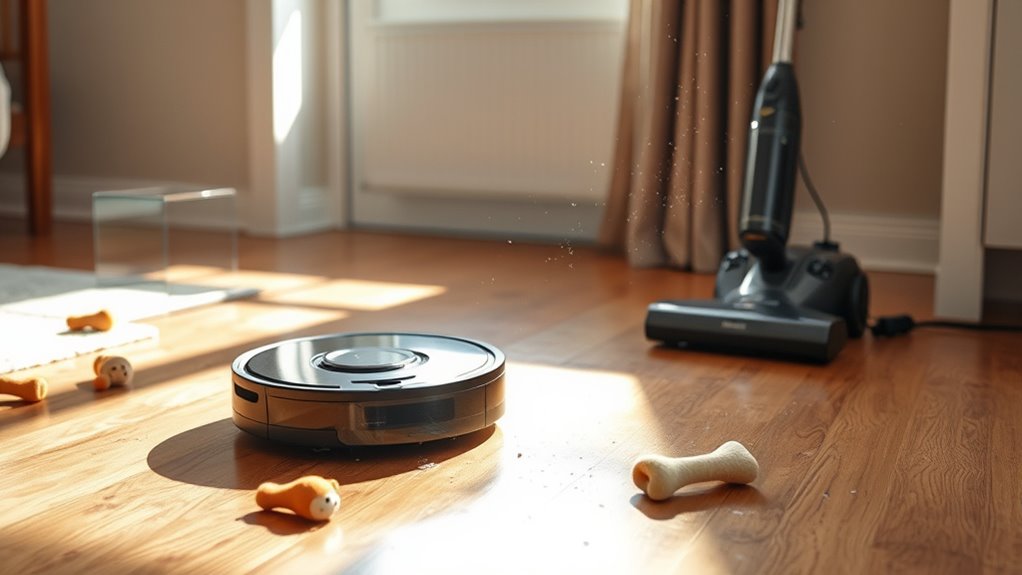
When you consider the efficiency of robot vacuums, you’ll find they typically pick up between 80% to 90% of dust and crumbs on flat or short carpets. Advanced models can offer suction power exceeding 4000 Pa, making them powerful enough for deep cleaning. However, they often struggle with high-pile carpets and embedded dirt, which may require manual intervention. Some vacuums achieve about 75.5% pickup rates for carpets, but large debris collection varies by device. Self-emptying models maintain around 95% coverage of floor area, aided by AI mapping and sensors. While robot vacuums provide solid efficiency for everyday cleaning tasks, they might not replace traditional vacuums for deep cleaning needs, especially in complex environments. Additionally, many robot vacuums integrate with smart-home systems, allowing for seamless operation and scheduling.
Convenience and Autonomy Features
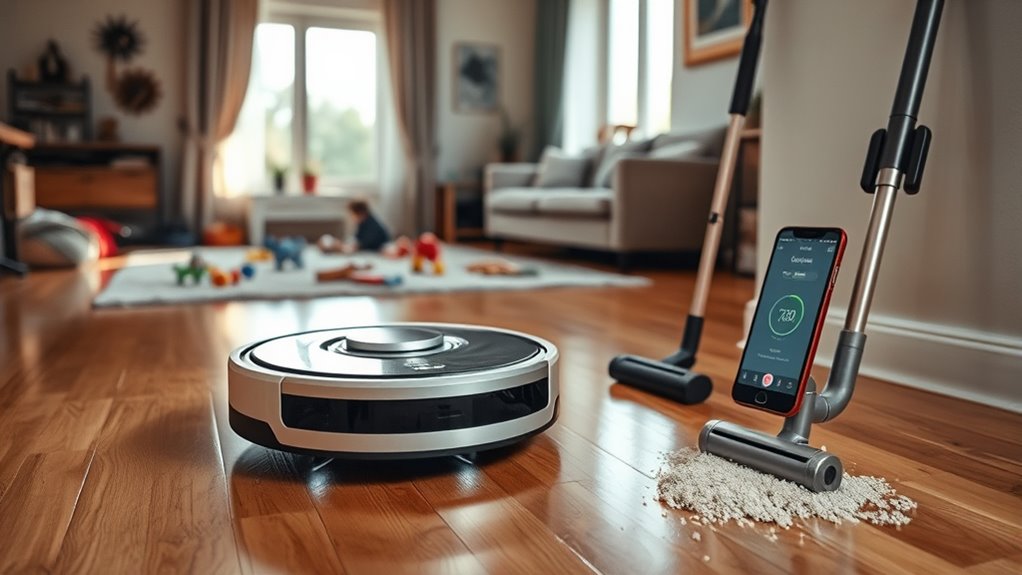
Robot vacuums offer impressive convenience with smart navigation systems that allow them to clean efficiently without your supervision. Self-emptying features mean you won’t have to worry about emptying the dustbin daily, and extended battery life ensures they can tackle larger spaces without interruption. These advancements make keeping your home clean easier than ever, giving you more time for what matters most. Additionally, the integration of smart appliances enhances the overall efficiency of your home cleaning routine.
Smart Navigation Systems
How do smart navigation systems enhance your cleaning experience? These systems enable your robot vacuum to create efficient cleaning paths, minimizing the time it takes to cover your home. With features like LiDAR and 3D sensors, your vacuum can avoid obstacles and adapt to your environment, ensuring it doesn’t get stuck. You’ll appreciate the convenience of scheduling regular cleanings without needing to supervise. Plus, you can control your vacuum remotely via an app, customizing your cleaning sessions to fit your lifestyle. With advanced mapping technology, your vacuum learns the layout of your home, achieving thorough coverage while you focus on other tasks. Smart navigation truly transforms your cleaning routine into a hassle-free experience. Additionally, utilizing energy-efficient cloud servers for data processing can enhance the performance of these smart devices, ensuring quicker updates and improved functionality.
Self-Emptying Convenience
While many vacuums require daily attention to empty their dustbins, self-emptying models offer a seamless solution that considerably enhances your cleaning experience. These advanced vacuums automatically transfer dirt and debris into a larger base, so you don’t have to lift a finger for weeks at a time. This hands-free convenience saves you valuable time, allowing you to focus on other tasks. Plus, with smart navigation and optimized cleaning paths, you can schedule cleanings without supervision. You’ll appreciate the reduced maintenance, as you won’t be constantly dealing with a messy dustbin. The autonomy and ease of use make self-emptying vacuums a compelling choice for maintaining a clean home effortlessly. Additionally, high refresh rates in some robotic models can enhance their efficiency in navigating around obstacles and cleaning effectively.
Extended Battery Life
When you’re juggling a busy schedule, the extended battery life of premium robot vacuums can be a game changer. With runtimes between 180 to 240 minutes, these vacuums allow you to tackle larger spaces without interruption. You won’t need to worry about frequent recharging, making them perfect for multi-room homes. Imagine setting your robot to clean while you’re away, returning to spotless floors without lifting a finger. Plus, advanced models come with smart navigation, ensuring they cover every corner efficiently. This autonomy means you can focus on your day-to-day tasks, knowing your vacuum is working hard for you. Enhanced battery life isn’t just a convenience; it’s a valuable feature that simplifies your cleaning routine. Additionally, choosing a reliable power source for your robot vacuum is essential for maintaining its performance, as standby generator buying guides can help ensure your vacuum has the energy it needs.
Advanced Technology Integration
When it comes to robot vacuums, advanced technology integration enhances your cleaning experience considerably. With sophisticated mapping and navigation systems, these devices navigate your home efficiently, ensuring no corner is left untouched. Plus, smart home compatibility and cutting-edge sensor technology make operation seamless and user-friendly. Additionally, the integration of science‑backed knowledge ensures that users can select products that truly enhance their cleaning routines.
Mapping and Navigation Systems
As robot vacuums continue to evolve, their mapping and navigation systems play a crucial role in enhancing cleaning efficiency. These systems help guarantee that your vacuum covers every corner of your home while avoiding obstacles. Here are some key features to take into account:
- LiDAR and Sensors: Advanced models use LiDAR and infrared sensors to create detailed maps, optimizing cleaning routes.
- Smart Navigation: They adapt to your home’s layout, making cleaning paths more efficient compared to random movement.
- Virtual Boundaries: You can set virtual walls or no-go zones to keep the vacuum away from specific areas.
- Real-Time Updates: Many models offer real-time mapping, allowing you to track cleaning progress via an app.
Additionally, the importance of proper aftercare in maintaining your robot vacuum’s functionality cannot be overstated, as regular maintenance ensures optimal performance over time. These features considerably enhance your vacuuming experience.
Smart Home Compatibility
Robot vacuums are increasingly designed to integrate seamlessly into smart home ecosystems, enhancing your cleaning experience. With compatibility for voice assistants like Alexa and Google Assistant, you can control your vacuum hands-free. Imagine starting a cleaning session just by saying, “Clean the living room,” while you relax. Many models also connect to smartphone apps, allowing you to schedule cleanings or monitor progress remotely. This level of control means you can maintain a tidy home without constant supervision. Additionally, some advanced models can interact with other smart devices, adjusting cleaning schedules based on your daily routines. Overall, this integration not only simplifies your life but also guarantees your robot vacuum works efficiently within your home setup. Furthermore, integrating your robot vacuum with energy management systems can help optimize its cleaning schedule according to your home’s energy usage patterns.
Sensor Technology Advances
Recent advancements in sensor technology have markedly enhanced the performance of robot vacuums, making them smarter and more efficient than ever. These innovations allow you to enjoy a more thorough cleaning experience without the hassle. Here are some key benefits:
- LiDAR and 3D Sensors: Create detailed maps of your home, optimizing cleaning paths and avoiding obstacles.
- Smart Navigation: Let your vacuum navigate around furniture and tight spaces, reducing the chance of getting stuck.
- App Integration: Control your vacuum remotely and schedule cleanings at your convenience, directly from your smartphone.
- Obstacle Detection: Advanced sensors help identify and avoid hazards, protecting your belongings and ensuring a smooth cleaning process.
With these features, robot vacuums are becoming increasingly reliable and convenient. Additionally, the integration of advanced technology in household appliances is transforming how we maintain our living spaces.
Costs and Economic Considerations
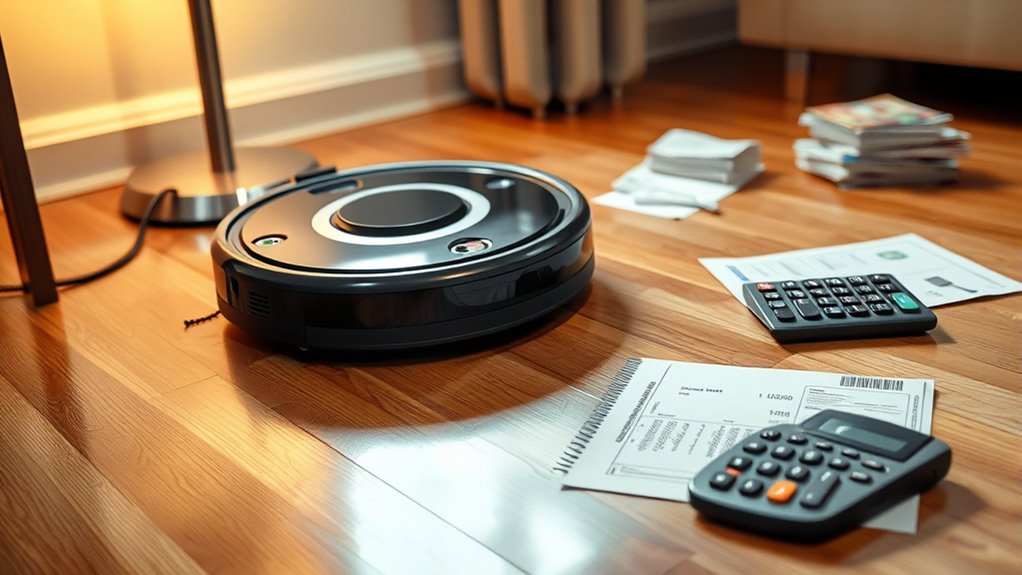
When considering a robot vacuum, you’ll find that costs can vary considerably, ranging from budget-friendly models to premium options priced as high as $1500-$1900. While you might be tempted by lower-priced models, investing in a self-emptying vacuum could save you time and effort in maintenance, justifying the higher upfront cost. Additionally, these devices have low energy consumption, typically using 30 to 90 watts per hour, which keeps operational costs down. However, keep in mind that frequent repairs or maintenance can lead to unexpected expenses, especially if components like sensors or brushes malfunction. Weighing cleaning efficiency against cost is essential, particularly if your home has complex layouts or specialized cleaning needs. Moreover, using essential oils like eucalyptus oil in your home can enhance the overall cleaning experience by providing a refreshing aroma while maintaining a healthy environment.
Maintenance Requirements and Longevity
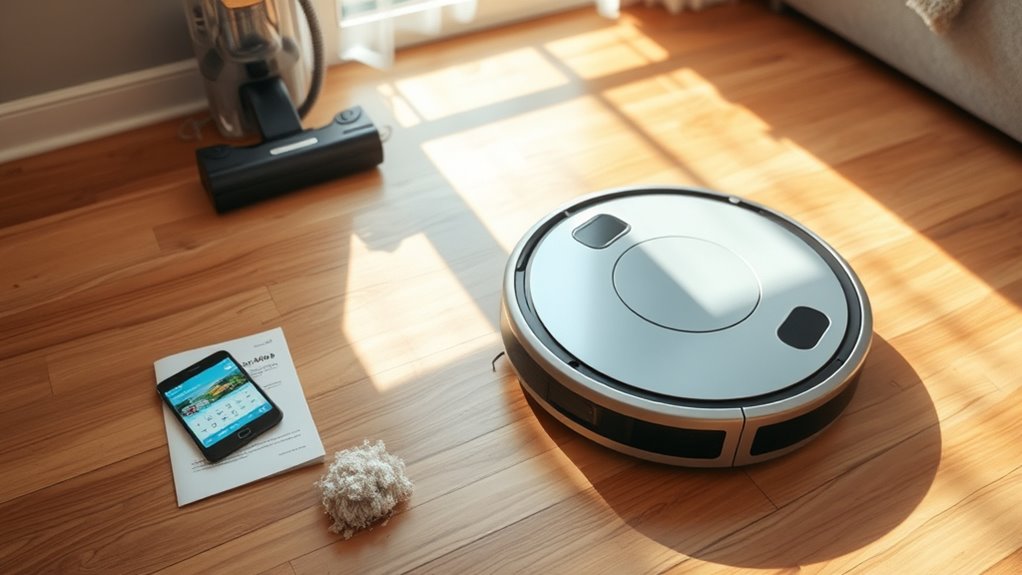
While enjoying the convenience of a robot vacuum, you’ll need to keep up with its maintenance to guarantee peak performance and longevity. Regular upkeep is essential to avoid issues and ensure efficient cleaning. Here are four key maintenance tasks you should prioritize:
- Clean the filters regularly to prevent clogging, which affects suction power.
- Check and clean the brushes to remove tangled hair and debris, maintaining ideal performance.
- Empty the dustbin as needed, even for self-emptying models, to prevent odors and blockages.
- Update the software periodically to enhance navigation and functionality.
Privacy Concerns and Limitations
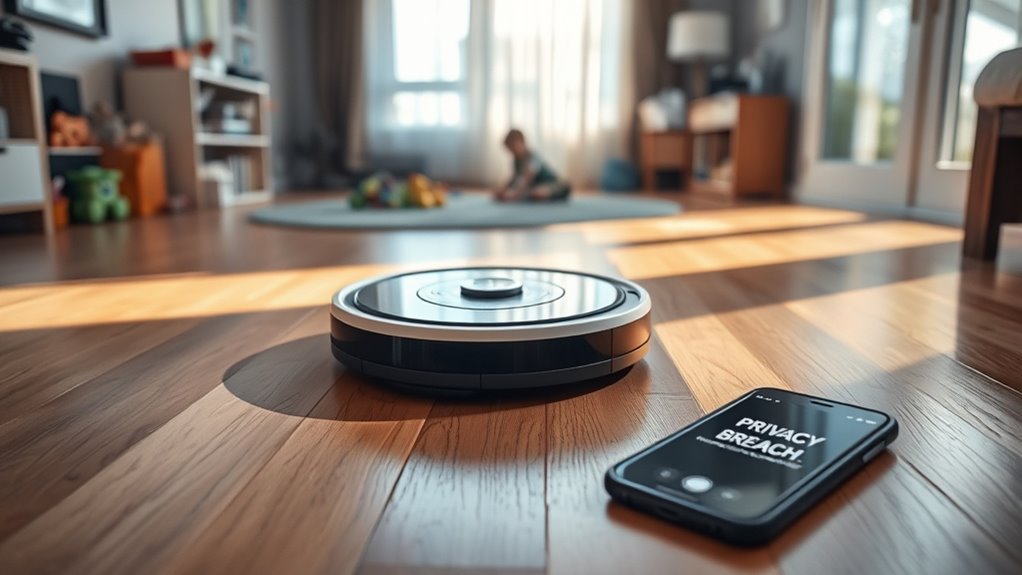
Maintaining your robot vacuum is crucial for its performance, but it’s also important to contemplate the privacy implications that come with its advanced technology. Many models use cameras and mapping features that collect data about your home. This data could potentially be accessed by hackers or misused by manufacturers. Additionally, while these vacuums excel at traversing your space, they often struggle in cluttered areas and tight corners, which may require manual cleaning. You might find they can’t fully replace traditional vacuuming for deep cleaning tasks, such as tackling embedded dirt or high-pile carpets. So, weigh these privacy concerns and limitations carefully before committing to a robot vacuum for your cleaning needs.
Comparing Robot Vacuums to Traditional Cleaning Methods
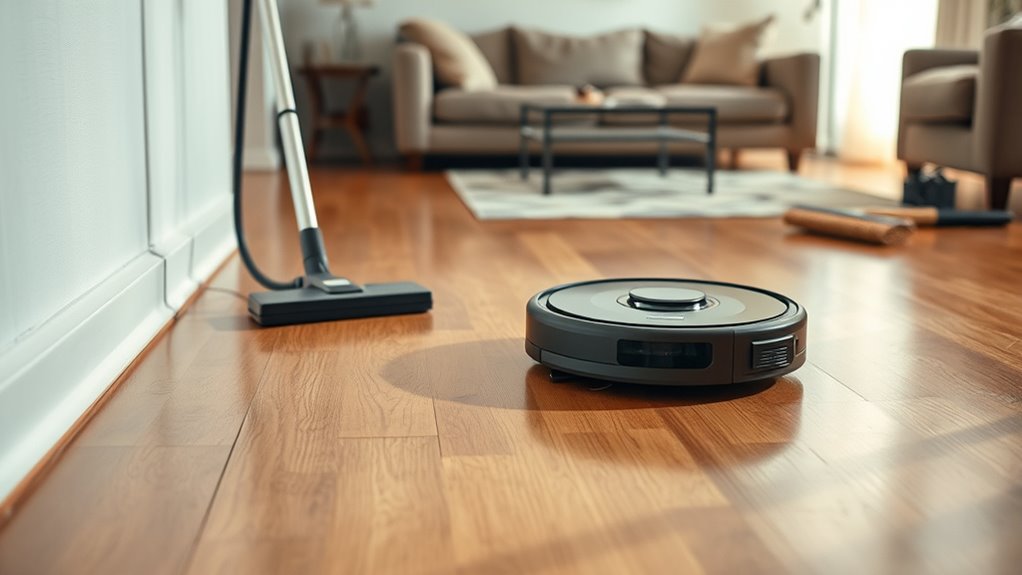
Although robot vacuums offer impressive convenience and efficiency, comparing them to traditional cleaning methods reveals significant differences in performance and user experience. Here’s what you need to know:
- Cleaning Power: Traditional vacuums often provide deeper cleaning, especially on high-pile carpets, while robot vacuums excel on hard floors.
- User Engagement: Robot vacuums can operate autonomously, saving you time, while traditional methods require your active involvement.
- Maintenance: Robot vacuums need regular upkeep, like cleaning filters and brushes, whereas traditional vacuums might need less frequent maintenance.
- Cost: Initial costs for robot vacuums can be high, whereas traditional methods usually have lower upfront expenses.
Ultimately, your choice depends on your lifestyle and cleaning preferences.
Frequently Asked Questions
Can Robot Vacuums Handle Pet Hair Effectively?
Yes, robot vacuums can handle pet hair effectively, especially models designed with rubber brushes and strong suction power. They pick up around 80% to 90% of pet hair on flat surfaces and short carpets. However, they might struggle with high-pile carpets or tangled hair, so you may need to assist them occasionally. Regular maintenance, like cleaning filters and brushes, guarantees they perform at their best for your furry friends.
How Do Robot Vacuums Navigate Around Furniture?
Robot vacuums use advanced navigation technology, often achieving around 95% floor coverage. They navigate around furniture with smart sensors and mapping systems, avoiding obstacles like tables and chairs. This technology allows them to create efficient cleaning paths, ensuring they clean your space without getting stuck. Some models even use LiDAR and cameras to enhance their awareness of the environment, making them adept at maneuvering around tight spaces and cluttered areas.
Are Robot Vacuums Suitable for All Floor Types?
Robot vacuums aren’t suitable for all floor types. They perform best on flat or short carpets, picking up most dirt effectively. However, they struggle with high-pile carpets and often need help on uneven surfaces. If your home has a mix of flooring, consider a model with adjustable suction and specialized brushes. You’ll also want to be mindful of clutter, as tangled cords can hinder their cleaning performance.
What Happens if the Robot Vacuum Runs Out of Battery?
When your robot vacuum runs out of battery, it’s like a knight losing its sword in battle. It’ll pause its quest for cleanliness, often returning to its charging dock to recharge. Once powered up, it can resume where it left off, thanks to smart mapping. So, while it may temporarily halt its mission, it’s designed to get back to work, ensuring your home stays tidy without your intervention.
Can I Control My Robot Vacuum Remotely?
Yes, you can control your robot vacuum remotely! Most modern models come with app integration, letting you start, stop, and schedule cleanings from your smartphone. You’ll also be able to customize cleaning paths and view maps of your home. With smart home compatibility, you can even use voice commands through your virtual assistant. This convenience means you can manage your cleaning tasks from anywhere, making your life a lot easier!
Conclusion
In summary, robot vacuums can markedly enhance your cleaning routine, offering up to 90% efficiency on flat surfaces. While they excel at daily maintenance, you might still need a traditional vacuum for deeper cleans, especially on high-pile carpets. With prices ranging from $200 to over $1,000, it’s important to weigh the convenience against your budget. Ultimately, if you value time-saving technology, a robot vacuum could be a worthy investment for your home.