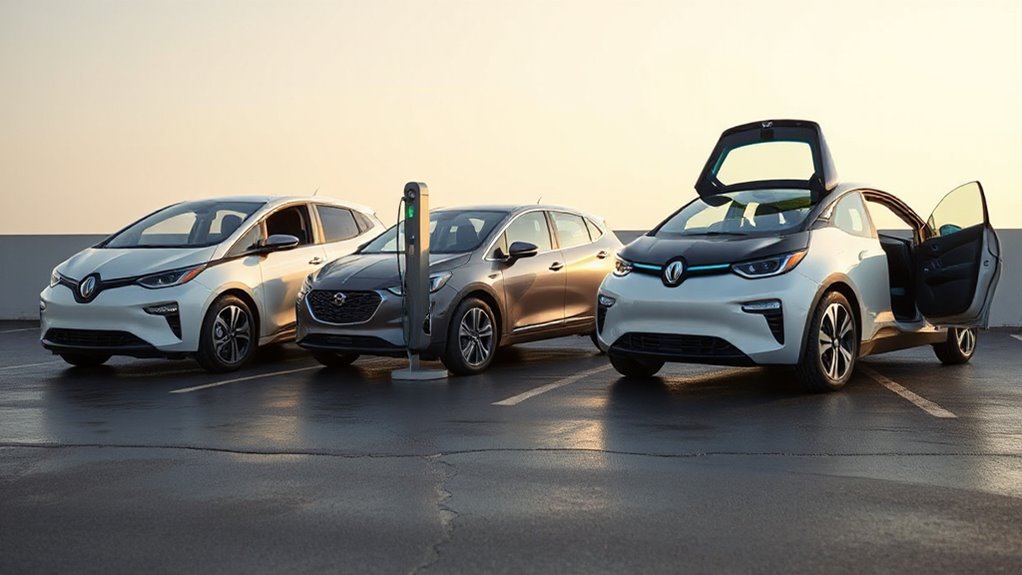

Choosing between hybrid, plug-in hybrid, and full EV depends on your driving needs and access to charging. Hybrids are great if you want lower emissions without worrying about charging stations. Plug-in hybrids let you drive electric short distances and switch to gas for longer trips, requiring chargers nearby. Full EVs produce no tailpipe emissions and have lower running costs, but need a good charging setup. Exploring these options further will help you find the best eco-friendly fit.

Get your next haul delivered free — and shop member deals
- Fast, free delivery on millions of items
- Access to Prime Big Deal Days deals on October 6–7
- Prime Video, Amazon Music and more included
Key Takeaways
- Hybrids combine gasoline and electric power without external charging, suitable for areas with limited charging infrastructure.
- Plug-in hybrids have larger batteries for electric-only driving, requiring access to chargers to maximize eco benefits.
- Full EVs operate solely on batteries, offering zero emissions and lower operating costs with expanding charging networks.
- Range and charging speed improvements in battery technology enhance all options, influencing practicality for longer trips.
- Cost, infrastructure, and driving needs determine the most eco-friendly choice among hybrids, plug-in hybrids, and full EVs.
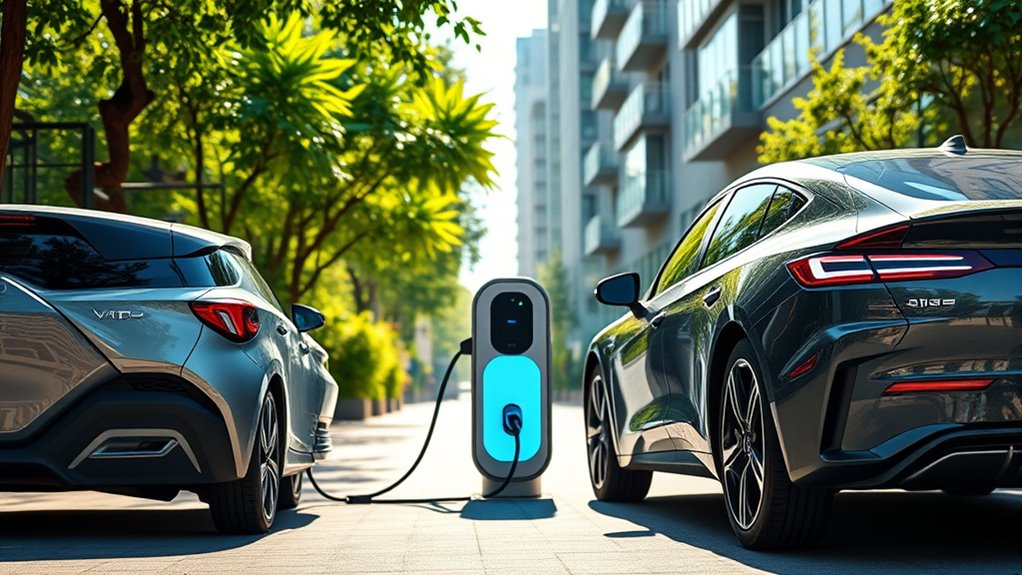
As concerns about climate change and air pollution grow, more drivers are seeking eco-friendly car options that reduce their environmental impact. Choosing between hybrid, plug-in hybrid, and full electric vehicles can feel overwhelming, but understanding the technology behind each helps clarify your options. Your decision should consider how battery technology and charging infrastructure shape the practicality and convenience of each vehicle type.
Hybrid cars combine a traditional gasoline engine with an electric motor, offering a seamless progression between power sources. They don’t rely heavily on charging stations because their batteries are recharged through regenerative braking and engine operation. This makes hybrids ideal if you’re concerned about the current state of charging infrastructure, which may be limited in your area. Battery technology in hybrids is optimized for longevity and efficiency, but since the batteries are smaller, their contribution to fuel savings and emissions reduction is moderate compared to plug-in and full EVs. Hybrids are a good choice if you want to reduce emissions without the need for dedicated charging stations or significant changes to your driving habits.
Plug-in hybrids (PHEVs) extend the benefits of hybrids by allowing you to recharge their larger batteries via external power sources. This means you can operate on electric power alone for short trips, reducing fuel consumption and emissions during daily commutes. When the battery runs low, the gasoline engine kicks in, providing flexibility. The success of owning a PHEV hinges on the availability of charging infrastructure—ideally, accessible public charging stations or a home charger—so you can maximize electric driving. Thanks to advancements in battery technology, these vehicles now offer longer electric-only ranges and faster charging times, making them more practical than ever. If your area has a growing network of charging stations and you mostly drive within the electric range, a PHEV could be a smart, eco-friendly option.
Full electric vehicles (EVs) operate solely on battery power and produce zero tailpipe emissions. Their performance relies heavily on the quality of battery technology, which continues to improve in capacity, lifespan, and charging speed. The main challenge with EVs is the charging infrastructure, which varies regionally. While urban areas often boast extensive networks of fast chargers, rural or less-developed regions may lack convenient options. This makes planning longer trips more critical, but advancements in battery technology now enable faster charging, reducing downtime. Moreover, innovative European cloud servers support the development of next-generation energy solutions, which are essential for expanding charging infrastructure and supporting widespread EV adoption. If you have access to reliable charging stations and want to eliminate emissions completely, a full EV offers the most eco-friendly option. Its lower operating costs and decreasing prices make it increasingly accessible, especially as charging infrastructure expands.
hybrid car with regenerative braking
As an affiliate, we earn on qualifying purchases.
As an affiliate, we earn on qualifying purchases.
Frequently Asked Questions
What Are the Maintenance Costs for Each Eco-Friendly Car Type?
You’ll find that hybrid cars generally have lower maintenance costs, with fewer battery replacement worries thanks to extensive warranty coverage. Plug-in hybrids may cost a bit more due to larger batteries but still benefit from solid warranties. Full EVs tend to have the lowest maintenance costs overall, as they have fewer moving parts, though you should consider potential battery replacement after several years, which is often covered by warranty.
How Do Charging Times Compare Among Hybrid, Plug-In, and Full EVS?
Time is of the essence, so you’ll find that hybrids charge almost instantly since they don’t rely heavily on charging infrastructure. Plug-ins take longer—about 2-8 hours—due to battery size, but this depends on charger type. Full EVs can take anywhere from 30 minutes to over 12 hours, depending on the charger. Battery degradation can also affect charging times, especially as the battery ages, making quick charging less effective over time.
Which Eco-Friendly Car Option Offers the Best Resale Value?
You’ll find that full EVs generally offer the best resale value due to high market demand and advancing battery longevity. As electric vehicles become more popular, their resale prices tend to stay strong, especially for models with longer-lasting batteries. Plug-in hybrids have decent resale value but may decline faster, while traditional hybrids typically see the lowest. Your choice depends on how long you want to hold onto the vehicle and future market trends.
Are There Government Incentives Specific to Hybrid, Plug-In, or Full EVS?
Imagine driving through a city glowing with eco-friendly lights—government rebates often shine brightly for hybrid, plug-in, and full EVs. You may qualify for incentives depending on eligibility criteria like vehicle type and location. These rebates can markedly reduce your costs, making eco-driving more affordable. Check your local government programs regularly, as incentives can change, helping you save money while supporting sustainable transportation.
How Do Eco-Friendly Cars Impact Long-Term Insurance Premiums?
Eco-friendly cars can lower your long-term insurance premiums because they often have advanced safety features and are seen as less risky. Insurance providers may also offer discounts for eco-friendly technology, reducing your overall long-term costs. However, keep in mind that some models may have higher repair costs, which could impact your premiums over time. Overall, choosing an eco-friendly car can be a smart move for saving money long-term.
plug-in hybrid electric vehicle charger
As an affiliate, we earn on qualifying purchases.
As an affiliate, we earn on qualifying purchases.
Conclusion
Choosing between hybrid, plug-in, and full EVs might seem overwhelming, but remember, you’re on the verge of transforming your drive and saving the planet. Each option offers unique perks, like a superhero’s power to reduce emissions or boost efficiency. So, pick the one that fits your lifestyle and watch your impact grow exponentially — like a ripple turning into a tidal wave of change. Your eco-friendly journey starts now, and you’re unstoppable!
full electric vehicle charging station
As an affiliate, we earn on qualifying purchases.
As an affiliate, we earn on qualifying purchases.
As an affiliate, we earn on qualifying purchases.
Fall Picks
fall essentials
As an affiliate, we earn on qualifying purchases.