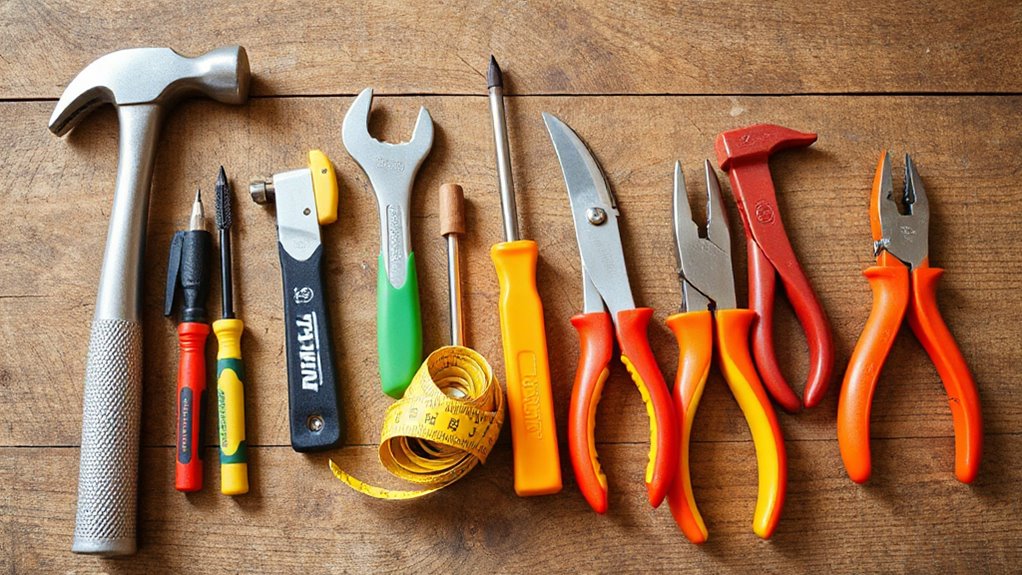
To handle everyday household repairs without breaking the bank, you should have a few essential tools like a good hammer, screwdrivers, a measuring tape, and a level. A cordless drill, needle-nose pliers, and a handsaw can cover most small projects. Build your toolkit gradually with quality, versatile tools, and avoid expensive specialty items. If you keep exploring, you’ll find ways to create a practical setup that meets your needs confidently.
Key Takeaways
- Prioritize versatile, quality hand tools like a hammer, screwdrivers, and utility knife for everyday repairs.
- Invest in a reliable tape measure and level to ensure accurate measurements and proper alignment.
- Include a cordless drill with various drill bits for drilling and fastening tasks around the home.
- Add gripping tools such as pliers and locking pliers for handling different repair and assembly needs.
- Build your toolkit gradually, focusing on essential tools and modern options to maximize efficiency without overspending.
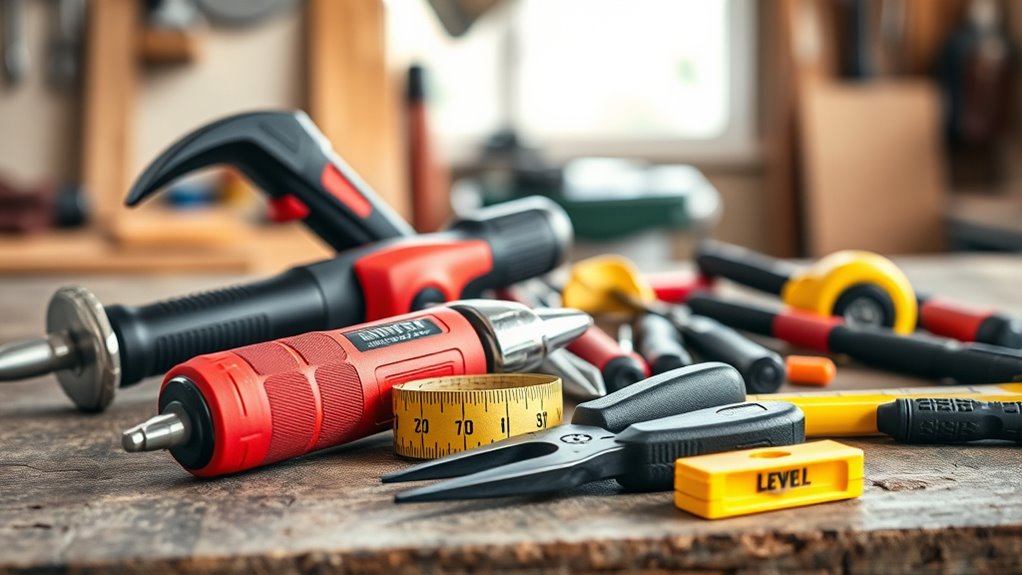
Owning a home comes with the responsibility of handling repairs and maintenance, and having the right tools makes it much easier. When you’re prepared with essential tools, you can tackle DIY maintenance tasks and home improvement projects confidently, saving money and time. You don’t have to spend a fortune to build a practical toolkit; focusing on versatile, quality tools that cover multiple needs is the smart way to go. Incorporating modern connected tools can further enhance your efficiency and precision in home repairs.
Start with the basics: a good hammer and a set of screwdrivers. A hammer is useful for hanging pictures, assembling furniture, or minor carpentry. Choose one with a comfortable grip and a balanced weight. A screwdriver set with Phillips and flat-head bits will help you handle many fasteners around the house. Opt for magnetic or ratcheting screwdrivers for convenience. These simple tools form the foundation of most repair and improvement tasks.
Start with a sturdy hammer and a versatile screwdriver set for all your basic home repairs.
Next, include a tape measure and a level. Accurate measurements are critical for home improvement projects, whether you’re installing shelves or replacing fixtures. A tape measure with clear markings and a sturdy build will serve you well. A small, bubble or laser level ensures your work stays straight and precise, avoiding crooked results that can be frustrating to fix later.
A cordless drill is another essential tool, combining power and portability. It simplifies tasks like drilling holes or screwing in hardware. Look for one with adjustable speed and a range of drill bits. Being cordless means you’re not tethered to an outlet, giving you flexibility to work anywhere in your home.
For cutting tasks, a utility knife and a handsaw are invaluable. A utility knife with replaceable blades makes trimming or scoring materials straightforward. A handsaw can handle small demolition jobs or cutting wood for projects without needing a power saw. These tools keep your projects manageable and safe.
Finally, consider a set of pliers—needle-nose, slip-joint, and locking pliers. Pliers help with gripping, twisting, or turning objects, and they’re useful in almost every repair situation. Having a versatile set means you’re prepared for whatever comes up.
With these foundational tools, you’re equipped for most DIY maintenance and home improvement projects. Focus on quality where it counts, and don’t overspend on specialty tools you might only use once. Building your toolkit gradually ensures you stay within budget while gaining the tools you need to maintain and improve your home efficiently. The right tools empower you to handle everyday repairs confidently, making your home a better place to live without breaking the bank.
Frequently Asked Questions
What Is the Most Versatile Tool for General Home Repairs?
The most versatile tool for general home repairs is a cordless multi-tool. It offers ergonomic design, making it comfortable to use for extended periods, and its adaptability means you can cut, sand, and scrape with one device. Proper tool maintenance guarantees it stays reliable, while its multi-functionality saves you money and space. This tool is perfect for tackling various tasks around the house, making repairs easier and more efficient.
How Can I Identify Quality Tools on a Budget?
To identify quality tools on a budget, focus on trusted tool brands known for durability, like Craftsman or Stanley. When budget shopping, compare prices and read reviews to gauge performance. Look for tools with sturdy construction, comfortable grips, and solid warranties. Avoid cheap, no-name options, and instead, invest in a few reliable pieces. This approach guarantees you get long-lasting tools without overspending.
Are Cordless Tools Worth the Extra Cost?
Cordless tools are worth the extra cost because they offer unmatched convenience and portability. You benefit from longer battery life, allowing you to work without interruptions, and brand reputation guarantees quality and durability. While they might be pricier upfront, investing in reputable brands assures you get reliable power and performance, making your projects easier and more efficient. Overall, cordless tools can be a smart, long-term investment for any homeowner.
How Often Should I Replace or Upgrade My Tools?
You should replace or upgrade your tools when they show signs of wear or no longer perform effectively. Regular tool maintenance, like cleaning and sharpening, extends their lifespan. Proper tool storage keeps them in good condition and prevents damage. Typically, invest in new tools every few years or as needed, especially for high-use items. Staying attentive to their condition guarantees safety and efficiency for your projects.
What Safety Gear Is Essential When Using Home Tools?
You should always wear protective eyewear and hearing protection when using home tools. Safety goggles shield your eyes from debris, dust, and sparks, while earplugs or earmuffs protect your hearing from loud noises. These gear pieces are essential to prevent injuries and long-term damage. Always prioritize safety, and make sure your protective equipment fits well. Stay alert and cautious to enjoy your projects without risking your health.
Conclusion
Having these essential tools in your arsenal means you’re always ready to tackle household tasks without breaking the bank. They’re your secret weapons for quick fixes and ongoing maintenance, helping you save time and money in the long run. Remember, a stitch in time saves nine—being prepared now prevents bigger problems later. Keep your toolkit stocked and stay confident, because when it comes to homeownership, a little know-how goes a long way.