If you want low-cost, durable houseplants that are hard to kill, start with plants like pothos, snake plants, or ZZ plants. These choices thrive in a variety of light conditions and can handle occasional watering mistakes, making them perfect for beginners. They don’t require much fuss or special care, so you can build confidence while enjoying a lush green space. To learn more about caring for these resilient plants, keep exploring the best beginner-friendly options.

Get your next haul delivered free — and shop member deals
- Fast, free delivery on millions of items
- Access to Prime Big Deal Days deals on October 6–7
- Prime Video, Amazon Music and more included
Key Takeaways
- Choose low-maintenance plants like pothos, snake plants, and ZZ plants that tolerate inconsistent care.
- Opt for affordable, resilient greenery that thrives in various light and watering conditions.
- Start with easy-care plants requiring minimal watering and indirect light to reduce stress.
- Select plants that are forgiving of watering mistakes and lower light levels, perfect for beginners.
- Prioritize budget-friendly options that add lushness without frequent attention or specialized care.
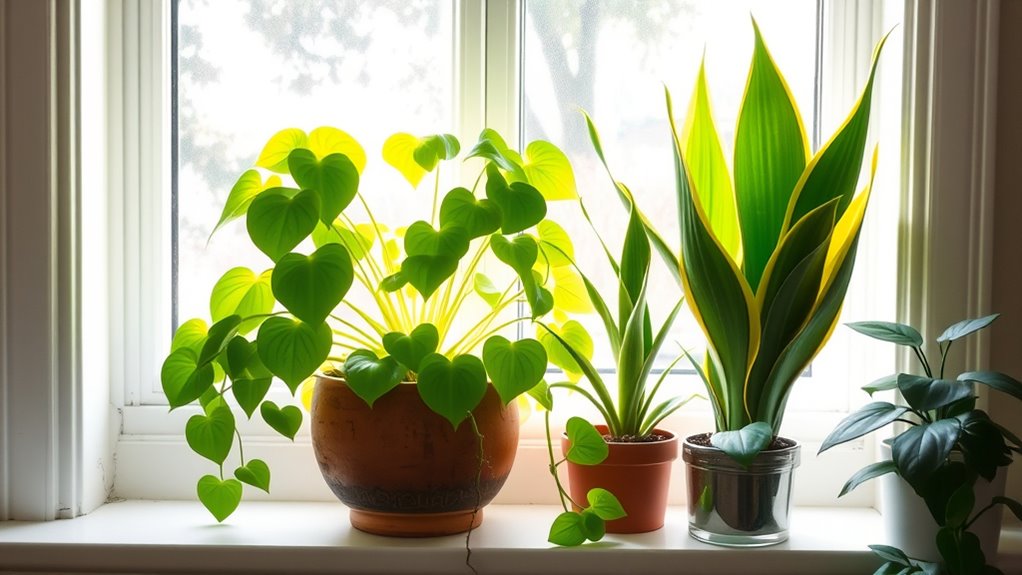
Starting your journey with houseplants can be rewarding, even if you’re new to gardening. The key to success lies in choosing low-maintenance plants that can tolerate a range of conditions and require minimal fuss. When you pick the right plants, caring for them becomes more about enjoying their presence than stressing over perfect conditions. To start, understanding basic watering tips and lighting requirements will considerably improve your chances of keeping your houseplants healthy and thriving. Additionally, selecting plants that are easy-care can make your experience more enjoyable and less stressful. Watering is one of the most common mistakes beginners make. Many new plant parents tend to overwater, which can lead to root rot and other issues. A good rule of thumb is to check the top inch of soil; if it feels dry, it’s time to water. When you do water, do so thoroughly until you see it drain out of the bottom of the pot. This ensures the roots get enough moisture and prevents water from sitting stagnant at the surface. Remember, different plants have different needs, but most low-maintenance houseplants prefer to dry out slightly between waterings. Avoid sticking to a strict schedule; instead, base your watering routine on the plant’s specific needs and the soil’s moisture level. Lighting requirements are equally important. Many beginner-friendly plants thrive in bright, indirect light. If you’re unsure about your space, observe how sunlight moves through your home during the day. A good rule is to place your plants near east- or west-facing windows, where they’ll get plenty of filtered light without the harsh direct rays that can scorch their leaves. For spaces with less natural light, some plants adapt well to lower light conditions, so you won’t need to invest in grow lights right away. Just be mindful of signs like leggy growth or faded leaves, which indicate your plant might need more light. Conversely, avoid placing plants in direct sunlight if they’re sensitive, as too much direct sun can cause leaves to burn. Starting with easy-care plants like pothos, snake plants, or ZZ plants takes the guesswork out of lighting and watering. They’re forgiving if you forget to water occasionally or if the lighting isn’t perfect. Keep an eye on their growth and adjust your routine as needed. With a little attention to watering tips and lighting requirements, you’ll find that caring for houseplants becomes a simple, enjoyable part of your daily routine. Over time, you’ll gain confidence and might even explore more plants, but for now, focus on the basics. The rewards of lush, green indoor plants are well worth the effort, and the best part is, these low-cost options are hard to kill, making your gardening journey both affordable and fulfilling.
As an affiliate, we earn on qualifying purchases.
Frequently Asked Questions
Which Houseplants Purify the Air Effectively?
You’ll want to choose air purifying plants like snake plants, pothos, and peace lilies. These toxin removing species effectively filter indoor air, removing common pollutants such as formaldehyde, benzene, and trichloroethylene. Not only do they improve air quality, but they’re also easy to care for, making them perfect for beginners. Incorporate these low-cost, hardy options into your space to enjoy cleaner, healthier indoor air effortlessly.
How Often Should I Water Low-Maintenance Indoor Plants?
Think of your low-maintenance plants as gentle friends needing just enough attention. You should water them based on their watering schedule, typically when the top inch of soil feels dry. Check soil moisture regularly, and avoid overwatering, which can cause root rot. Usually, watering once a week works well, but adjust depending on humidity and light. Your plants will thrive with consistent, mindful care.
Can I Grow Houseplants in Low-Light Conditions?
Yes, you can grow houseplants in low-light conditions. Look for low light plant options like snake plants, pothos, or ZZ plants, which are shade tolerant species. These plants thrive in indirect or minimal sunlight, making them perfect for shaded spots. Place them near windows with drapes or in rooms with limited natural light, and you’ll enjoy healthy, easy-to-care-for greenery without needing bright conditions.
What Are Common Pests That Harm Indoor Plants?
You might encounter pests like spider mites, aphids, or mealybugs that harm your indoor plants. To prevent pests, practice pest prevention by regularly inspecting your plants and keeping leaves clean. If you notice pests, use natural remedies like neem oil, insecticidal soap, or homemade solutions to control them. Consistent preventive care and early intervention help protect your plants and keep them healthy and thriving indoors.
How to Troubleshoot Leaf Yellowing in Houseplants?
Did you know that over 60% of indoor plant issues stem from watering problems? To troubleshoot leaf yellowing, first check your watering routine—overwatering or underwatering can cause this. Also, assess nutrient levels; deficiencies like nitrogen or iron often lead to yellow leaves. Adjust your watering schedule and consider fertilizing with a balanced plant food. Regularly inspecting your plant helps catch issues early and keeps it healthy.
low maintenance indoor plants snake plant
As an affiliate, we earn on qualifying purchases.
As an affiliate, we earn on qualifying purchases.
Conclusion
So, as you bring these easy-care houseplants into your home, you might find yourself surprised by how effortlessly they thrive—almost as if they were waiting for you to adopt them. With a little attention and these low-cost options, you’ll create a lush, green oasis that feels like it was meant to be. Before you know it, your space will be filled with life and color, turning everyday moments into a calming, natural retreat.
easy care ZZ plants for beginners
As an affiliate, we earn on qualifying purchases.
As an affiliate, we earn on qualifying purchases.
budget friendly houseplants for low light
As an affiliate, we earn on qualifying purchases.
As an affiliate, we earn on qualifying purchases.
Evergreen bestsellers Picks
bestsellers
As an affiliate, we earn on qualifying purchases.