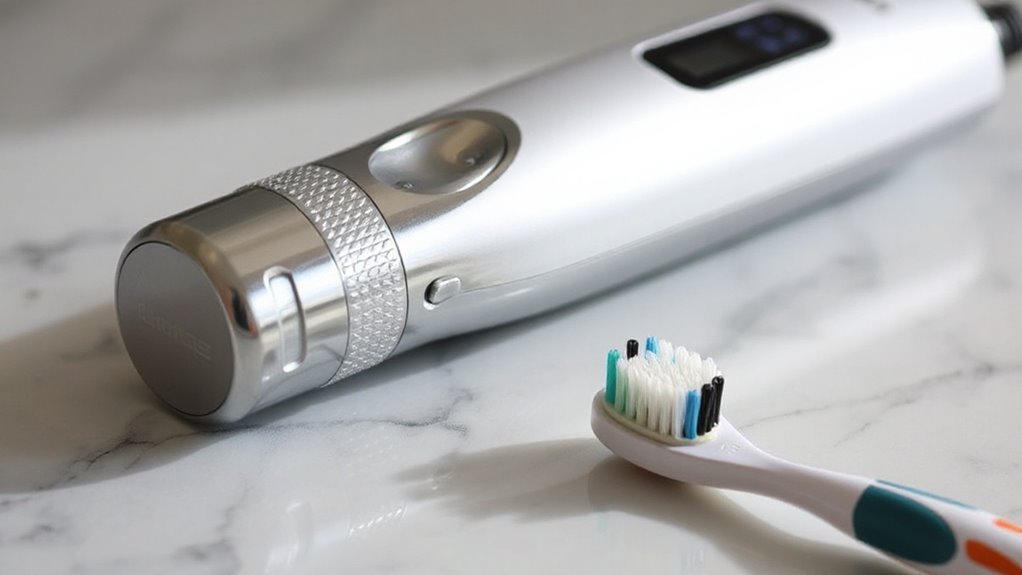
Pricier electric toothbrushes often come with features like timers, pressure sensors, and gentle, effective cleaning, which can benefit those with sensitive gums or limited dexterity. However, a manual brush with proper technique and the right bristle stiffness can still keep your smile healthy without the extra cost. If you want to understand how these options compare and find what works best for your needs, there’s more to explore below.
Key Takeaways
- Pricey electric toothbrushes often include advanced features like timers and pressure sensors that can improve brushing effectiveness.
- Manual brushes with proper technique and suitable bristle stiffness can be just as effective for maintaining oral health.
- Electric models are beneficial for individuals with limited dexterity or sensitive gums due to their gentle, automated cleaning.
- Higher-cost electric toothbrushes typically offer longer battery life and customizable settings, adding value for consistent use.
- The decision depends on personal needs, with pricier models providing additional features that may enhance overall oral hygiene.

When it comes to maintaining good oral hygiene, choosing between an electric and a manual toothbrush can make a significant difference. One of the first things to consider is how the bristle stiffness impacts your cleaning effectiveness and comfort. Softer bristles are gentler on your gums and enamel, making them ideal if you have sensitive teeth or gums. Medium or firm bristles can be more effective at removing plaque if used correctly, but they also carry a higher risk of irritation or damage if you brush too hard. Electric toothbrushes often feature softer, more flexible bristles designed to oscillate or vibrate, giving you a thorough clean without requiring you to apply extra pressure. Meanwhile, manual brushes rely on you to control the pressure and motion, so choosing a brush with the right bristle stiffness becomes even more vital to prevent gum recession or enamel wear. Additionally, the incorporation of water-based cleaning techniques in some electric models can enhance plaque removal and overall oral health. Handle design also plays a significant role in your brushing experience, especially when comparing electric and manual options. Many electric toothbrushes come with ergonomic handles that fit comfortably in your hand, making it easier to maneuver around hard-to-reach areas like the back molars. Some models even have textured grips or non-slip surfaces, which help you maintain control, especially when your hands are wet. Manual toothbrushes vary widely in handle design, from basic plastic grips to more sophisticated shapes that aim to improve grip and comfort. If you struggle with dexterity or experience hand fatigue, an electric toothbrush with a well-designed handle can alleviate those issues, encouraging more consistent brushing routines. Cost is often a deciding factor, but it’s essential to weigh whether the features justify the price difference. More expensive models frequently offer customizable settings, longer battery life, and advanced handle designs that make brushing easier and more effective. For example, some electric toothbrushes include timers to ensure you brush for the recommended two minutes and pressure sensors that alert you if you’re brushing too hard. These features can enhance your oral hygiene, especially if you’re prone to rushing or applying excessive force. However, a good manual toothbrush with the right bristle stiffness and comfortable handle can still be effective if used correctly and regularly. Ultimately, whether a pricier electric model is worth it depends on your specific needs. If you have sensitive gums, limited dexterity, or want extra features that help improve your technique, investing in a high-quality electric toothbrush might pay off. But if you prefer simplicity and affordability, choosing a manual toothbrush with suitable bristle stiffness and a comfortable handle can still keep your teeth clean and healthy.
Frequently Asked Questions
Do Electric Toothbrushes Help With Whitening Teeth Better Than Manual Ones?
Electric toothbrushes often help with teeth whitening better than manual ones because they can remove plaque more effectively, leading to a brighter smile. Their oscillating or pulsating action targets surface stains and reduces plaque buildup, which manual brushes might miss. If you’re aiming for whiter teeth and improved oral health, investing in an electric toothbrush could be worth it, especially for regular plaque removal and maintaining your smile’s brightness.
How Long Do Electric Toothbrushes Typically Last Before Needing Replacement?
Your electric toothbrush typically lasts about three to five years before needing replacement. The key factor is its battery lifespan, which gradually diminishes over time. You should replace the brush head every three months for ideal cleaning, but the device itself may require replacement sooner if the battery no longer holds a charge or the motor becomes less effective. Regular maintenance ensures your electric toothbrush continues to perform well.
Are There Specific Dental Conditions That Benefit More From Electric Brushes?
If you have gingivitis or braces, an electric toothbrush can be more effective for treatment and cleaning. It helps remove plaque better, making gingivitis treatment easier and more efficient. For orthodontic cleaning, electric brushes reach difficult spots around brackets and wires, reducing plaque buildup. You’ll notice improved gum health and cleaner teeth overall. So, if you’re dealing with these issues, investing in an electric toothbrush might be worth it.
Can Children Safely Use Electric Toothbrushes, and at What Age?
Think of electric toothbrushes as training wheels—they can be safe for children when used properly. Children can typically start using them around age 3, but always follow age guidelines and consult your dentist. Make sure the toothbrush has a child-friendly design, gentle bristles, and is used under supervision. Prioritizing children’s safety helps them develop good habits early and keeps their teeth healthy for the long ride ahead.
Do Electric Toothbrushes Require Special Toothpaste or Accessories?
Electric toothbrushes generally don’t require special toothpaste, but you should verify for toothpaste compatibility to avoid damaging the device or reducing effectiveness. You’ll also need replacement parts like brush heads regularly to keep your cleaning effective. Using the right toothpaste and replacing parts as recommended ensures your electric toothbrush works well and lasts longer, giving you a better clean without extra hassle or expense.
Conclusion
Ultimately, choosing between electric and manual brushes depends on your needs and budget. While electric models can make brushing easier and more consistent, they aren’t always necessary for everyone. Sometimes, the old-fashioned manual brush gets the job done just fine. It’s all about finding what works best for you. Remember, it’s not the tool but how you use it that makes all the difference—so don’t judge a book by its cover when it comes to your smile!