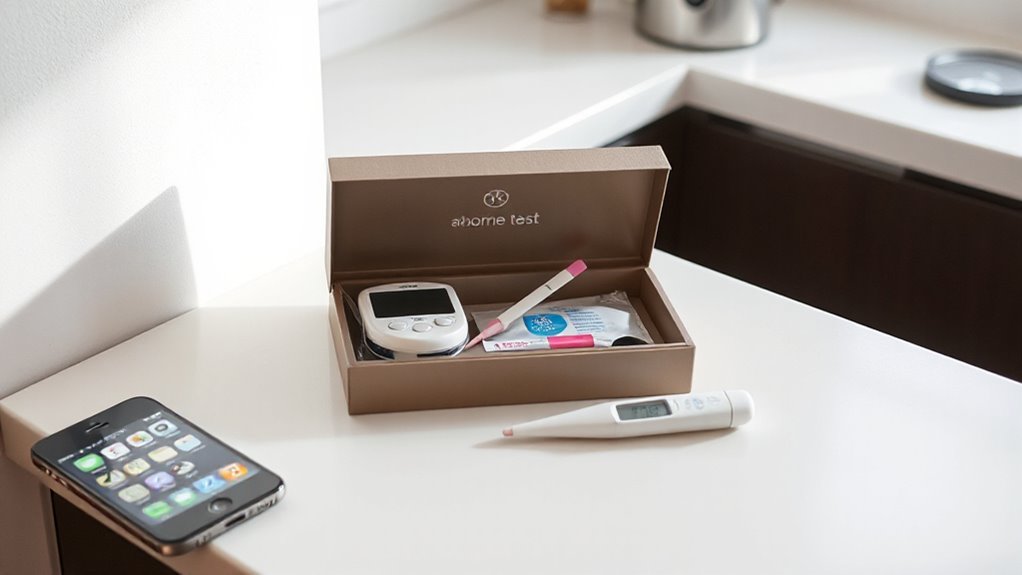

If you’re considering at-home medical tests, focus on those that are FDA-approved for accuracy, like blood sugar or hormone tests. They’re useful for quick health insights, early detection, and ongoing management. Make sure they’re easy to use and come with clear instructions. Keep in mind, interpreting results accurately often requires professional advice. Thinking about which tests fit your needs? Keep exploring to find out more about making the right choices.
Key Takeaways
- Choose FDA-approved tests for verified accuracy and reliability.
- Prioritize tests that offer easy-to-follow instructions and quick results.
- Use at-home tests as a supplement, not a replacement, for healthcare provider guidance.
- Focus on tests that monitor your specific health concerns, like blood sugar or hormone levels.
- Ensure proper sample collection and interpret results cautiously, consulting professionals when needed.

Have you ever wondered if you can check your health from the comfort of your home? With the rise of at-home medical tests, it’s now easier than ever to monitor key health markers without visiting a doctor’s office. These tests can give you quick insights into your body’s functioning, allowing you to catch potential issues early or simply stay on top of your health. But not all at-home tests are worth your money, so it’s important to understand which ones deliver reliable results and meet your needs.
One of the most common at-home tests focuses on blood sugar levels. If you’re managing diabetes or are concerned about your glucose levels, home blood sugar tests can be incredibly useful. These kits typically involve a small finger prick to get a blood sample, which you then analyze with a portable meter. They provide immediate results, helping you track how different foods, activities, or medications impact your blood sugar throughout the day. Regular monitoring can assist you in making better lifestyle choices and can alert you to potential problems before they become serious. When choosing a blood sugar test, look for FDA-approved options known for accuracy and ease of use. Keep in mind, though, that these tests are best used in conjunction with your healthcare provider’s advice, especially if you notice unusual patterns or readings.
Another important category is hormone level testing. Hormones regulate many bodily functions, from mood to metabolism, and imbalances can cause a wide range of health issues. At-home hormone tests can measure levels of hormones like cortisol, thyroid hormones, testosterone, or estrogen. These tests usually involve collecting saliva, urine, or blood samples and sending them to a lab for analysis. They can be particularly helpful if you’re experiencing symptoms like fatigue, weight changes, or mood swings and want to identify underlying causes. While at-home hormone testing can be insightful, it’s essential to interpret the results with the guidance of a healthcare professional. Incorrect readings or misinterpretation could lead to unnecessary worry or overlooked problems. Additionally, ensuring the accuracy of testing methods is crucial for reliable health insights.

AstroAI Digital Multimeter, True RMS 6000 Counts Auto-Ranging Volt Meter for Automotive & Home Electrical Troubleshooting, AC/DC Voltage Current Resistance Continuity Capacitance Temperature Tester
- Versatile Measurement Functions: Measures AC/DC Voltage, Current, Resistance, and more
- User-Friendly Design: Includes Data Hold, Backlit Screen, Auto Shut-off, Kickstand
- Professional Features: Auto-Ranging and True RMS for accurate readings
As an affiliate, we earn on qualifying purchases.
Frequently Asked Questions
Are At-Home Tests as Accurate as Laboratory Tests?
At-home tests can be quite accurate, but their accuracy varies depending on the test type and brand. Generally, home test accuracy is good for screening, but lab comparison often shows slightly higher reliability due to specialized equipment. You should follow instructions carefully and consult a healthcare professional for confirmation, especially if results are positive or unexpected. Always choose reputable brands to guarantee the best possible accuracy.
How Do I Interpret the Results of At-Home Medical Tests?
Think of your test results as a map guiding you through your health journey. First, compare your results with your symptoms to find the right direction. If results are unclear or unexpected, follow up with your healthcare provider for further tests or advice. Always consider symptom correlation, and don’t hesitate to seek professional guidance to make certain you’re interpreting the results accurately and taking the best steps forward.
What Should I Do if My At-Home Test Results Are Positive?
If your at-home test results are positive, you should seek immediate medical advice and follow up care from a healthcare professional. Don’t hesitate to reach out for emotional support from friends, family, or support groups to help manage your feelings. Keep detailed records of your test results and symptoms, and make certain you follow your doctor’s recommendations for next steps to stay healthy and informed.
Are At-Home Tests Covered by Insurance?
Most at-home tests aren’t covered by insurance, which can be surprising since over 50% of Americans look for ways to cut healthcare costs. You should check with your insurer about coverage, as policies vary. Cost considerations matter, especially since some tests can be pricey without reimbursement. While some labs offer reimbursement options, it’s essential to verify insurance coverage beforehand to avoid unexpected expenses.
How Often Should I Use At-Home Medical Tests for Monitoring?
You should perform at-home medical tests as often as your healthcare provider recommends, typically during routine check-ups or if you notice changes in your health. Regular frequency checks help track your condition, but avoid over-testing, which can lead to unnecessary worry. Remember, test reliability varies; always follow instructions carefully and discuss results with your doctor to ensure accurate monitoring and appropriate action based on your test results.

Fluke 87V Industrial Digital Multimeter, for Advanced Troubleshooting, Measures 1000 V AC/DC, Peak Min/Max, Low Pass Filter, Includes TL75 Test Leads, AC175 Alligator Clips, 80BK Temp Probe
- Frequency Measurement: Accurate on adjustable speed drives
- Peak Capture: Records 250 µS intermittent signals
- High-Resolution Display: Switchable 6000 to 20000 counts
As an affiliate, we earn on qualifying purchases.
Conclusion
Did you know that over 30% of people have taken an at-home medical test in the past year? With so many options available, it’s worth choosing the right ones for your health needs. Whether it’s checking your cholesterol or monitoring blood sugar, these tests can save you time and provide peace of mind. Just make sure to follow instructions carefully and consult your doctor if results are concerning. Your health is worth it!

Fluke 117 Digital Multimeter, Non-Contact AC Voltage Detection, Measures Resistance/Continuity/Frequency/Capacitance/Min Max Average, Automatic AC/DC Selection, Low Impedance Mode
- Non-contact Voltage Detection: VoltAlert technology for safety
- Automatic Voltage Selection: AutoVolt for AC/DC detection
- Wide Measurement Range: DC millivolts up to 600.0 mV
As an affiliate, we earn on qualifying purchases.

Fluke 117/323 Kit Multimeter and Clamp Meter Combo Kit For Residential And Commercial Electricians, AC/DC Voltage, AC Current 400 A, Includes Test Leads, TPAK And Carrying Case
- Multimeter Measures AC/DC Voltage: AC and DC voltage measurement
- Multimeter Measures AC/DC Current: AC and DC current measurement
- Clamp Meter Measures AC/DC Voltage: AC and DC voltage measurement
As an affiliate, we earn on qualifying purchases.