
To stay healthy on the go, pack an affordable travel health kit with essentials like adhesive bandages, antiseptic wipes, pain relievers, and allergy medications. Keep medications in cool, dry places, close to your body or in carry-on bags, and include extra supplies for delays. Use small containers or pill organizers for easy access and organization. Keep everything updated and well-organized—you’ll discover more tips to make sure you’re fully prepared on your journey.
Key Takeaways
- Pack a compact first aid kit with bandages, antiseptic wipes, and pain relievers for quick treatment of minor injuries.
- Store medications in cool, dry containers close to your body or in carry-on luggage to maintain efficacy.
- Include essential items like allergy medications and thermometer to manage common health issues affordably.
- Use small, airtight containers or pill organizers to keep medicines organized, spill-proof, and easy to access.
- Regularly check expiration dates and restock supplies to ensure your travel health kit remains effective and ready.
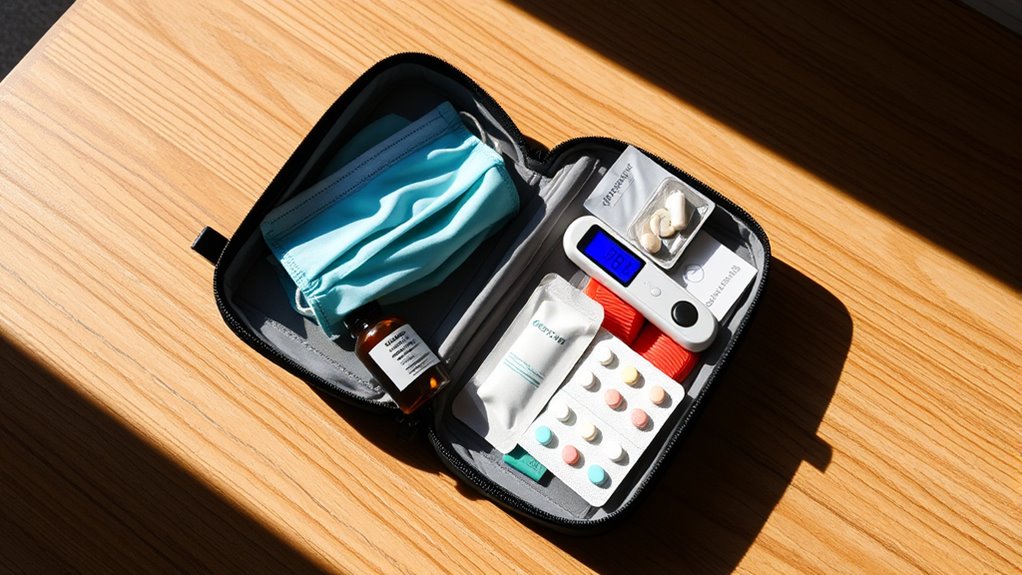
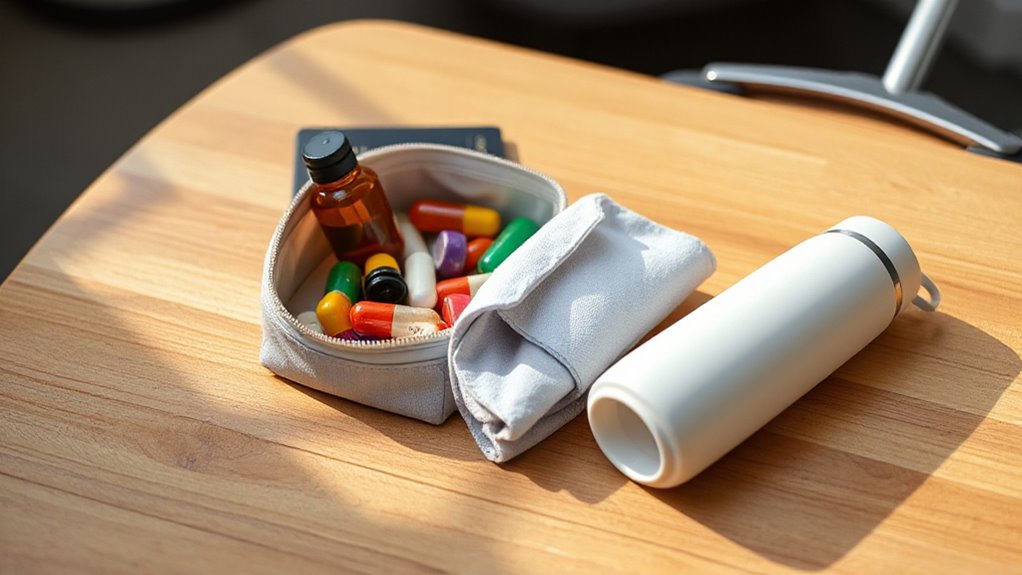
Are you prepared for unexpected health issues while traveling? Having a well-stocked health kit can make all the difference when illness or injury strikes away from home. The first step is ensuring your kit includes proper medication storage. You want to keep your medicines in a cool, dry place, protected from excessive heat or moisture. Consider using small, airtight containers or pill organizers to keep everything organized and prevent spills. If you’re carrying prescription medications, pack enough for your entire trip, plus a little extra in case of delays. Always carry copies of your prescriptions, just in case you need to replace them unexpectedly. Remember, some medications can be sensitive to temperature, so avoid storing them in your luggage’s outer pockets or in direct sunlight. Instead, keep them close to your body or in your carry-on bag where temperatures are more stable.
In addition to medication storage, knowing first aid basics is essential. Your travel health kit should contain items like adhesive bandages in various sizes, antiseptic wipes, antibiotic ointment, and sterile gauze. These basics help you address minor cuts, scrapes, or burns immediately, preventing infection and reducing discomfort. Including a pair of tweezers can help remove splinters or debris from wounds, while scissors can cut tape or clothing if necessary. Don’t forget to pack pain relievers like acetaminophen or ibuprofen, and any allergy medications you might need. Having these essentials on hand allows you to manage common ailments without panicking or seeking urgent care for minor issues. Additionally, understanding nanotechnology applications can be beneficial for future medical innovations, such as more effective drug delivery systems or advanced wound dressings.
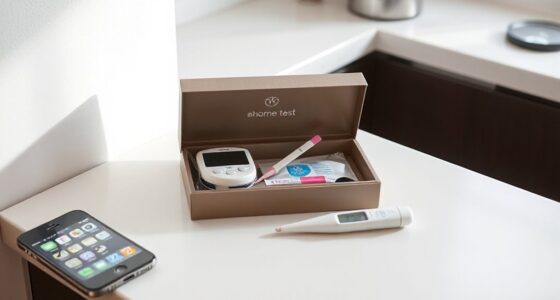
Think about also including a digital thermometer to monitor fevers, and a small first aid manual for quick reference. It’s a good idea to familiarize yourself with basic first aid procedures before your trip, so you’re confident in applying these supplies correctly. Keeping your supplies organized in a dedicated, portable container makes it easier to access what you need quickly. Whether you’re hiking, exploring a new city, or relaxing on the beach, a compact health kit with proper medication storage and first aid basics can save you time, money, and unnecessary stress. It’s not just about prevention but being ready to respond effectively should something happen. With a little planning and attention to detail, you can handle minor health issues confidently, allowing you to focus on enjoying your trip without worry.
Frequently Asked Questions
How Do I Choose Travel-Sized Health Products?
When choosing travel-sized health products, look for travel-sized toiletries that meet airline regulations and fit easily in your bag. Opt for compact first aid kits with essentials like bandages, antiseptic wipes, and pain relievers. Consider your specific needs, such as allergy medication or vitamins, and select smaller versions for convenience. Prioritize lightweight, multi-purpose items to save space and make sure you’re prepared for minor health issues while on the go.
Are Natural Remedies Effective for Travel Ailments?
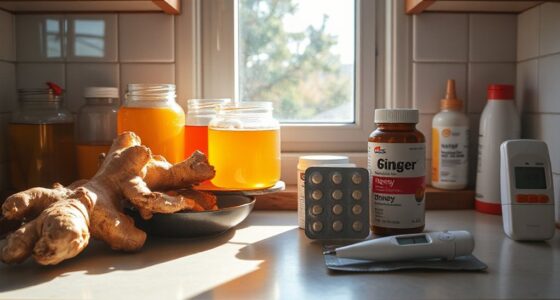
Think of herbal supplements and home remedies as your travel’s secret garden. They can be effective for minor ailments like headaches or digestion, but aren’t always a cure-all. While many find relief in natural remedies, their effectiveness varies and scientific backing isn’t always strong. Use them as complementary options, not replacements for professional medical advice, and always check for allergies or interactions before packing herbal supplements in your travel kit.
What Should I Include for Children’s Travel Health?
When packing a travel health kit for children, prioritize child safety by including pediatric vitamins to support their immune system. Always carry child-safe medications, a thermometer, and bandages. Consider natural remedies for common ailments, but consult your pediatrician first. Keep a list of emergency contacts and any allergies. Ensuring these essentials are handy helps keep your little one safe, healthy, and comfortable during your trip.
How Often Should I Replace Expired Medicines?
You should replace expired medicines as soon as you notice the medication has passed its expiration date. Medication expiration affects medicine safety, reducing effectiveness and potentially causing harm. Regularly check your travel kit and discard any expired medicines promptly. To stay safe, restock with fresh supplies before your trip, ensuring you’re always prepared with safe, effective medications. Never use expired medicines, especially when traveling with children.
Can I Pack Liquids in Carry-On Luggage?
Yes, you can pack liquids in your carry-on luggage, but you need to follow TSA liquid rules. Use travel container tips like transferring liquids into small, clear, 3.4-ounce bottles and placing them in a quart-sized bag. This makes it easier to pass through security. Remember, all liquids must adhere to TSA regulations, so double-check your containers before packing to avoid delays.
Conclusion
Packing your travel health kit is like building a sturdy shield for your journey. With these affordable essentials, you’ll be ready to face any bumps along the road, keeping yourself well and worry-free. Think of it as your personal safety net, always within reach. So, gear up with these simple items, and turn your travel experience into a smooth sailing adventure—protected, prepared, and ready for anything that comes your way.