Choosing an expensive private school doesn’t guarantee success, as tuition costs don’t always reflect quality or future achievements. While private schools often offer smaller classes and extensive extracurriculars, public schools can provide excellent opportunities too, especially with community support and specialized programs. Your child’s motivation, family involvement, and available resources matter more than the school’s price tag. Keep exploring to discover how different options can best support your child’s path to success.
Key Takeaways
- Higher tuition in private schools does not guarantee better academic outcomes or long-term success.
- Public schools can provide quality education and opportunities without the high costs.
- Success depends on individual motivation, family support, and available programs, regardless of school type.
- Extracurricular opportunities and class sizes vary more by school quality than by private or public status.
- Choosing the right school involves considering local options, resources, and how students engage with the education.
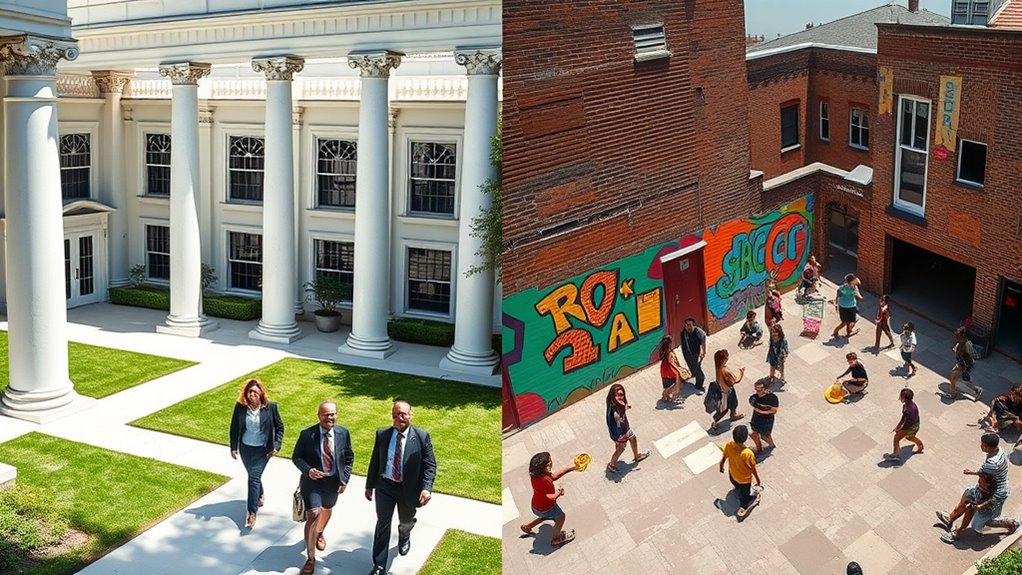
Have you ever wondered how private and public schools compare? When you’re trying to decide which type of school is best for you or your child, one of the first considerations often revolves around tuition affordability. Private schools tend to have higher tuition costs, which can be a significant barrier for many families. However, some believe that the investment might lead to better opportunities or outcomes. On the other hand, public schools are funded by taxes, making them tuition-free or very low-cost, which can be a relief financially. But, the question remains: does paying more automatically translate to a better education or increased chances of success?
One key aspect to consider is extracurricular opportunities. Private schools often tout their extensive programs, like advanced arts, sports, and academic clubs, which they argue help students develop well-rounded skills. These schools usually have smaller class sizes, allowing for more personalized attention and the chance to participate actively in various activities. Such involvement can foster leadership, discipline, and confidence—traits that are valuable for future success. Conversely, public schools may have more limited extracurricular options due to larger class sizes and fewer resources. However, some public schools excel in particular areas or have partnerships with local organizations that offer rich extracurricular programs. The availability of these opportunities can vary greatly depending on the school district and community support. Additionally, Free Floating educational environments, like outdoor or experiential learning spaces, are becoming more common and can enhance student engagement outside traditional classroom settings.
While private schools are often associated with a more rigorous academic environment, that doesn’t guarantee success after graduation. Success depends on many factors, including individual motivation, family support, and personal goals. Private schools can provide a structured environment with smaller classes and dedicated teachers, but public schools are equally capable of nurturing talented students, especially when families are actively involved. It’s also worth noting that some public schools offer specialized programs, like magnet schools and academies, which can provide a level of academic challenge comparable to private institutions.
Ultimately, whether a private or public school is better depends on your priorities, resources, and the specific options available in your area. Higher tuition doesn’t necessarily mean a better chance at success, nor does a free public education mean fewer opportunities. Both types of schools have strengths and limitations, and success often hinges on what you or your child make of the educational experience. Balancing the costs with the extracurricular opportunities and academic offerings can help you make a choice that aligns with your goals and circumstances.
Frequently Asked Questions
Do Private Schools Have Higher College Acceptance Rates Than Public Schools?
Yes, private schools often have higher college acceptance rates than public schools because of their resources, smaller class sizes, and dedicated college counseling. You should consider tuition affordability and financial aid availability, as private schools can be costly. Many private institutions offer generous financial aid packages, making them accessible for talented students. This support can boost your chances of college acceptance, but weigh the costs and aid options carefully.
How Do Extracurricular Opportunities Compare Between Private and Public Schools?
You’ll find private schools often offer more extensive extracurricular opportunities, including advanced arts programs and top-tier sports facilities, giving you more ways to explore your interests. Public schools may have fewer resources, but they still provide meaningful activities. Your experience depends on the specific school, but private institutions typically invest more in extracurriculars, helping you develop skills, leadership, and passions that can boost your college applications and future success.
What Is the Impact of Class Size on Student Performance?
Smaller class sizes boost student performance by increasing student engagement, allowing you to receive more personalized attention from teachers. When classes are smaller, you can participate more actively, ask questions, and get quicker feedback. Larger classes often lead to less interaction and decreased motivation. So, if you’re in a setting with reduced class sizes, you’re likely to stay more engaged and perform better academically, boosting your overall success.
Are Private School Teachers More Qualified Than Public School Teachers?
You might think private school teachers are better qualified, but that’s not always the case. While private schools often offer higher salaries, attracting highly qualified educators, public school teachers can be just as skilled, especially with rigorous training and certifications. Teacher qualifications vary widely, and salary disparities don’t guarantee quality. Ultimately, dedication and effective teaching matter more than the school’s price tag or perceived prestige.
How Do Social Environments Differ Between Private and Public Schools?
In private schools, you’ll notice a more controlled social environment with peer interactions often influenced by a specific culture or background, whereas public schools typically offer a greater diversity of students, exposing you to a wider range of perspectives. This diversity fosters richer peer interactions, encouraging you to adapt and grow socially. Public schools tend to be more inclusive, helping you develop empathy and understanding across different social and cultural groups.
Conclusion
Ultimately, choosing between private and public schools is like picking a seed—you hold the power to nurture it with your effort and passion. Expensive schools may seem like a golden key, but success blooms from your dedication, not just the lock you choose. Like a garden, your future depends on the care you give. No matter the path, your perseverance is the sunlight that helps your dreams grow into a vibrant, flourishing tree.