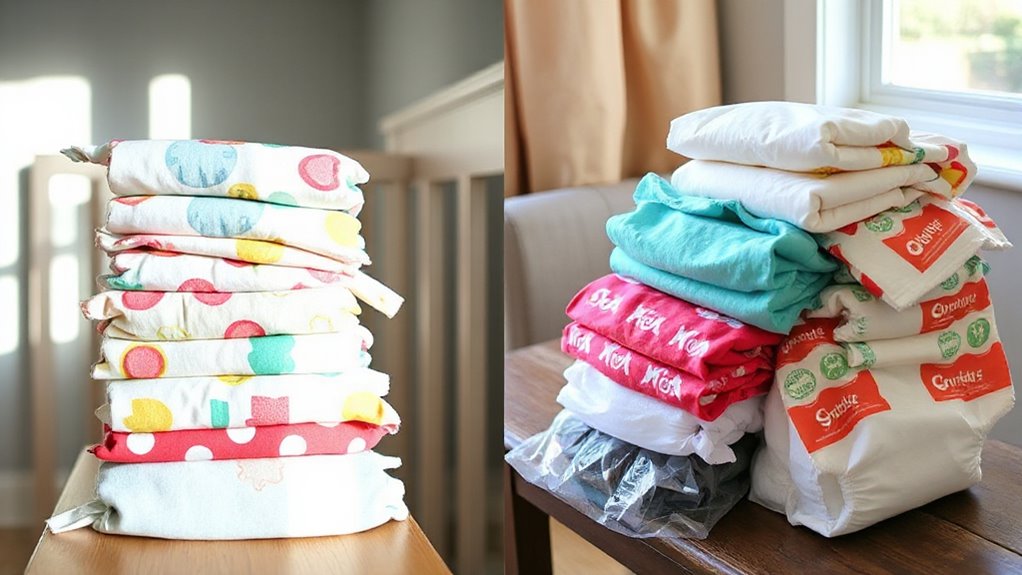

Choosing cloth diapers can save you money in the long run and help reduce environmental impact, but they do require regular laundry, which can feel time-consuming. If you’re okay with washing and want a sustainable option, the savings and eco benefits may outweigh the inconvenience. However, if you prefer convenience, disposables might suit your lifestyle better. To discover how to balance these factors and make the best decision for your family, keep exploring how each option fits your routines.

Get your next haul delivered free — and shop member deals
- Fast, free delivery on millions of items
- Access to Prime Big Deal Days deals on October 6–7
- Prime Video, Amazon Music and more included
Key Takeaways
- Cloth diapers have higher upfront costs but save money long-term due to reusability across multiple children.
- They require regular laundry, which adds time, energy, and water costs, potentially offsetting savings.
- Disposables are more convenient but generate significant landfill waste and recurring expenses.
- For eco-conscious families, cloth diapers offer environmental savings that may justify laundry efforts.
- Overall savings depend on diaper usage frequency, laundry efficiency, and personal priorities on convenience and sustainability.

Choosing between cloth diapers and disposables can markedly impact your baby’s comfort, your budget, and the environment. When evaluating your options, it’s important to consider eco friendly options, which often appeal to parents aiming to reduce their carbon footprint. Cloth diapers are reusable, made from natural fabrics like cotton, bamboo, or hemp, making them a sustainable choice. They tend to be gentler on your baby’s skin, especially when it comes to diaper rash prevention, because you can select fabrics that are free from chemicals and fragrances commonly found in disposables. This can be especially beneficial if your little one has sensitive skin or frequently suffers from diaper rash. Additionally, many cloth diaper brands now incorporate eco-friendly features, such as organic materials and biodegradable inserts, further reducing environmental impact.
Cloth diapers are eco-friendly, gentle on skin, and reusable, making them a sustainable choice for your baby.
However, cloth diapers do require a commitment to laundry. You’ll need to wash them regularly, often every couple of days, which involves using water, detergent, and energy. This extra laundry might seem like a hassle, but many parents find that it’s a manageable routine once they’re accustomed to it. Plus, modern cloth diapers are designed to be easy to clean and fast-drying, making laundry less of a burden. On the other hand, disposable diapers are incredibly convenient. You simply change them out as needed and toss them away, saving time and effort. But their disposability comes at a cost—both financially and environmentally. Most disposables aren’t biodegradable and can take hundreds of years to decompose, contributing considerably to landfill waste. Using smart home technology such as automated laundry systems could help streamline the laundry process for cloth diaper users.
Cost is another vital factor. While cloth diapers often require a higher upfront investment—covering purchase, accessories, and laundry supplies—they can be reused for multiple children, making them more economical in the long run. Disposables, by contrast, might seem cheaper initially but add up quickly over months and years, especially if you have a high-usage baby. Environmental concerns often influence parents’ decisions, too. Many prefer cloth diapers because they considerably reduce waste and lessen pollution, aligning with eco friendly options. Yet, some parents appreciate the convenience of disposables, especially when traveling or during busy periods.
Ultimately, whether the savings outweigh the laundry depends on your lifestyle, values, and willingness to manage laundry. If you prioritize eco friendliness and want to prevent diaper rash with natural, chemical-free options, cloth diapers are a compelling choice. If convenience and minimal maintenance are more important, disposables might suit your needs better. Either way, understanding these trade-offs helps you make a decision aligned with your priorities and your baby’s comfort.
As an affiliate, we earn on qualifying purchases.
Frequently Asked Questions
How Often Should Cloth Diapers Be Changed Compared to Disposables?
You should change cloth diapers every 2-3 hours to prevent leaks and maintain diaper absorption, similar to disposables. Keep an eye on diaper sizing to verify a proper fit, which also helps with absorption and comfort. If your baby has a bowel movement, change the cloth diaper promptly. Regular changes minimize rashes and keep your baby comfortable, making sure both types of diapers serve their purpose effectively.
Are Cloth Diapers Suitable for Overnight Use?
Think of cloth diapers as your child’s cozy night armor. They’re suitable for overnight use when you choose ones with excellent nighttime absorbency and a snug diaper fit. Just like a well-fitted suit keeps everything in place, a good fit prevents leaks. Opt for thicker inserts or double-layered cloth to boost absorbency, ensuring your little one stays dry and comfortable all night long.
What Are the Environmental Impacts of Cloth Versus Disposable Diapers?
You’ll find that cloth diapers have a lower environmental impact overall due to their biodegradability comparison, breaking down faster in landfills. They also have a smaller manufacturing carbon footprint since they reuse materials, unlike disposables that require continuous production. While disposables contribute more waste and pollution, cloth diapers, when used responsibly and washed efficiently, help you reduce your ecological footprint markedly.
Can Cloth Diapers Cause Diaper Rash More Than Disposables?
Cloth diapers don’t necessarily cause more diaper rash than disposables, but skin sensitivity plays a big role. You might notice a higher rash frequency if your baby’s skin reacts to certain fabrics or detergents used on cloth diapers. Without proper cleaning and frequent changing, cloth can trap moisture, leading to irritation. However, with attentive care, cloth diapers can be gentle and even reduce rash risks compared to disposables.
How Do Diaper Costs Compare Over the First Year of Use?
Over the first year, cloth diapers often cost less than disposables, especially if you reuse them and wash frequently, saving you money in the long run. You might notice diaper odor lessening with cloth, and fabric softness keeps your baby comfortable. While laundry increases, the savings on disposables add up, making cloth a budget-friendly choice that also benefits your baby’s skin and comfort.
As an affiliate, we earn on qualifying purchases.
Conclusion
So, when it comes to saving money, cloth diapers might seem appealing, but do you really want to spend your time on extra laundry? Disposables offer convenience, but can you justify the ongoing costs? Ultimately, it’s about what fits your lifestyle and values. Are you willing to trade a bit of extra laundry for the environmental benefits and savings cloth diapers can provide? The choice is yours—what feels right for your family?
As an affiliate, we earn on qualifying purchases.
As an affiliate, we earn on qualifying purchases.
Evergreen bestsellers Picks
bestsellers
As an affiliate, we earn on qualifying purchases.