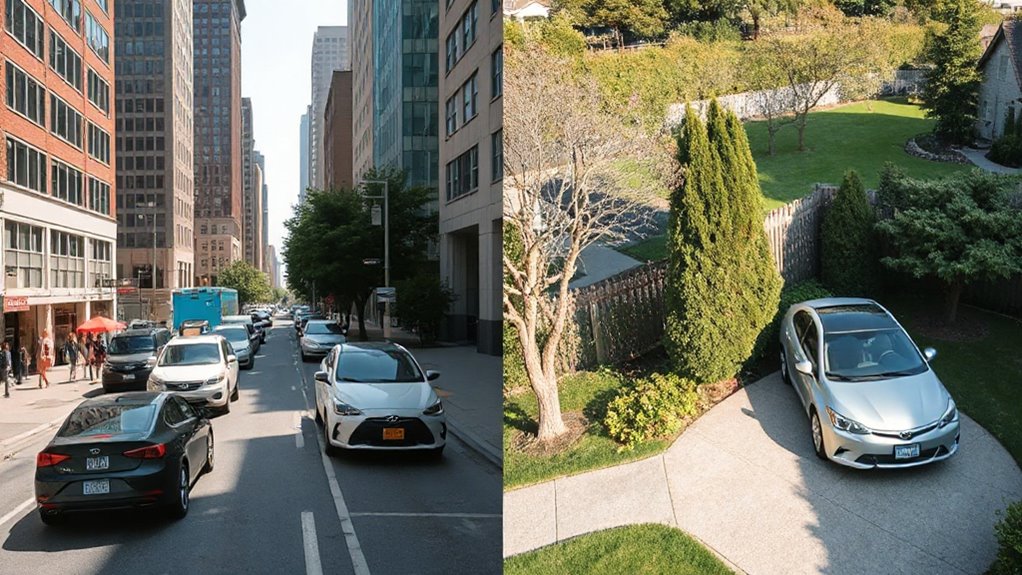

Owning a car in the city usually costs more because of higher parking fees and insurance premiums, especially in busy areas. Suburban drivers often save money on parking and insurance but might face higher fuel and maintenance costs due to longer commutes. Your total expenses depend on how often you drive, parking situation, and insurance choices. If you’re curious about which environment truly saves you more, there’s more to discover as you explore these factors carefully.

Get your next haul delivered free — and shop member deals
- Fast, free delivery on millions of items
- Access to Prime Big Deal Days deals on October 6–7
- Prime Video, Amazon Music and more included
Key Takeaways
- Parking fees tend to be higher in city centers, increasing overall car ownership costs compared to suburbs.
- Urban areas generally have higher insurance premiums due to increased theft and accident risks.
- City driving involves more stop-and-go traffic, leading to higher fuel consumption and vehicle wear.
- Suburban residents often face longer commutes, raising fuel and maintenance costs despite lower parking and insurance fees.
- Public transportation options in cities can reduce reliance on personal vehicles, potentially lowering ownership expenses.

Have you ever wondered what it truly costs to own a car? When weighing the expenses of city living versus suburban life, many factors come into play, especially parking fees and insurance premiums. In the city, parking fees can eat into your budget daily, with metered parking, parking garages, and permit costs adding up quickly. If you frequently park downtown or near popular spots, you might spend a considerable portion of your monthly budget just to keep your car parked. In contrast, suburbs often offer more free or inexpensive street parking and dedicated driveways or garages, which can drastically lower your parking expenses. So, if parking costs are a concern, living outside the city might save you hundreds over the course of a year.
Insurance premiums also differ considerably between city and suburban areas. Urban environments tend to have higher premiums because of increased risks, such as theft, vandalism, and accidents caused by traffic congestion. Insurance companies see city drivers as more prone to claims, so they charge more to offset potential payouts. Conversely, suburban drivers generally face lower premiums due to reduced risks and less dense traffic. While this isn’t a rigid rule—your driving history, car type, and coverage choices matter—it’s typical to see noticeable differences in insurance costs depending on your location. If saving on insurance premiums is a priority, living in the suburbs might give you a financial edge.
Beyond parking fees and insurance premiums, other city-related costs can impact your overall expenses. For example, city streets are often more congested, leading to more frequent stop-and-go driving, which can increase fuel consumption and wear on your vehicle. Meanwhile, suburban roads tend to be less crowded and more straightforward, potentially saving you money on fuel and maintenance over time. Additionally, urban infrastructure plays a role in the overall driving experience and costs, influencing factors like traffic flow and road quality. However, you might find that city living offers more public transportation options, which could reduce the need for a car altogether, cutting down on all these expenses.
On the flip side, suburban areas often mean longer commutes, which can increase fuel costs and vehicle wear and tear. This might offset some savings from lower parking fees and insurance premiums. Ultimately, whether city or suburb is cheaper for you depends on your specific circumstances—how often you drive, where you park, your insurance rates, and your commuting distance. But understanding these costs helps you make an informed decision. By weighing the expenses like parking fees and insurance premiums carefully, you’ll get a clearer picture of which environment suits your budget best.
Frequently Asked Questions
How Does Parking Cost Differ Between City and Suburban Areas?
You’ll find parking fees are generally higher in city areas compared to suburbs. In cities, street parking often costs more and can be hard to find, leading to parking fees that add up quickly. Suburban areas usually offer more free or cheaper parking options, including ample street parking or dedicated lots. So, if you’re looking to save on parking costs, suburbs tend to be more affordable and convenient.
What Are the Insurance Premiums Like in Urban Versus Rural Settings?
You’ll find that insurance premiums in urban areas are typically higher—by about 20%—due to increased risks from congestion and theft. However, urban safety features like surveillance systems and better emergency response can sometimes lead to insurance discounts. In rural settings, lower accident rates often mean cheaper premiums, but fewer safety measures can offset those savings. Overall, your location markedly impacts your insurance costs and potential discounts.
Do Maintenance Costs Vary Significantly Between City and Suburban Vehicles?
Maintenance costs can vary between city and suburban vehicles, often influenced by driving conditions and vehicle usage. City driving tends to cause more wear and tear, leading to higher maintenance costs, but frequent use might also reduce vehicle longevity. Suburban vehicles usually experience less stop-and-go driving, which can lower maintenance expenses and extend vehicle longevity. Keep in mind, regular upkeep is key to minimizing costs regardless of your location.
How Does Traffic Congestion Impact Fuel Efficiency in Cities?
Traffic congestion in cities reduces your fuel efficiency because stop-and-go traffic forces your engine to work harder. During peak hours, traffic patterns become unpredictable, causing longer idling times. Implementing congestion pricing can encourage you to avoid busy times or switch to public transportation, saving you money on fuel. Overall, heavy city traffic means you’ll burn more fuel, increasing your costs and impacting your vehicle’s performance.
Are There Tax Benefits for Car Ownership in Suburban Areas?
You’ll find that suburban areas often offer significant tax advantages and incentives for car owners, making your vehicle more affordable over time. These incentives can include property tax deductions, rebates, or special registration rates designed to encourage local driving. While city life might seem hectic, suburban incentives help keep your car costs in check, turning your vehicle into a surprisingly economical choice—almost like having a secret weapon for savings!
Conclusion
So, buckle up, because choosing between city and suburb isn’t just a decision—it’s the difference between living like royalty in a palace or barely surviving on a shoestring! If you think car costs are minor, think again. Your wallet will thank you (or curse you) for years to come. Whether you’re splurging in the city or scrimping in the suburbs, know this: your car’s price tag might just be the biggest shocker of all!
Fall Picks
fall essentials
As an affiliate, we earn on qualifying purchases.