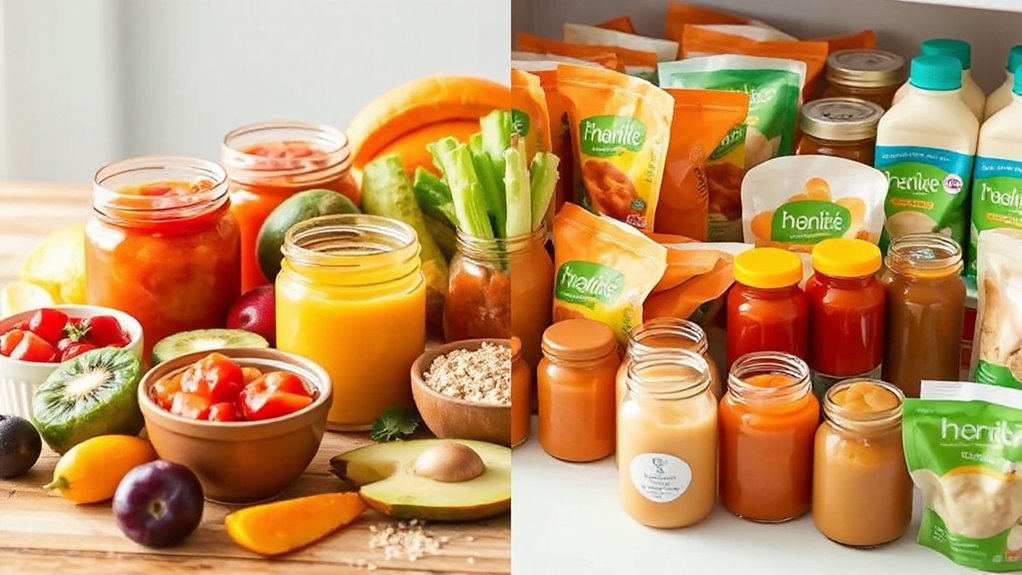

Making baby food at home can be healthier and cheaper since you control the ingredients, avoid additives, and select fresh, organic produce. It also allows you to customize meals to your baby’s dietary needs. Store-bought options offer convenience but may contain preservatives or fillers. Both methods can be safe if you follow proper hygiene and safety practices. To discover practical tips on choosing the best option for your family, keep exploring these key factors.
Key Takeaways
- Homemade baby food allows control over ingredient quality, reducing additives and preservatives, making it potentially healthier.
- Preparing your own baby food can be more cost-effective than buying commercial options regularly.
- Store-bought baby food offers convenience and saves time, especially for busy parents or caregivers.
- Making baby food at home enables customization to meet specific dietary needs and preferences.
- Both methods can be safe and nutritious if proper food safety practices are followed.
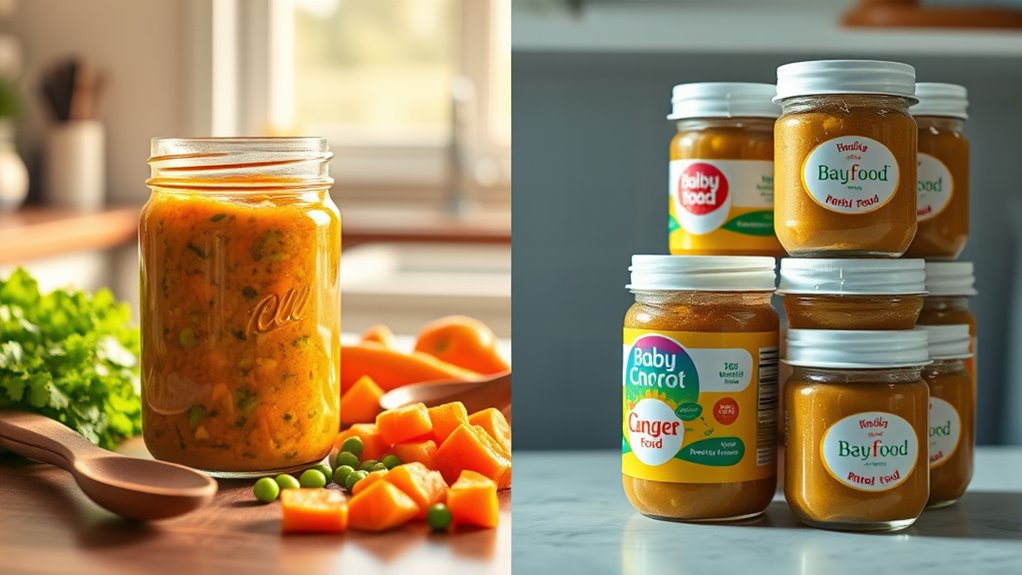
Are you wondering whether to make your baby’s meals at home or buy them pre-packaged? This is a common dilemma for many parents who want to provide the best for their little ones. When deciding, one of the most important factors to consider is food safety. Homemade baby food allows you to control how it’s prepared, stored, and served, reducing the risk of contamination. You can ensure that all utensils and surfaces are thoroughly cleaned, which is crucial because babies’ immune systems are still developing. With store-bought options, you have to trust that the manufacturer follows strict safety protocols, but recalls and contamination issues still happen. So, if food safety is your top priority, making your own baby food might give you peace of mind, knowing exactly what’s going into each meal.
Homemade baby food offers better control over safety and cleanliness, reducing contamination risks.
Ingredient quality is another key aspect. When you prepare baby food at home, you select fresh, high-quality ingredients. You can buy organic produce and avoid additives or preservatives often found in commercial products. This means you’re offering your baby pure, wholesome foods that are free from unnecessary chemicals. On the other hand, store-bought baby foods are convenient and often undergo extensive processing to ensure shelf stability. While they usually list ingredients transparently, some products include fillers, thickeners, or flavorings that you might not want in your baby’s diet. If ingredient quality is a top concern, making your own meals allows you to choose the best ingredients and prepare meals tailored to your baby’s needs and preferences.
However, it’s worth noting that homemade baby food requires time and effort. You need to plan, shop, prepare, and store the food properly to maintain its freshness and nutritional value. Freezing portions in advance can help save time, but you still have to be diligent about food safety during storage. Store-bought options, while less customizable, provide quick, ready-to-eat solutions that are convenient for busy parents. They’re designed to meet safety standards and are often fortified with vitamins and minerals, which can support your baby’s growth.
In the end, whether you choose DIY or store-bought, prioritizing food safety and ingredient quality is essential. Making your own gives you control and confidence in what your baby eats, but store-bought options can be a practical, safe alternative when you’re pressed for time. Both choices can fit into a healthy feeding routine, as long as you stay mindful of safety and quality standards.
Frequently Asked Questions
How Long Can Homemade Baby Food Be Stored Safely?
You can typically store homemade baby food safely for up to 48 hours in the refrigerator, following proper refrigeration guidelines. Make sure to store it in airtight containers and label them with the date. For longer storage, freeze portions for up to 1-3 months. Always check the food’s smell, texture, and appearance before feeding your baby, and discard any leftovers that seem questionable to guarantee safety.
Are Store-Bought Baby Foods Organic or Non-Gmo?
Think of store-bought baby foods as a carefully packaged gift; some are organic and non-GMO, while others aren’t. You’ll want to check labels for organic certification to verify no harmful chemicals, and look for non-GMO symbols if you’re concerned about genetically modified ingredients. Not all store-bought options are organic or non-GMO, so reading labels helps you select the safest, healthiest options for your little one.
What Are the Common Allergens in Store-Bought Baby Foods?
You should watch out for common allergens in store-bought baby foods, which often include ingredients like dairy, soy, wheat, and nuts. These products can contain pesticide residues and food additives, potentially triggering allergic reactions or sensitivities. Always check labels carefully, especially if your baby has known allergies. Opting for organic options can reduce pesticide exposure, but remain vigilant about added preservatives and flavorings that might affect your baby’s health.
How Do I Ensure Homemade Baby Food Retains Nutrients?
To guarantee homemade baby food retains nutrients, focus on nutrient preservation by choosing gentle cooking methods like steaming or boiling briefly. Avoid high heat and prolonged cooking, which can destroy vitamins. Use quick blending to maintain the food’s natural texture and nutrients. Store leftovers properly in airtight containers and serve fresh whenever possible. These steps help you maximize the nutritional value and provide healthy meals for your baby.
Is There a Risk of Contamination With Homemade Baby Food?
Yes, there’s a risk of contamination with homemade baby food if you don’t follow proper food safety practices. To minimize contamination risks, always wash your hands, thoroughly clean utensils, and use fresh ingredients. Store the food in airtight containers in the refrigerator and consume it within 24-48 hours. Avoid leaving homemade baby food at room temperature for extended periods, as this increases the chance of bacterial growth and contamination.
Conclusion
Choosing between DIY baby food and store-bought options isn’t just a simple decision—it’s like revealing the secret to your baby’s health and happiness. Making your own can save you a fortune and guarantee pure, nutritious meals. But store-bought is quick and convenient when time’s tight. Ultimately, you hold the power to shape your little one’s future—so why not give them the freshest, most loving food possible? Your kitchen can be the birthplace of a thriving, healthy baby!