
Imagine transforming your garden into a high-tech oasis where plants thrive effortlessly. With smart irrigation systems, soil sensors, and automated greenhouses, you can optimize care and minimize effort. But how do you start integrating these advanced tools into your gardening routine? Understanding the right technologies and how to implement them can make all the difference. Let’s explore the essential components that can elevate your gardening experience.
Key Takeaways
- Integrate soil moisture sensors to monitor water levels and optimize irrigation schedules based on real-time data for healthier plants.
- Use weather stations to track environmental conditions, adjusting care routines for temperature, rainfall, and UV exposure to enhance plant growth.
- Implement smart greenhouse systems to control temperature, humidity, and lighting automatically, allowing for year-round cultivation of various plants.
- Centralize device management through mobile apps or voice assistants to streamline control of irrigation, lighting, and notifications for garden maintenance.
- Embrace automated gardening tools and IoT technologies to simplify maintenance tasks, making gardening more accessible and enjoyable for all skill levels.
Understanding Smart Irrigation Systems
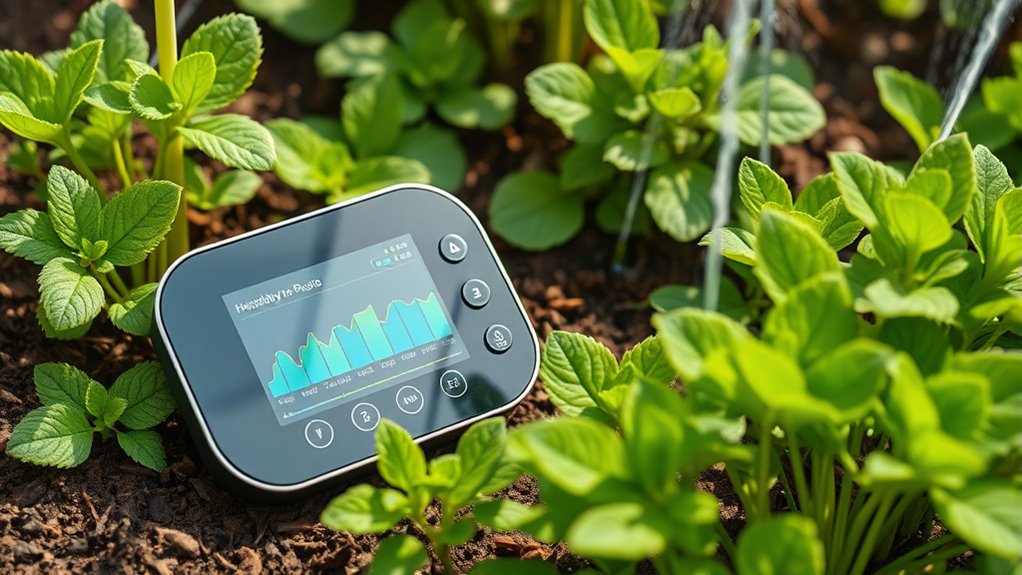
When you think about efficient gardening, smart irrigation systems stand out as a game-changer. These systems use soil moisture sensors to deliver water only when your plants need it, conserving water and reducing waste. By integrating real-time weather data, they automatically adjust watering schedules based on rainfall and temperature. You can easily control and monitor your irrigation system remotely via smartphone apps, ensuring your plants receive the right amount of water without the risk of overwatering or underwatering. This technology promotes healthier plants while supporting water conservation, especially in areas facing drought or hosepipe bans. Embracing smart irrigation not only simplifies your gardening routine but also contributes to a more sustainable environment. Additionally, understanding energy integration can enhance how your garden interacts with your home’s overall energy usage.
Harnessing Soil and Environmental Monitoring
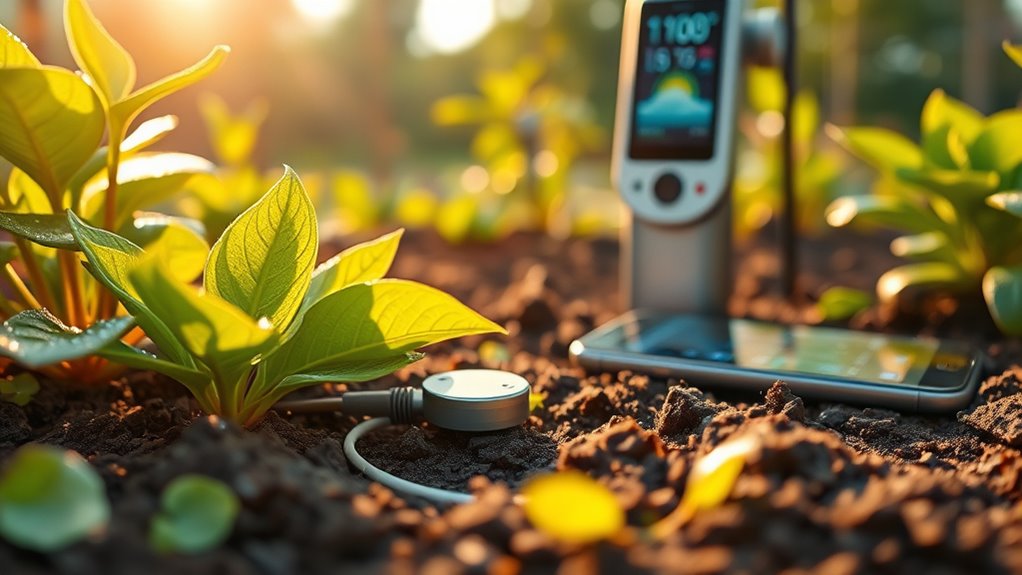
To create a thriving garden, you need to tap into the power of soil and environmental monitoring. By using soil sensors, you can gain insights into moisture levels, pH, and nutrients, ensuring your plants get exactly what they need. Plus, understanding weather impacts lets you adjust your care routine to optimize growth and health. Additionally, implementing advanced technology in gardening can enhance your overall experience, similar to how pinball machines showcase advanced technology and design.
Soil Sensor Benefits
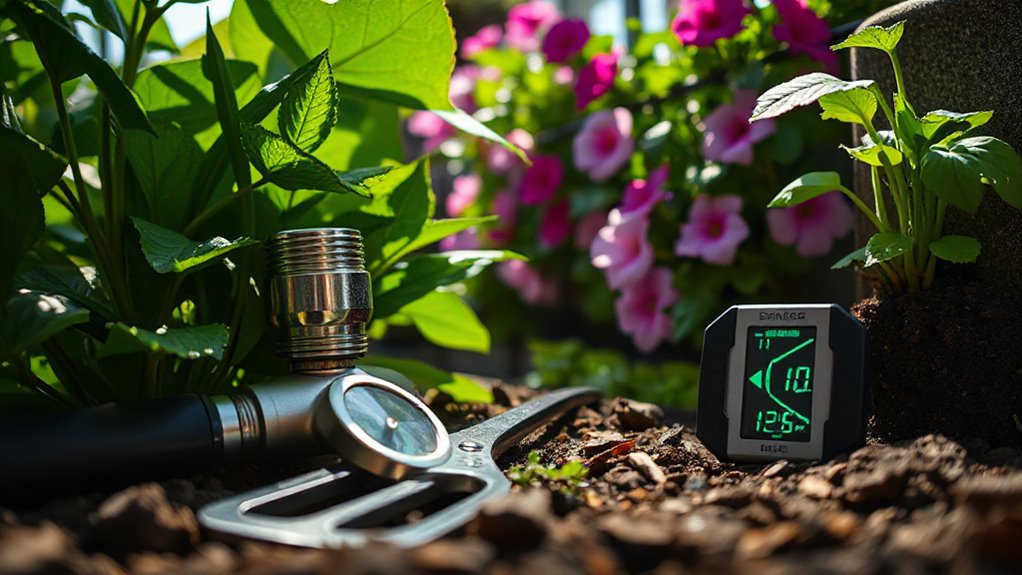
How can you guarantee your plants thrive while minimizing resource use? Soil sensors offer invaluable insights to help you achieve that balance. These devices measure moisture, pH, temperature, and nutrient levels, ensuring you provide the right care. By monitoring your soil conditions, you can tailor your watering and fertilization, preventing waste and plant stress. Here’s a quick breakdown of soil sensor benefits:
| Benefit | Description | Impact |
|---|---|---|
| Real-time Monitoring | Get instant feedback on soil conditions | Optimizes plant health |
| Data-driven Insights | Tailor care based on sensor readings | Reduces resource use |
| Stress Prevention | Avoid over or underwatering | Promotes plant vitality |
| Sustainable Practices | Efficiently manage resources | Supports eco-friendliness |
Implementing soil sensors helps you cultivate a thriving garden with minimal effort. Additionally, using sustainable practices can further enhance your garden’s efficiency and health.
Weather Impact Analysis
Understanding how weather impacts your garden is essential for optimizing plant health and resource use. By harnessing soil and environmental monitoring tools, you can gain valuable insights into conditions affecting your plants. Soil sensors track moisture, pH, and temperature, ensuring your plants receive the right care when needed. Weather stations monitor temperature, rainfall, and UV rays, helping you anticipate changes that could stress your plants. This real-time data allows you to adjust your gardening practices accordingly, minimizing waste and maximizing efficiency. With these tools, you’ll not only create a healthier garden but also promote sustainability by using resources wisely. By understanding and responding to environmental fluctuations, you can cultivate a thriving garden that adapts to the weather. Additionally, sleep hygiene practices can enhance your overall well-being, allowing you to enjoy your gardening efforts even more.
Data-Driven Plant Care
While cultivating a thriving garden, leveraging data-driven plant care through soil and environmental monitoring can considerably enhance your success. By using soil sensors, you can track moisture, pH, temperature, and nutrient levels, ensuring your plants receive the precise care they need. Weather stations help you understand external conditions like rainfall and UV rays, allowing you to adjust your practices accordingly. This data-driven approach not only minimizes plant stress but also supports sustainability by optimizing resource use. With smart plant monitors, you’ll receive real-time alerts on watering and fertilizing, making it easier to keep your garden healthy. Additionally, integrating energy-efficient cloud solutions can help you analyze and store your gardening data, leading to even more informed decisions. Embrace these tools to enhance your gardening experience and achieve ideal results effortlessly.
Utilizing Smart Plant Monitors
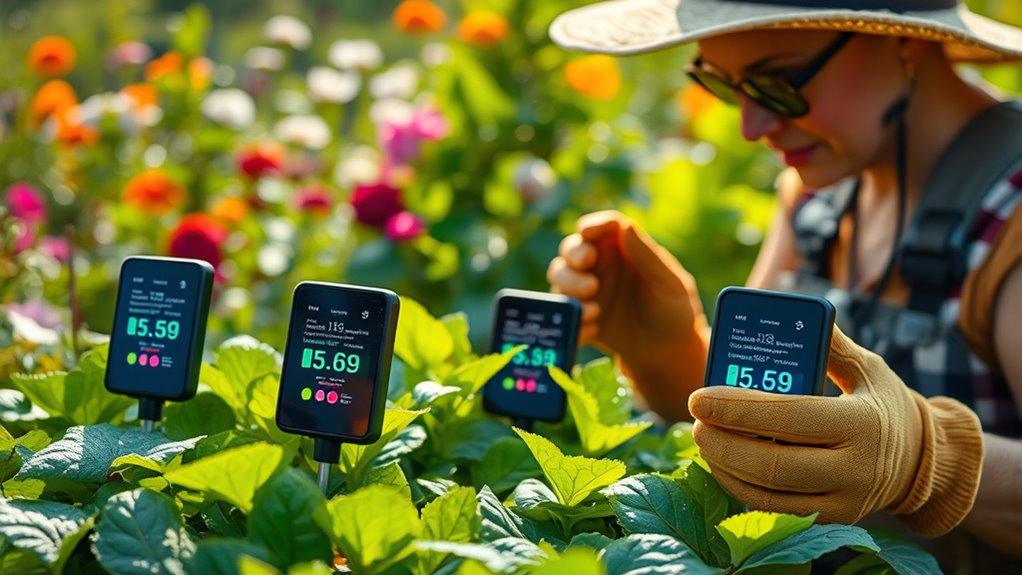
If you want to take the guesswork out of plant care, utilizing smart plant monitors can be a game changer. These devices provide real-time alerts on your plants’ watering, fertilizing, and pruning needs, making it easier for you to keep them healthy. By measuring soil moisture, sunlight exposure, temperature, and humidity, smart plant monitors give you essential insights tailored to your specific plants. Whether you’re a novice or a busy gardener, these tools streamline your care routine, ensuring your plants thrive. Plus, many monitors integrate with your smartphone, delivering notifications and updates right to your pocket. With smart plant monitors, you’ll maintain vibrant greenery and enjoy a flourishing garden without the stress of uncertainty. Additionally, incorporating eco-friendly practices can further enhance your gardening experience and promote sustainability.
Implementing Automated and Smart Greenhouses
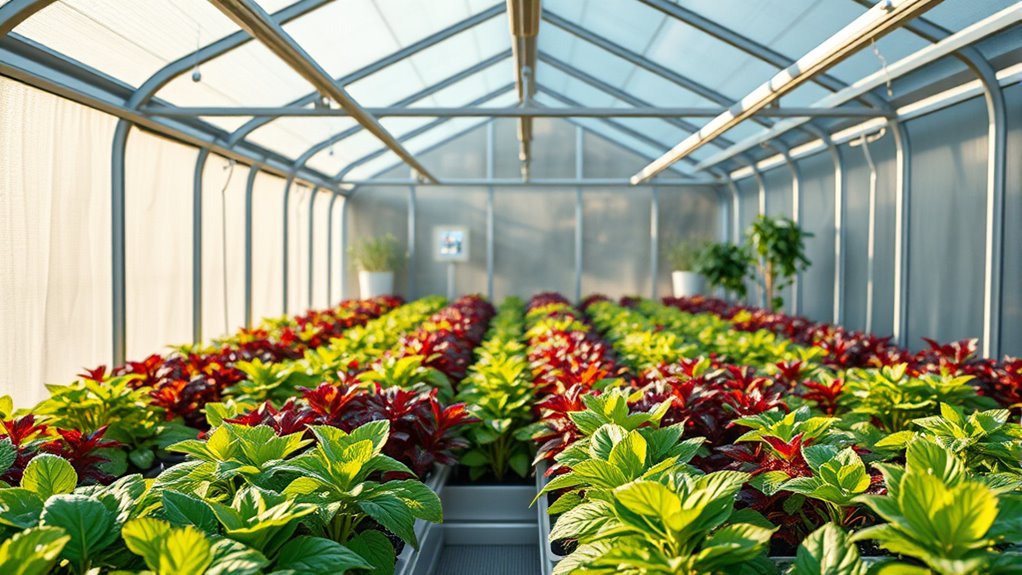
Smart plant monitors are just one way to enhance your gardening experience, but for those looking to take their cultivation efforts to the next level, implementing automated and smart greenhouses offers incredible advantages. These innovative systems let you control the growing environment precisely, ensuring ideal conditions for your plants year-round.
Here are three key benefits of smart greenhouses:
- Environmental Control: Regulate temperature, humidity, and lighting, regardless of external weather conditions.
- Remote Monitoring: Use IoT integration to monitor and adjust settings from your smartphone, ensuring your plants thrive even when you’re away.
- Increased Yields: Enjoy extended growing seasons and higher crop production with optimal care and attention.
Additionally, modern greenhouse technology incorporates smart appliances that can automate tasks, making gardening more efficient. With smart greenhouses, you can truly elevate your gardening game.
Integrating With Smart Home and Voice Control
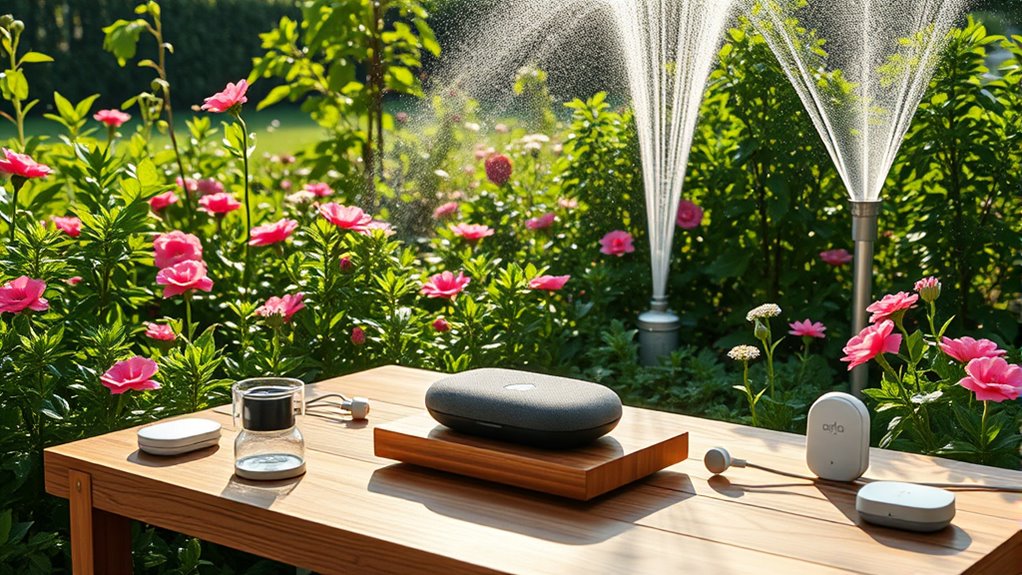
Integrating your smart garden with home automation and voice control makes managing your plants effortless. You can use voice commands to control irrigation systems, outdoor lights, and more, giving you hands-free convenience. Plus, centralized device management through your smartphone guarantees you remain connected to your garden, no matter where you are. Additionally, utilizing smart home technology can further enhance your garden’s efficiency and responsiveness to environmental changes.
Voice Command Convenience
As you embrace the convenience of voice commands in your gardening routine, you’ll find managing your outdoor space becomes effortlessly efficient. With the integration of smart home technology, you can control various garden elements hands-free. Here are three ways voice command convenience transforms your gardening experience:
- Irrigation Control: Adjust your watering schedule by simply asking your voice assistant to turn the system on or off based on real-time weather conditions.
- Outdoor Lighting: Set the mood or increase security by commanding your lights to turn on or off, creating a beautiful ambiance.
- Plant Care Notifications: Receive timely reminders for watering or fertilizing, ensuring your plants stay healthy without the hassle.
Additionally, smart wellness technology can help you monitor your garden’s health, allowing you to make informed decisions about plant care. Harnessing voice commands makes gardening more accessible and enjoyable!
Centralized Device Management
How can you simplify your gardening tasks while maximizing efficiency? By integrating your smart garden devices with your smart home system, you can streamline your gardening experience. Imagine controlling your irrigation system, outdoor lights, and other garden elements through voice commands with Amazon Alexa or Google Assistant. This hands-free convenience not only saves time but also makes gardening more accessible, especially if you have mobility limitations. Centralized control via smartphone apps allows you to manage multiple devices from one place, enhancing your garden management efficiency. You’ll easily adjust settings or monitor conditions, ensuring your plants thrive with minimal effort. Embracing this technology transforms your gardening routine, making it smarter and more adaptable to your needs. Additionally, tool maintenance is essential for ensuring that your smart devices function optimally throughout the gardening season.
Accessibility for Gardeners
What if you could manage your garden with just your voice? Integrating smart home technology and voice control makes gardening more accessible and enjoyable. You can effortlessly control irrigation systems, outdoor lights, and other devices without lifting a finger. This hands-free approach is especially beneficial for gardeners with mobility challenges. Here are three key benefits of voice integration:
- Convenience: Adjust your garden settings while cooking dinner or relaxing on the couch.
- Centralized Control: Use smartphone apps to manage all your garden devices from one place.
- Efficient Management: Receive real-time updates and alerts, allowing for timely care and maintenance.
With these tools, you’ll elevate your gardening experience and enjoy a thriving garden with ease.
Exploring Self-Contained Indoor Smart Gardens
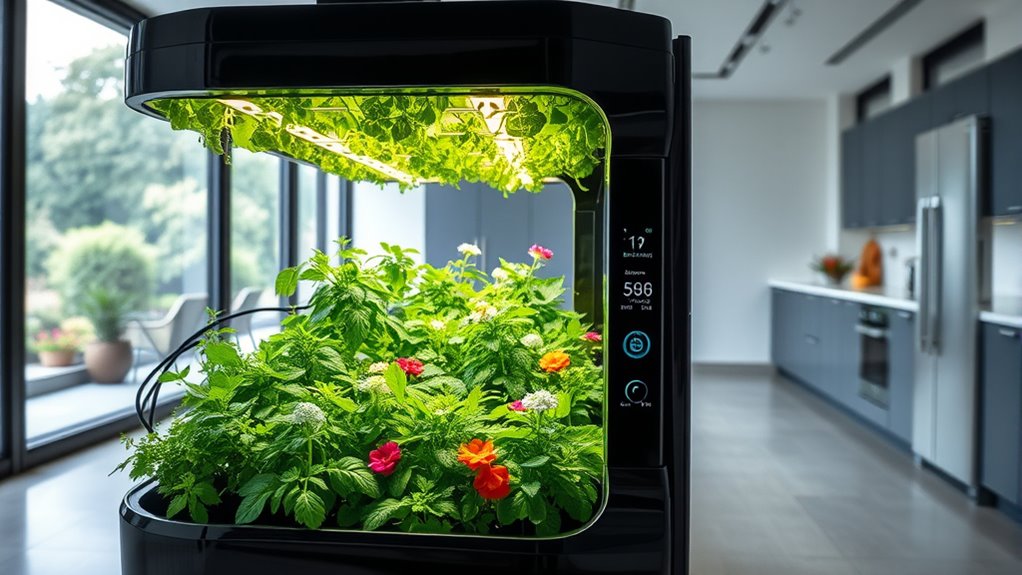
While you may think that indoor gardening requires a lot of effort, self-contained indoor smart gardens simplify the process considerably. These portable systems automatically manage light, watering, and nutrients, allowing you to grow herbs, vegetables, and flowers effortlessly. With energy-efficient LED lighting, your plants thrive indoors year-round without needing much intervention. The built-in water tanks sustain hydration for weeks, eliminating the hassle of daily watering. Plus, sensors monitor conditions to guarantee ideal growth, giving you peace of mind. You can enjoy fresh produce or beautiful blooms with minimal effort, making these smart gardens perfect for busy lifestyles. Embrace the convenience of technology and watch your indoor garden flourish!
Frequently Asked Questions
What Initial Investment Is Needed for a Smart Garden Setup?
To set up a smart garden, you’ll likely need an initial investment of around $200 to $1,500, depending on the technology you choose. Essential items include smart irrigation systems, soil sensors, and possibly a smart greenhouse. If you opt for advanced features like automated monitoring or integration with smart home systems, costs can rise. However, investing in these technologies can lead to long-term savings and healthier plants, making it worthwhile.
How Do I Choose the Right Plants for Smart Gardening?
Choosing the right plants for smart gardening’s not rocket science! Start by considering your climate and available light. Select plants that thrive in your environment, whether they’re herbs, vegetables, or flowers. Look for varieties that are low-maintenance and compatible with smart systems, like moisture sensors. Don’t forget to check growth habits and space requirements. By matching plants to your smart setup, you’ll guarantee a thriving garden without the guesswork!
Are There Maintenance Requirements for Smart Gardening Devices?
Yes, smart gardening devices do have maintenance requirements. You’ll need to regularly check and clean sensors and irrigation systems to ensure accurate readings and effective watering. Updating software and firmware is essential for peak performance. Additionally, monitor battery levels in devices and replace them as needed. Keep an eye on any potential blockages in watering systems to maintain efficiency. With proper care, your smart devices will thrive alongside your plants.
Can I Use Smart Garden Tools Without a Smartphone?
Sure, you can use smart garden tools without a smartphone, but why not just write your garden’s diary with a quill? In reality, while many devices are more effective with smartphone integration, some can operate independently. You’ll miss out on real-time updates and remote control, though. So, if you’re ready to forgo convenience and modernity for a retro experience, go right ahead! Just don’t expect your plants to appreciate the old-school vibes.
How Do Smart Gardens Impact Energy Consumption?
Smart gardens can notably reduce energy consumption by optimizing resource use. For instance, smart irrigation systems only water when plants need it, cutting down on water waste and the energy used for pumping. Automated lighting adjusts based on sunlight, ensuring you’re not using excess energy. Additionally, smart controls in greenhouses maintain ideal conditions efficiently, reducing heating and cooling demands. Overall, these technologies promote sustainability while keeping your garden thriving.
Conclusion
Creating a smart garden not only enhances your gardening experience but also brings nature closer to your tech-savvy lifestyle. Imagine lush plants thriving while you sip coffee, effortlessly controlled by your voice or a tap on your phone. With smart irrigation and monitoring tools, you’re not just planting seeds; you’re cultivating a sustainable future. As you watch your garden flourish, you’ll see how technology and nature can beautifully coexist, turning your space into a vibrant green oasis.