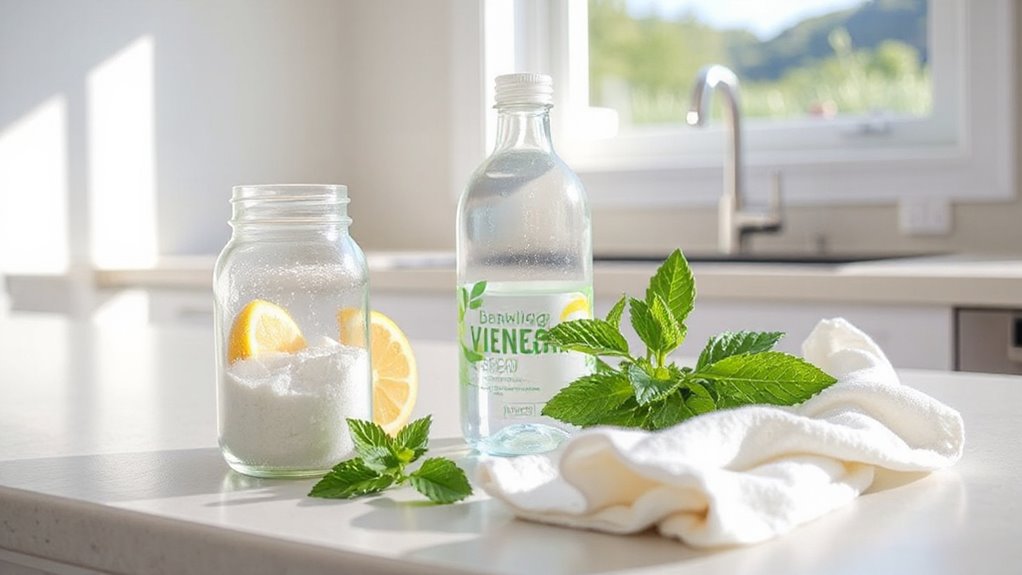

Did you know that Americans spend over $30 billion a year on cleaning products? It’s a staggering figure, especially when you can achieve the same results with simple household ingredients. By exploring affordable alternatives, you’ll not only save money but also create a healthier home environment. Curious about how vinegar, baking soda, and lemon juice can transform your cleaning routine? Let’s uncover these effective hacks together.
Key Takeaways
- Use a mixture of vinegar and water for an effective all-purpose cleaner that eliminates dirt and odors without harsh chemicals.
- Baking soda serves as a powerful stain remover and deodorizer, making it a cost-effective alternative to expensive cleaning products.
- Combine lemon juice with salt to tackle rust stains naturally and effectively, saving money on specialized cleaning solutions.
- Reusable microfiber cloths can be used over 300 times, providing an eco-friendly and economical cleaning option compared to disposable wipes.
- Incorporate steam cleaning for a chemical-free sanitizing method that reduces reliance on expensive cleaning supplies while maintaining a clean home.
The Power of Natural Cleaning Ingredients

When you want a clean home without the harsh chemicals, natural cleaning ingredients like vinegar, baking soda, and lemon juice can be your best friends. These ingredients effectively break down dirt and grime while being completely biodegradable, which means they’re safer for the environment. You can use vinegar as a deodorizer or surface cleaner, while baking soda works wonders for stain removal and scrubbing. Lemon juice’s acidic properties make it a natural disinfectant and degreaser, perfect for kitchens and bathrooms. By incorporating these natural cleaners into your routine, you not only save money but also reduce toxic waste in your home. Embracing these alternatives helps you create a healthier living space for you and your family. Additionally, using natural cleaning ingredients can also contribute to a more sustainable household, similar to the way reliable backup power solutions support environmental safety.
Cost-Effective Uses of Vinegar, Baking Soda, and Lemon Juice

How can you make the most of vinegar, baking soda, and lemon juice in your cleaning routine? Start by creating an all-purpose cleaner with equal parts vinegar and water. This works wonders on glass and countertops. For tough stains or odors, sprinkle baking soda on surfaces, then scrub with a damp cloth. It’s perfect for sinks and tubs. Lemon juice shines as a natural disinfectant; mix it with salt to tackle rust stains or use it in your kitchen to cut grease. You can also deodorize your fridge by placing an open box of baking soda inside. These simple ingredients not only save you money but also keep your home fresh and clean without harsh chemicals. Additionally, consider incorporating eco-friendly practices into your cleaning routine to further enhance sustainability.
Benefits of Microfiber and Reusable Cleaning Tools
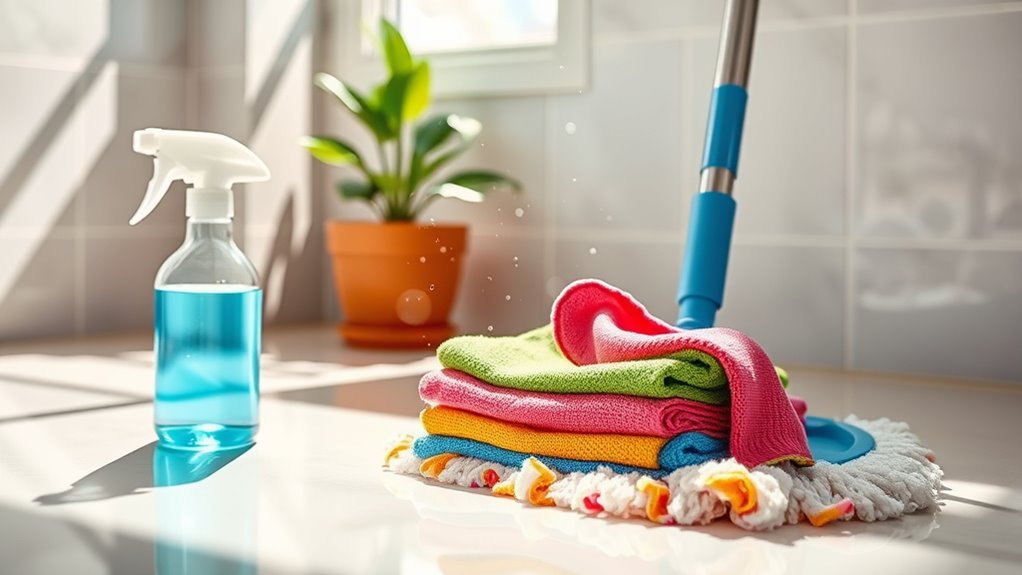
Microfiber and reusable cleaning tools are game-changers for your cleaning routine. They not only save you money over time, but they also help the environment by reducing waste and chemical usage. Plus, their effectiveness means you can tackle dirt and grime more efficiently, making your cleaning tasks quicker and easier. Incorporating personalized intervention strategies can further enhance your cleaning effectiveness, ensuring that you address specific cleaning challenges with tailored solutions.
Cost-Effective Cleaning Solutions
Although many people rely on disposable cleaning products for convenience, switching to microfiber and reusable cleaning tools can markedly reduce costs and waste. Microfiber cloths capture dirt and grime effectively, allowing you to clean surfaces without scratching them. You can use a single microfiber cloth over 300 times, making it incredibly economical compared to paper towels. Plus, these cloths often require just water or mild solutions, cutting down your need for chemical cleaners. Reusable mops and scrubbers further decrease your reliance on single-use items, saving you money in the long run. By regularly washing and maintaining these tools, you ensure their longevity and cleaning power, making them a smart investment for your cleaning routine. Additionally, using high-quality materials can enhance the effectiveness of your cleaning tools, leading to better results.
Environmental Impact Reduction
Why settle for disposable products when you can embrace microfiber and reusable cleaning tools that considerably reduce your environmental footprint? By choosing these options, you not only save money but also help the planet. Here are some key benefits:
- Microfiber cloths can be used over 300 times, cutting down on waste.
- Reusable mops and scrubbers replace single-use items, minimizing landfill contributions.
- Microfiber enhances cleaning with just water, reducing the need for chemical cleaners.
- Regular maintenance of these tools ensures durability and ongoing effectiveness.
Switching to microfiber and reusable tools is a simple yet impactful way to promote sustainability in your cleaning routine while keeping your home clean and safe. Additionally, investing in educational resources can help you maximize the effectiveness of your cleaning tools and techniques.
Enhanced Cleaning Efficiency
When you switch to microfiber and reusable cleaning tools, you’ll notice a significant boost in your cleaning efficiency. Microfiber cloths capture dirt and grime effectively, allowing you to clean surfaces without scratching them. Plus, one microfiber cloth can last for over 300 washes, making it a cost-effective choice. By using just water or mild solutions, you reduce the need for harsh chemicals, which is better for both your health and the environment. Reusable mops and scrubbers further cut down on single-use waste and costs. Regular washing keeps these tools in top shape, ensuring they maintain their cleaning power. This combination of effectiveness and sustainability makes microfiber and reusable tools a smart choice for any cleaning routine. Additionally, using practical organizing solutions helps you create a more efficient cleaning system that can be easily maintained.
How to Maximize the Life of Microfiber Cloths
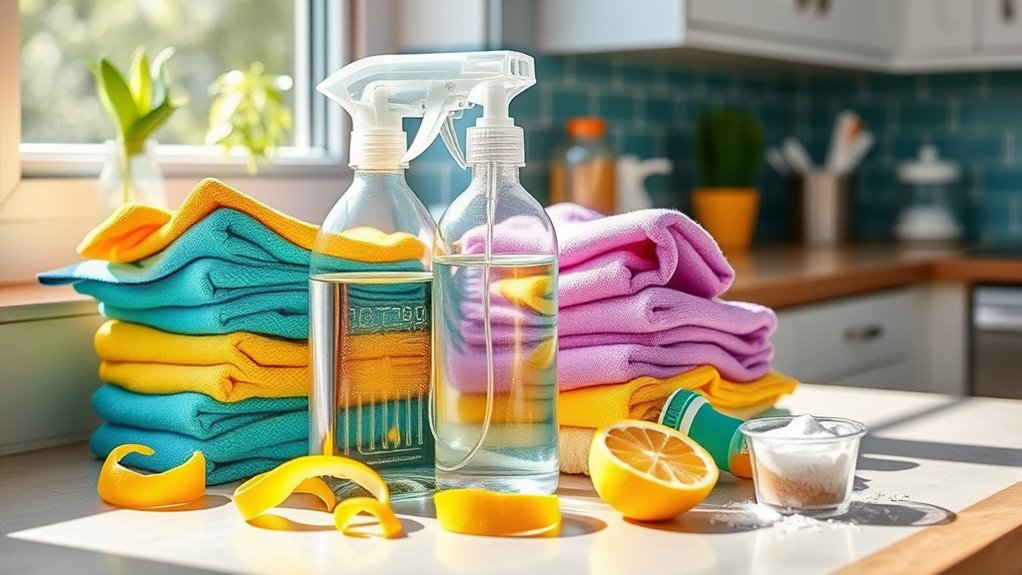
To get the most out of your microfiber cloths, proper washing techniques are essential. You’ll want to store them in a way that keeps them clean and ready for use. With a little maintenance, you can extend their lifespan considerably and keep them performing at their best. Regularly washing them with mild detergent can help maintain their effectiveness and softness.
Proper Washing Techniques
How can you guarantee your microfiber cloths last longer and perform better? Proper washing techniques are essential. Follow these tips to keep your cloths in top shape:
- Wash Separately: Always wash microfiber cloths alone or with similar materials to prevent lint transfer.
- Avoid Fabric Softener: Fabric softeners can coat the fibers, reducing their absorbency and effectiveness.
- Use Mild Detergent: Opt for a gentle, eco-friendly detergent to maintain the cloth’s integrity without damaging its fibers.
- Air Dry or Low Heat: If you must use a dryer, select a low heat setting. Air drying is best to prevent fiber damage. Additionally, using energy-efficient washing techniques not only helps your microfiber cloths but also aligns with sustainable cloud solutions that reduce environmental impact.
Storage and Maintenance Tips
While you may already know the importance of proper washing techniques, effective storage and maintenance can considerably extend the life of your microfiber cloths. After washing, let them air dry completely to prevent mildew. Store your cloths in a cool, dry place, avoiding direct sunlight, which can degrade the fibers. Keep them organized in a dedicated bin or drawer, separated by type or cleaning task to make them easy to access. Avoid using fabric softeners or bleach, as these can damage microfiber’s effectiveness. When you notice wear and tear, consider repurposing older cloths for tough jobs, like scrubbing. Following these simple tips ensures your microfiber cloths stay in top shape, maximizing their lifespan and cleaning power.
Exploring the Advantages of Steam Cleaning
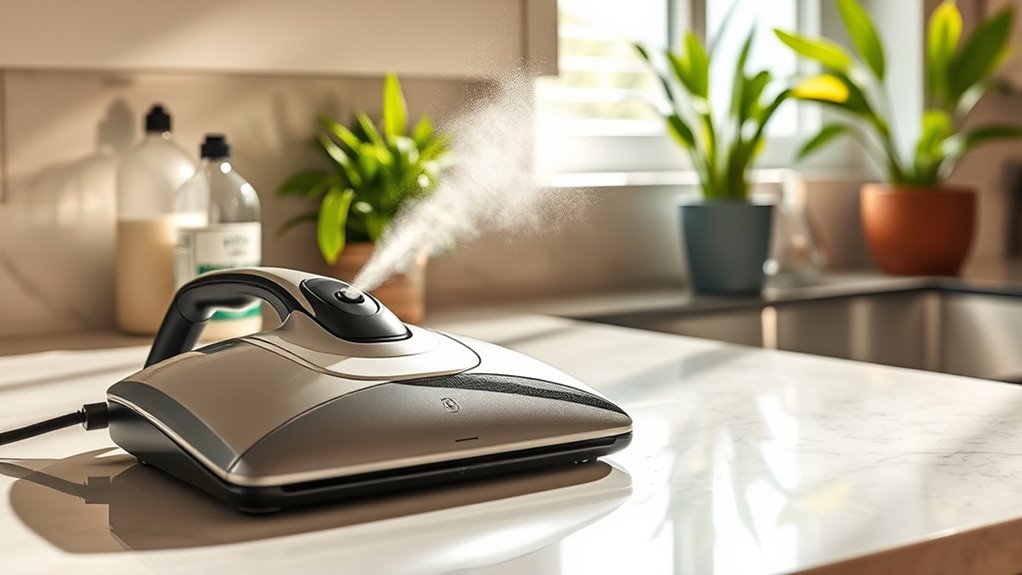
When you’re looking for an effective way to clean your home without harsh chemicals, steam cleaning stands out as a powerful solution. This method harnesses the natural power of hot water vapor to sanitize surfaces, removing dirt and germs without any chemical residue. Here are some advantages of steam cleaning:
- Chemical-Free: It eliminates the need for harsh cleaning agents, making it safe for your family and pets.
- Eco-Friendly: Steam cleaning produces zero chemical waste, reducing your environmental footprint.
- Versatile: It’s effective on various surfaces, including floors, upholstery, and even kitchen appliances.
- Cost-Effective: While you may spend more upfront on a steam cleaner, you’ll save money on cleaning supplies in the long run. Additionally, using steam can help effectively eliminate germs and bacteria that might linger on surfaces.
Market Trends Favoring Affordable Cleaning Solutions
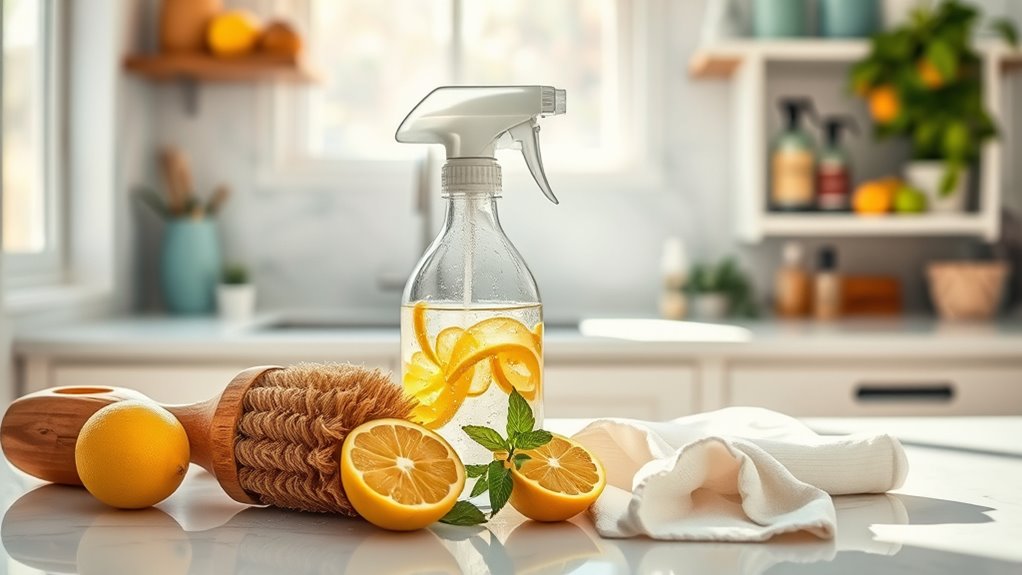
As you shop for cleaning products, you’ll notice a growing demand for eco-friendly options that won’t break the bank. Subscription services are also on the rise, offering convenient and affordable solutions for keeping your space clean. These trends reflect a shift towards sustainable practices that prioritize both your budget and the environment. Additionally, many consumers are becoming more aware of the benefits of sustainable practices, which promote a healthier lifestyle and reduce environmental impact.
Eco-Friendly Product Demand
With a growing awareness of environmental issues, consumers increasingly seek eco-friendly cleaning products that are both affordable and effective. This shift in demand is reshaping the market landscape. Here are four key trends driving this eco-friendly product demand:
- Cost Efficiency: Consumers prefer products that deliver value without breaking the bank.
- Sustainability: There’s a strong preference for biodegradable materials, reducing environmental impact.
- Health Awareness: Many want safer alternatives to harsh chemicals that could harm their families.
- Brand Loyalty: Younger generations, like Millennials and Gen Z, support brands that prioritize natural ingredients and sustainable practices.
Subscription Service Growth
How can subscription services transform your cleaning routine? They offer a convenient way to access affordable cleaning supplies tailored to your needs. By subscribing, you can receive eco-friendly products, like natural cleaners and microfiber cloths, delivered right to your door. This eliminates the hassle of running to the store while ensuring you always have the essentials on hand. You’ll also save money, as many subscription services provide discounts for regular users. Plus, you can often customize your orders, ensuring you’re only getting what you truly use. As consumer preferences shift towards sustainability, these services align with your values while simplifying your cleaning process—making it easier than ever to maintain a clean, green home.
Environmental Benefits of Choosing Green Alternatives

Choosing green cleaning alternatives not only benefits your home but also plays a crucial role in protecting the environment. By making the switch to eco-friendly products, you can considerably reduce your environmental footprint. Here are some key benefits:
Switching to eco-friendly cleaning products benefits both your home and the environment, significantly lowering your ecological impact.
- Reduced Toxic Waste: Natural ingredients are biodegradable, minimizing landfill waste.
- Improved Air Quality: Green cleaners release fewer volatile organic compounds (VOCs), enhancing indoor air quality.
- Lower Water Pollution: Eco-friendly products decrease chemical runoff that can harm aquatic ecosystems.
- Safer for Wildlife: Using non-toxic cleaners helps protect local wildlife from harmful substances.
DIY Cleaning Hacks With Household Items
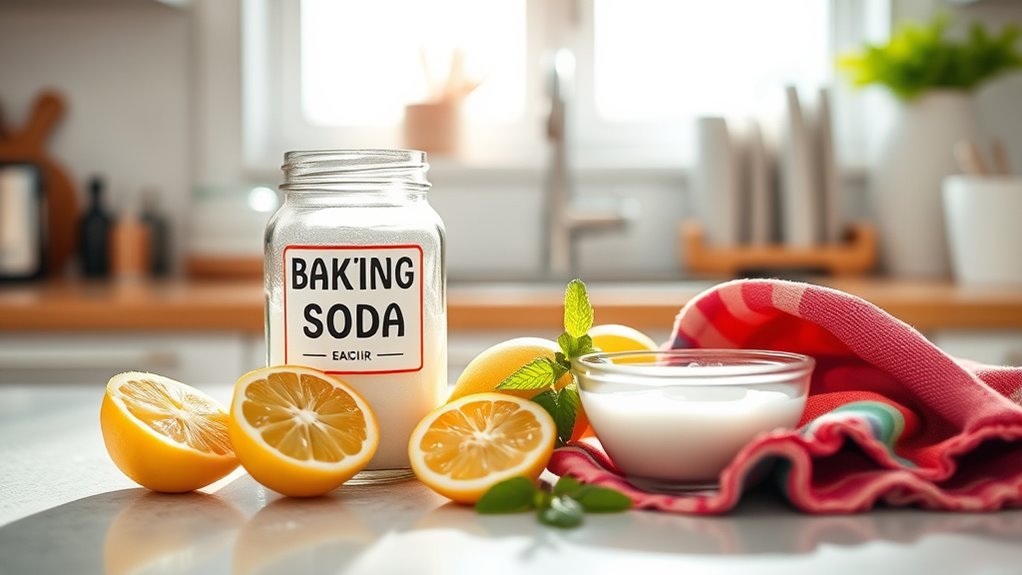
If you’re looking to save money and reduce waste, DIY cleaning hacks using household items can be your best bet. Try mixing equal parts water and vinegar for an all-purpose cleaner that works wonders on glass and countertops. Baking soda is your friend; use it as a gentle abrasive to scrub sinks or eliminate odors in your fridge. For rust stains, combine lemon juice with salt to brighten surfaces naturally. If you need a chemical-free approach, fill a spray bottle with deionized water and use it with microfiber cloths on sensitive surfaces. Ultimately, steam cleaning is an excellent way to sanitize without harsh chemicals, helping you keep your home clean while saving money and the environment.
Health Impacts of Conventional vs. Eco-Friendly Cleaners
The health impacts of conventional versus eco-friendly cleaners can be significant in your home environment. Conventional cleaners often contain harmful chemicals that can affect your indoor air quality, leading to respiratory issues and other health problems. On the other hand, eco-friendly cleaners prioritize your well-being by using safer, natural ingredients. Here are four key differences:
- Toxic Chemicals: Conventional cleaners release volatile organic compounds (VOCs) that can irritate your lungs.
- Biodegradability: Eco-friendly options break down naturally, reducing environmental harm.
- Allergens: Conventional products may trigger allergies or sensitivities; eco-friendly cleaners often avoid such irritants.
- Long-Term Health: Using safer alternatives minimizes your exposure to harmful substances, promoting better overall health.
Choosing eco-friendly cleaners can create a healthier living space for you and your family.
Budget-Friendly Tips for a Sustainable Cleaning Routine
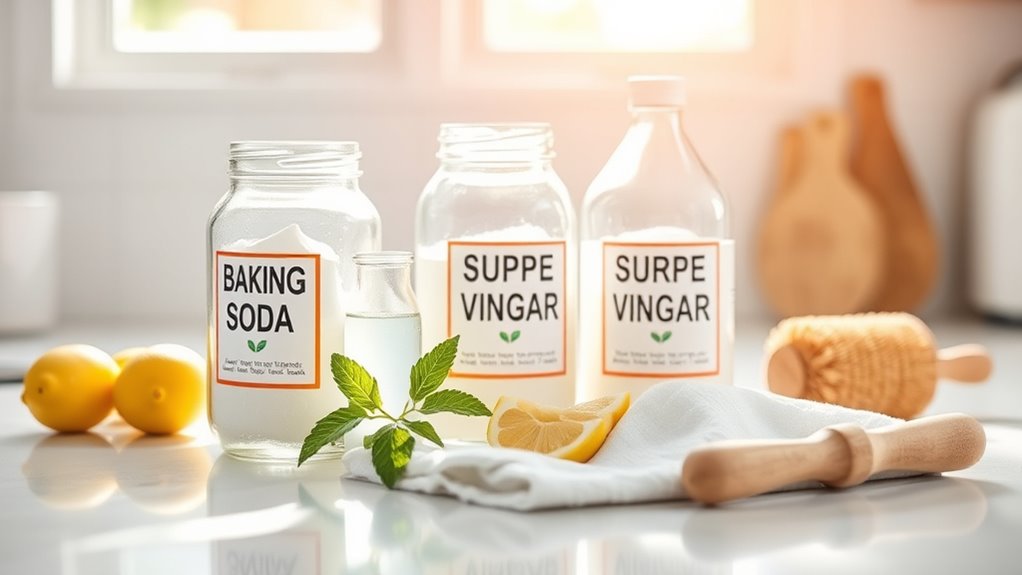
While maintaining a clean home might seem costly, it’s entirely possible to adopt a sustainable cleaning routine on a budget. Start by using natural ingredients like vinegar, baking soda, and lemon juice. These are not only affordable but also effective for various cleaning tasks. Invest in reusable microfiber cloths—they can be washed and used over 300 times, saving you money on disposable products.
Consider steam cleaning; it’s a one-time investment that eliminates the need for chemical cleaners. Finally, make your own cleaning solutions with simple DIY recipes. Mix equal parts water and vinegar for an all-purpose cleaner or use baking soda for scrubbing. By choosing these budget-friendly tips, you’ll maintain a clean home while being kind to the planet.
Frequently Asked Questions
Are Natural Cleaning Products Safe for All Surfaces?
Natural cleaning products are generally safe for many surfaces, but it’s important to verify them first. Vinegar and baking soda can damage certain materials like marble or granite, so use caution. Lemon juice is effective but may affect some finishes. Always check the manufacturer’s recommendations for specific surfaces. When in doubt, try a small, inconspicuous area first to ensure there’s no adverse reaction before applying it more broadly.
How Do I Store Homemade Cleaning Solutions?
Imagine your homemade cleaning solutions as precious potions in an alchemist’s lab. To store them, use clean, labeled spray bottles or jars, keeping them away from direct sunlight and heat. Glass containers are ideal, but sturdy plastic works too. Make sure to seal them tightly to prevent spills or contamination. Regularly check their potency, and if they lose their magic, it’s time to brew a fresh batch for your cleaning adventures!
Can I Use Vinegar on Granite Countertops?
You shouldn’t use vinegar on granite countertops. The acidity in vinegar can damage the stone’s surface, leading to dullness and etching over time. Instead, opt for a gentle soap and warm water solution to clean your granite. If you want a natural disinfectant, consider using a diluted solution of mild soap and water. Always remember to dry the surface with a microfiber cloth to prevent water spots and maintain its shine.
What’s the Shelf Life of DIY Cleaning Products?
DIY cleaning products typically have a shelf life of about 1 to 3 months, depending on the ingredients used. If you’re using vinegar or baking soda, they can last longer due to their natural preservative properties. Always store your mixtures in a cool, dark place to extend their usability. If you notice any changes in smell or appearance, it’s best to discard them and make a fresh batch.
How Often Should I Replace My Microfiber Cloths?
Replacing your microfiber cloths is like changing the oil in your car; it keeps everything running smoothly. You should replace them every 300 uses or when they start to lose their effectiveness, which can be indicated by a dull appearance or inability to clean properly. Regular washing extends their life, but if they’re frayed or worn out, it’s time for a new one to maintain peak cleaning performance.
Conclusion
By embracing these affordable cleaning hacks, you’re not just saving money; you’re also choosing a healthier home environment. Isn’t it interesting how simple ingredients like vinegar and baking soda can transform your space? You might even find that your cleaning routine becomes a satisfying ritual rather than a chore. So, the next time you reach for a pricey cleaner, remember these budget-friendly alternatives. Your wallet—and the planet—will thank you!