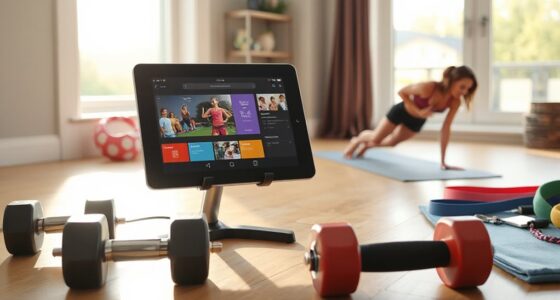
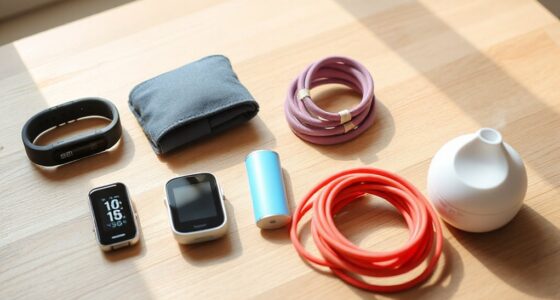
If you sit all day at your desk, you can stay active without spending much by incorporating simple habits like setting reminders to stand or stretch every hour. Use budget-friendly accessories like a lumbar support pillow or footrest, and try ergonomic tips such as adjustable chairs or desk converters. Regular movement, even small stretches or leg lifts, can make a big difference. Keep exploring to find more easy, cost-effective ways to improve your desk job health.
Key Takeaways
- Incorporate hourly stretch routines targeting neck, shoulders, and back to improve circulation and reduce stiffness.
- Use affordable ergonomic accessories like lumbar pillows, footrests, or adjustable desk converters to promote better posture.
- Set timers or reminders to stand, stretch, or move for a few minutes every hour, preventing prolonged sitting.
- Perform simple space-efficient movements such as shoulder rolls, leg lifts, or spinal twists throughout the day.
- Make small workspace adjustments to enhance comfort and support, minimizing musculoskeletal strain on a budget.
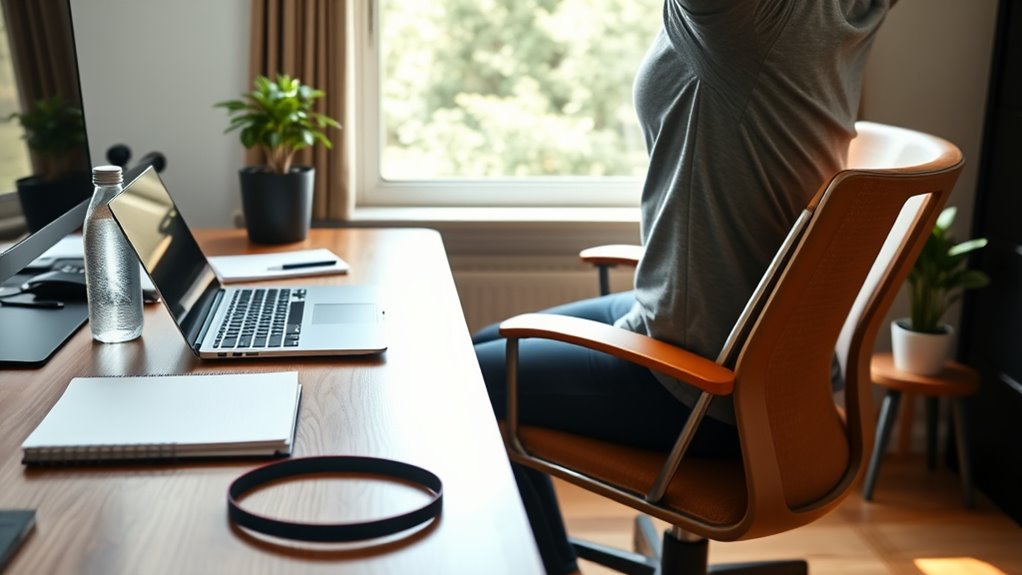
If you spend most of your day sitting at a desk, you’re at increased risk of health problems like back pain, weight gain, and poor posture. The good news is, you don’t need fancy gym memberships or expensive equipment to counteract these issues. Simple, budget-friendly strategies can make a big difference. Incorporating stretching routines into your day is one effective way to stay active and relieve tension. Take a few minutes every hour to stretch your neck, shoulders, and back. These stretches can loosen tight muscles and improve circulation, helping you feel more energized and less stiff. Pairing stretching routines with ergonomic accessories, like an adjustable chair, a supportive cushion, or an ergonomic keyboard, can further improve your posture and reduce strain. These accessories are often affordable and easy to set up, making them accessible solutions for anyone working from home or in an office. Additionally, understanding ergonomic principles can help you design a workspace that minimizes discomfort and promotes better health. Creating a habit of regular movement is key. Set a timer or use your phone to remind you to stand up and stretch at least once an hour. Simple movements like shoulder rolls, spinal twists, or calf raises can break up long periods of sitting. If you have limited space, even standing at your desk while working or doing quick leg lifts can help. The goal is to keep your muscles active and prevent stiffness from setting in. Additionally, investing in ergonomic accessories like an adjustable desk converter allows you to alternate between sitting and standing without needing a costly sit-stand desk. This flexibility reduces pressure on your lower back and encourages better posture throughout the day. You don’t need to overhaul your workspace or spend a lot of money to stay healthy. Small adjustments, like adding a lumbar support pillow or using a footrest, can improve comfort and alignment. These accessories are inexpensive but have a significant impact on your overall well-being. Remember, consistency matters more than intensity. Even taking five minutes every hour for stretches and posture checks can accumulate into a healthier, more comfortable workday. Over time, these habits can reduce back pain, improve your mood, and help manage weight—all without leaving your desk or spending a fortune. Prioritizing movement and proper ergonomics shows that you’re serious about your health, even with a busy schedule.
Frequently Asked Questions
How Can I Improve My Posture at My Desk?
To improve your posture at your desk, use ergonomic accessories like adjustable chairs and keyboard stands. Incorporate ergonomic tips by sitting with your back straight, feet flat on the floor, and shoulders relaxed. Keep your monitor at eye level to avoid straining your neck. Take short breaks to stretch and reposition yourself, helping prevent discomfort and promote better alignment throughout your workday.
Are There Specific Stretches for Neck and Shoulder Relief?
Yes, you should do neck stretches like gently tilting your head side to side and forward and backward to relieve tension. Pair these with ergonomic seating to support good posture and reduce strain on your shoulders and neck. Take short breaks regularly, and incorporate shoulder rolls to ease stiffness. These simple, budget-friendly neck stretches can make a big difference in preventing discomfort during long hours at your desk.
What Foods Boost Energy During Long Work Hours?
You need snacks that pack a punch—think nuts, fruit, or yogurt—that instantly boost your energy. Skip sugary treats that crash you later; instead, go for energy-boosting drinks like green tea or water infused with lemon. These options keep you alert and focused, preventing midday slumps. Keep a stash of healthy snack options nearby, and sip on revitalizing drinks to stay energized and conquer those long work hours effortlessly.
How Much Water Should I Drink Daily While Working?
You should aim to drink about 8 glasses of water daily, but your hydration tips depend on your activity level and environment. Stay mindful of your water intake by sipping regularly throughout the day, especially if you work indoors where air tends to be dry. Keep a reusable bottle at your desk, and listen to your body’s signals—thirst is a good indicator you need more water to stay alert and energized.
Can Desk Exercises Replace Traditional Workouts Effectively?
Like a knight wielding a quill instead of a sword, desk exercises can be a handy workout alternative, but they can’t fully replace traditional workouts. Deskercise benefits include improving circulation and reducing stiffness, yet they lack the intensity for extensive fitness. Incorporate them into your routine to stay active during breaks, but aim for regular gym sessions or outdoor activities for complete health benefits.
Conclusion
Staying active at your desk doesn’t have to break the bank. Simple habits like stretching or short walks can make a big difference. Did you know that sitting for more than 8 hours a day increases your risk of early death by 15%? Incorporating inexpensive activities into your routine can improve your health and boost your energy. Remember, small changes add up—so stay moving and keep your body engaged throughout the day.