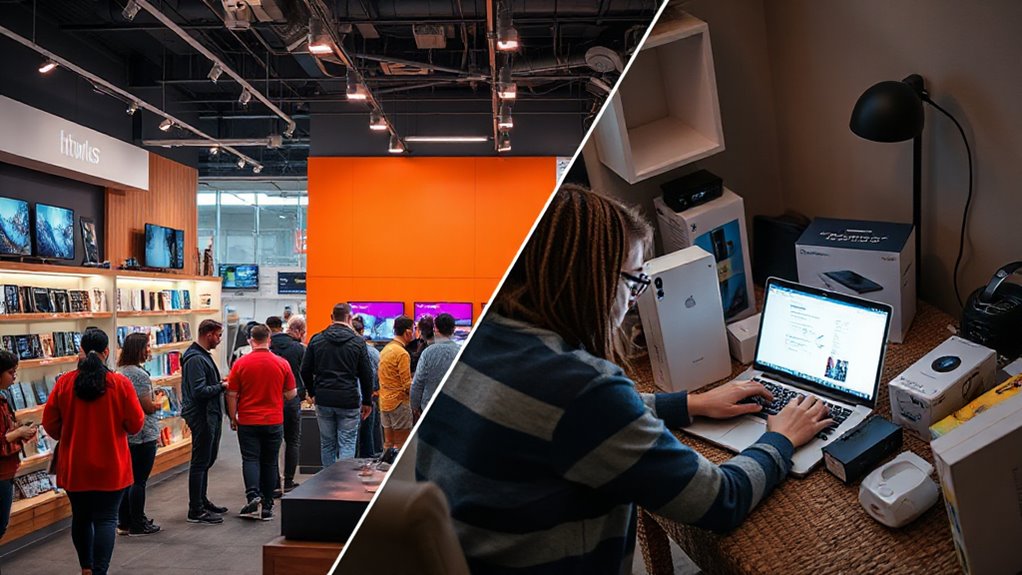

When choosing between buying electronics online or in-store, consider the pros and cons. Online shopping often offers better prices, discounts, and convenience, while in-store allows you to see and handle products firsthand and get immediate assistance. Be sure to compare total costs, including fees, and check retailer reviews for safety. Understanding return policies and ensuring secure payment methods is essential for a smooth experience. Keep exploring to find out how to make the safest and smartest choice.
Key Takeaways
- Compare total costs and discounts online versus in-store to find the best deal and avoid hidden fees.
- Inspect electronics physically in-store for quality assessment; rely on detailed specs and reviews online.
- Consider customer service quality, including immediate assistance in-store and support options online.
- Review return policies and processes, noting online shipping returns versus quick in-store exchanges.
- Ensure secure payment methods and verify retailer reputation to protect personal data and secure your purchase.

When it comes to purchasing electronics, you often face the choice between shopping online or in-store. Each option has its own advantages and drawbacks, and understanding these can help you make smarter decisions. One of the biggest benefits of shopping online is the ease of price comparison. With just a few clicks, you can browse multiple retailers, check prices, and find the best deals without leaving your home. This saves you time and helps you avoid paying more than necessary. On the other hand, in-store shopping allows you to see and handle products firsthand, which can be especially useful for electronics where feel and build quality matter.
Customer service plays a substantial role in your shopping experience, too. When you go to a physical store, you can ask staff questions directly and get immediate assistance. Sometimes, store employees can offer expert advice or recommend features that suit your needs, which isn’t always possible online. However, online retailers often provide extensive customer reviews, FAQs, and live chat support, giving you a chance to gather information before making a decision. Keep in mind, though, that customer service quality varies widely, whether you’re shopping online or in person. You might find that some online stores handle returns smoothly and respond promptly to inquiries, while others might leave you waiting.
Customer service quality varies widely, whether shopping online or in-store, affecting your overall shopping experience and satisfaction.
Pricing transparency is another factor to consider. In-store, prices are typically displayed clearly, but you might miss out on discounts or bundle deals that online stores promote. Online shopping often features flash sales, coupon codes, and free shipping offers that can lower costs substantially. But beware of hidden fees or shipping costs that can add up, making the total price less competitive than it appears at first glance. Always do your due diligence by comparing total costs across different platforms before finalizing your purchase. Additionally, understanding product specifications is crucial to ensure that what you buy meets your needs and expectations.
Customer service quality can influence your decision, especially if you value easy returns or need technical support. In-store, returns are straightforward—you bring the product back and get a refund or exchange quickly. Online, return policies vary, and shipping items back might take time and incur costs. Still, many online retailers have streamlined their return processes, making it easier to resolve issues remotely. Ultimately, your choice depends on what you prioritize—whether it’s immediate gratification, expert assistance, or the best deal. Both options have their merits, but doing thorough price comparisons and researching customer service reputation can help ensure you get the best value and support for your electronics purchase.

HDSZLJL 2026 USA Soccer Fan Kit 6 Piece Set, World Cup Football Party Gear with Patriotic Scarf, Flag, Face Painting Accessory, Hand Paddle, Wristband, Soccer Fans Game Day Accessories
COMPLETE 6-PIECE FAN KIT: Get ready for soccer cup season with this 2026 USA fan kit, including coordinated...
As an affiliate, we earn on qualifying purchases.
Frequently Asked Questions
How Can I Verify the Authenticity of Electronics Purchased Online?
To verify the product authenticity when buying online, always check the seller’s reputation and reviews. Look for sellers with high ratings and positive feedback, as they’re more likely to sell genuine products. Compare product images, descriptions, and prices with official listings. Additionally, ask for proof of authenticity or warranty details, and buy from authorized retailers or directly from the manufacturer’s website whenever possible.
What Are the Best Ways to Test Electronics Before Buying In-Store?
Coincidences often reveal hidden flaws. When testing electronics in-store, you should perform a thorough product inspection, examining for physical damages or irregularities. Don’t forget to test key features like screen responsiveness, sound quality, and connectivity. Use the device as intended to guarantee it functions properly. This hands-on approach helps you catch potential issues early, giving you confidence in your purchase and avoiding future surprises.
Are There Specific Warranties for Online Versus In-Store Electronics?
You’ll find that warranties differ for online and in-store electronics. In-store purchases often include an extended warranty option at checkout, giving you added protection. Some stores also offer price matching, which can help you get the best deal on warranties. When buying online, check if the manufacturer’s warranty applies or if the retailer offers any additional coverage. Always read warranty terms carefully to guarantee you’re protected, whether shopping online or in person.
How Do Return Policies Differ Between Online and Physical Stores?
Imagine shopping as a journey through two different lands. In physical stores, return policies are like friendly gates that often allow easy exchanges or refunds, sometimes offering store credits. Online, it’s like crossing a digital bridge—return policies can be stricter, with more steps and limited store credits. You need to read each store’s policies carefully to know if you’ll get refunds or only store credits, ensuring your journey ends happily.
What Cybersecurity Measures Should I Take When Shopping Online?
When shopping online, you should prioritize cybersecurity measures like using a secure payment method, such as a credit card or trusted third-party services, to protect your financial info. Confirm the website has HTTPS in the URL for privacy protection, and avoid public Wi-Fi networks during purchases. Keep your devices and antivirus software up to date, and be cautious of suspicious links or emails to stay safe.

Soccer Party Favors 2026 Soccer Fan Support Accessories Kit, 48 PCS Cheering Supplies with Thundersticks, Clappers, Wristbands, Stickers for Sporting Events, Game Day Watch Party & Stadium Essentials
48PCS Soccer Cheering Accessories Includes: Thickened 6 hand clappers, 12 soccer bracelets, 12 boom sticks, 6 soccer whistles,...
As an affiliate, we earn on qualifying purchases.
Conclusion
Whether you buy electronics online or in-store, both options have their perks and risks. Some say online shopping offers better deals and convenience, while in-store provides hands-on experience and immediate gratification. The truth is, with careful research and safety tips, you can enjoy the best of both worlds. Trust your instincts, compare prices, and verify sellers to make smart, safe choices. Ultimately, staying informed helps you shop confidently, no matter where you prefer to buy.

2026 USA Soccer Fan Accessories Set, Patriotic Independence Day Bundle with Flag, Shawl, Scarf, Headband and Drawstring Bag for Sports Events & July 4th Festivities (United States)
All-in-one fan set contains flag, shawl, scarf, headband and drawstring bag, ready for sports viewing and Independence Day...
As an affiliate, we earn on qualifying purchases.

USA Soccer Fan Gear Set, 7 Pcs 2026 Game Day Accessories with Hat, Scarf, Flag Sunglasses, Wristband, Flag Face Paint & Cheer Sticks, Soccer Party Supplies for Watch Parties
【Complete 7-Piece Soccer Fan Gear Set】Get ready for every match with a full USA fan accessories kit, including...
As an affiliate, we earn on qualifying purchases.