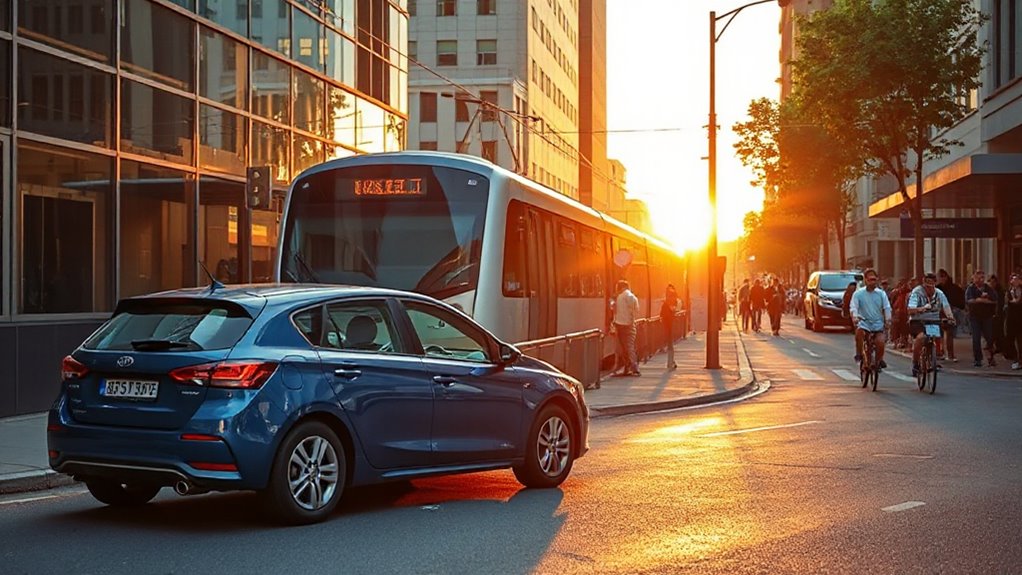

Switching to public transportation can save you hundreds or even thousands of dollars each year by eliminating expenses like fuel, insurance, maintenance, and parking fees. Public transit often costs less than vehicle ownership, especially when considering ongoing costs. While a car offers flexibility and convenience, choosing transit reduces financial and environmental impacts. Curious about how much you could actually save? Keep exploring to see how switching might benefit your wallet and lifestyle.
Key Takeaways
- Public transit is generally cheaper than owning and maintaining a vehicle, especially over the long term.
- Electric vehicles reduce maintenance costs but still involve expenses like charging and battery upkeep.
- Ditching a car eliminates expenses such as fuel, insurance, repairs, and parking fees.
- Owning a car offers flexibility, but public transit can save money during daily commutes and urban travel.
- Both options impact the environment, with public transit and EVs offering greener, cost-saving alternatives.
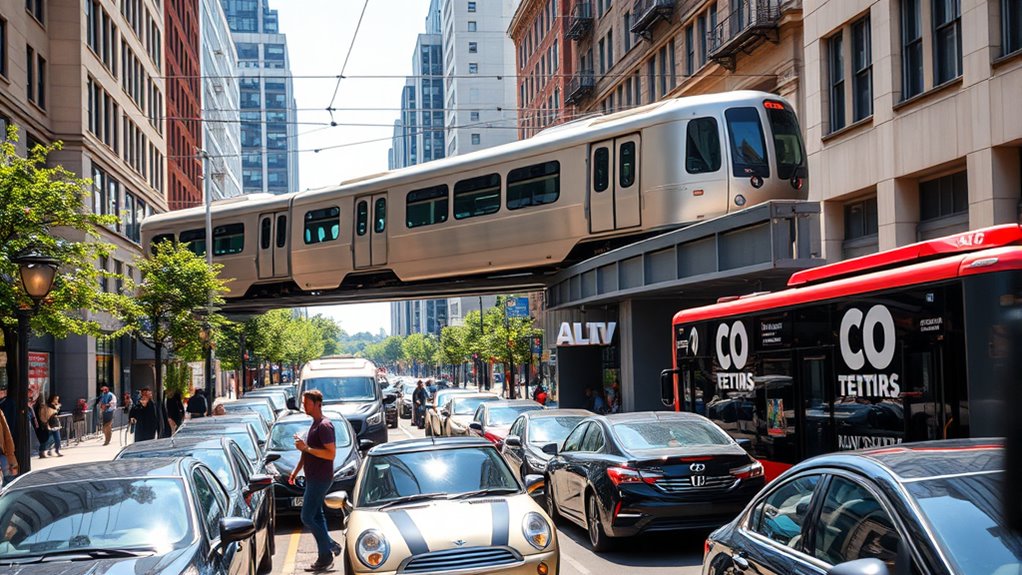
When deciding between public transportation and car ownership, you need to contemplate factors like cost, convenience, and environmental impact. If your goal is to save money, ditching your car might be the smarter choice. Public transit typically costs less than owning a vehicle, especially considering ongoing expenses like fuel, insurance, and maintenance. If you prefer a greener option, electric vehicles (EVs) are gaining popularity, offering a cleaner alternative to traditional cars. Still, EVs involve upfront costs and require minimal maintenance compared to conventional vehicles, which can help you save in the long run. But if you’re considering electric vehicles, keep in mind that they still need some car maintenance—like battery checks and tire rotations—but these are usually less frequent and less costly than repairs for internal combustion engines.
Public transportation eliminates the need for you to handle maintenance altogether. You don’t have to worry about oil changes, brake repairs, or replacing worn-out parts. Instead, you pay a fare and let the transit system handle the upkeep. Plus, using buses, trains, or subways can be more convenient during rush hours when traffic congestion makes driving a hassle. It also frees you from parking worries and fuel stops, saving both time and money. On the other hand, owning a car offers unmatched flexibility. You can leave whenever you want, go anywhere, and carry more luggage or groceries without logistical issues. However, this convenience comes with costs—fuel prices fluctuate, and regular maintenance can add up quickly, especially if your vehicle is older or not well-maintained.
If you’re leaning toward electric vehicles, you’ll find that the reduced maintenance needs are attractive. EVs don’t require oil changes and have fewer moving parts, which means fewer repairs. This can translate into lower maintenance bills over time, making electric cars an economical choice if you plan to keep your vehicle long-term. Still, owning a car, even electric, involves some costs. Routine maintenance, such as tire replacements and software updates, is necessary, and you’ll need to consider charging station access or home charging setups. Ultimately, switching to public transportation can significantly cut expenses, especially if your daily commute is manageable within transit routes. Yet, if your lifestyle demands frequent travel or remote access, owning a vehicle—particularly an electric one—might offer the flexibility you need without as much maintenance hassle. Additionally, advancements in projector technology have made in-home entertainment more accessible, which can be a worthwhile consideration for relaxation and leisure at home.
Frequently Asked Questions
How Does Public Transportation Impact Daily Commute Time Compared to Driving?
Public transportation often reduces your daily commute time compared to driving during peak hours because it avoids traffic congestion. You can relax or read instead of dealing with the stress of route flexibility and traffic jams. However, in some areas, delays or limited routes might extend your travel time. Overall, public transit can make your commute more predictable and less stressful, especially when traffic congestion is heavy.
Are There Environmental Benefits to Choosing Public Transit Over Personal Cars?
Choosing public transit reduces your carbon footprint markedly—up to 45% less than driving alone. This shift also improves air quality by lowering vehicle emissions, which contribute to smog and respiratory issues. When you opt for buses or trains, you’re helping combat climate change and promoting healthier communities. So, your decision to ride public transit not only saves you money but also makes a real difference environmentally.
What Are the Safety Considerations for Public Transportation Users?
You should prioritize personal safety and be aware of security measures when using public transportation. Keep an eye on your belongings, stay alert, and avoid isolated areas or empty cars, especially at night. Use well-lit stops, and consider traveling with a companion when possible. Most transit systems have security personnel and cameras in place, but your vigilance helps guarantee a safer experience for yourself and fellow passengers.
How Do Costs Vary Between Owning a Car and Using Public Transit Long-Term?
Owning a car typically costs more long-term than using public transit. You’ll pay for fuel costs and maintenance expenses regularly, which add up quickly. Public transit, on the other hand, usually involves a fixed fare or monthly pass, making budgeting simpler. If you don’t drive often, ditching your car can save you money, reduce stress, and lower your overall transportation costs over time.
Can Public Transportation Meet the Needs of Rural or Suburban Residents?
Public transportation can be a lifeline, but it’s often a narrow bridge for rural and suburban residents. Rural transit challenges, like infrequent schedules and limited routes, make it tough to reach essential destinations. Suburban service limitations mean longer waits and less flexibility. You might feel stranded if transit doesn’t align with your daily needs, so owning a car often remains the more reliable option for full independence and convenience.
Conclusion
Switching to public transportation can save you a significant amount of money, just like Sarah did when she sold her car and started commuting by bus. She cut her monthly expenses by over $200, freeing up funds for other needs. If you’re considering ditching your car, weigh the costs and benefits carefully. You might find, like Sarah, that embracing public transit not only saves you money but also reduces stress and your carbon footprint.