You might think you’ve found the deal of a lifetime, but how can you be sure it’s legitimate? Many scams hide behind enticing offers and urgent deadlines. It’s essential to recognize the warning signs before you click that tempting link or hand over your payment details. Whether it’s unrealistic discounts or untraceable payment methods, knowing what to look for can save you from potential fraud. Let’s explore these red flags together.
Key Takeaways
- Be wary of unrealistic discounts, such as 90% off, which often indicate potential scams.
- Avoid payment methods like gift cards or wire transfers, as they are untraceable and unprotected.
- Check for legitimate business contact information, including a physical address and customer support.
- Look for red flags like poor website design, spelling errors, and overly generic reviews.
- Trust your instincts; if something feels off, thoroughly research before completing a transaction.
Recognizing Unrealistic Discounts and Urgency Tactics

While shopping online, you might come across deals that seem too good to be true, and it’s crucial to recognize them before you get caught in a scam. Unrealistic discounts, like 90% off, often signal a red flag. If the price feels excessively low, take a moment to question its legitimacy. Scammers frequently create a sense of urgency, pushing you to act fast to “secure” the deal. They might say the offer expires soon or that stocks are limited. If you feel rushed, pause and reconsider. Legitimate retailers don’t pressure you to buy immediately. Always research the seller and the deal before making a purchase to ensure you’re not falling for a scam. Additionally, understanding AI-driven cyber threats can help you recognize tactics used by scammers to manipulate buyers. Stay informed and cautious!
Identifying Red Flags in Payment Methods
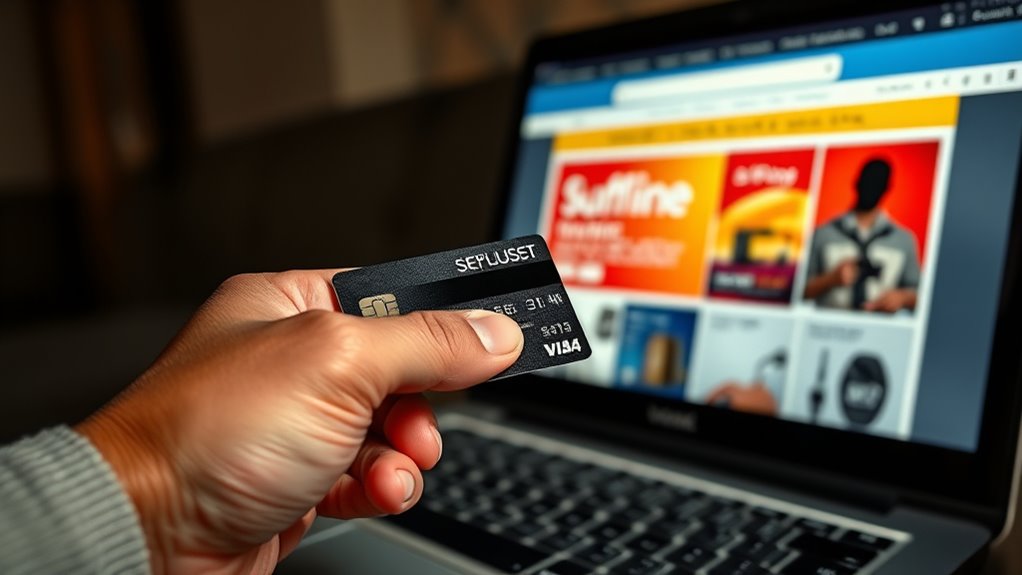
When you’re shopping online, it’s essential to be cautious about the payment methods being offered. Scammers often request untraceable payments, like wire transfers, gift cards, or cryptocurrency. These methods make it easy for them to disappear with your money.
| Payment Method | Red Flag |
|---|---|
| Gift Cards | Cannot be traced back |
| Wire Transfers | Irreversible and unprotected |
| Cryptocurrency | Difficult to recover |
| Prepaid Debit Cards | Anonymous, hard to track |
If you encounter these options, take a step back. Legitimate businesses typically offer secure methods like credit cards or PayPal. Protect your wallet by staying alert and informed! Additionally, be aware that proper dilution ratios for paint can influence the quality of your projects, just as payment method security influences your online shopping safety.
Evaluating Business Legitimacy and Contact Information

Recognizing the right payment methods is just one step in ensuring your online shopping experience is safe. Next, you need to evaluate the legitimacy of the business. Check for a physical address, customer support number, and social media presence. Trustworthy companies usually provide easily accessible contact information. If you can’t find these details or they seem sketchy, proceed with caution.
Additionally, scrutinize the website’s design and content quality. Poorly designed sites, spelling errors, or low-quality logos can indicate a scam. Look for reviews from other customers, but be wary of overly positive or generic feedback. If something feels off, it’s better to trust your instincts and look for alternatives. Your safety should always come first in online shopping. Furthermore, consider researching the pricing of similar products, as KTM electric dirt bikes typically range from $8,000 to $12,000, which can help you identify deals that may seem too good to be true.
Understanding Common Scam Formats in Online Shopping

As you navigate the online shopping landscape, understanding common scam formats can help protect you from falling victim to fraud. Scammers often use familiar tactics that prey on your trust and urgency. Here are some common formats to watch out for:
- Fake Discounts: Deals that seem too good to be true, often with unrealistic discounts.
- Urgent Messages: Pressure tactics urging you to buy immediately to avoid missing out.
- Impersonated Brands: Emails or ads pretending to be from reputable companies like Amazon or Apple.
- Phony E-Stores: Websites that disappear after you make a purchase, leaving you with nothing.
Additionally, be wary of deals related to electronics, as high refresh rates can often be misrepresented in fraudulent offers. Stay vigilant, and always verify before you buy!
Practicing Safe Online Shopping Habits

Although online shopping offers convenience, it’s essential to adopt safe habits to protect yourself from scams. Always verify the seller’s legitimacy by checking their contact details and looking for customer reviews. If a deal seems too good to be true, it probably is. Stick to well-known websites and avoid clicking on suspicious links. Use secure payment methods, like credit cards, which offer better fraud protection. Enable multi-factor authentication on shopping accounts for added security. Regularly monitor your bank statements for any unauthorized transactions. Finally, trust your instincts—if something feels off, don’t hesitate to walk away. Practicing these habits can substantially reduce your risk of falling victim to online scams. Additionally, consider using essential oils like peppermint oil for stress relief while shopping online, as they can help alleviate feelings of anxiety that may arise from suspicious deals. Stay safe and shop smart!
Frequently Asked Questions
How Can I Report a Suspected Online Scam Effectively?
To report a suspected online scam effectively, gather all relevant information, like emails, screenshots, and URLs. Then, visit the official websites of organizations like the FTC or FBI to submit your report. You can also inform your bank or credit card company if financial details are involved. Sharing your experience on social media helps raise awareness, but avoid directly confronting the scammer to prevent further issues. Stay vigilant and keep your personal information secure!
What Should I Do if I’Ve Fallen for a Scam?
If you’ve fallen for a scam, don’t panic—think of it as a bump in the road, not a dead end. First, report it to the authorities, like the FTC or your local police. Then, contact your bank or credit card provider to dispute any unauthorized charges. Change your passwords and monitor your accounts closely. Finally, learn from the experience to guard against future scams; knowledge is your best defense!
Are Online Scams More Common During Certain Times of the Year?
Yes, online scams often spike during certain times of the year, particularly around holidays and major sales events. Scammers capitalize on the increased shopping activity and consumer excitement, luring you with unbelievable deals. They may also target tax season when people are more vulnerable and stressed. Staying alert during these peak times is essential, as scammers exploit the urgency and emotions tied to these occasions to trick you into making hasty decisions.
How Do Scammers Obtain Personal Information From Victims?
Like a magician pulling a rabbit out of a hat, scammers often use tricks to obtain your personal information. They might send you phishing emails or create fake websites that look legitimate, luring you into sharing sensitive data. Sometimes, they’ll impersonate trusted entities, convincing you to divulge details through urgent messages. Always remember to verify identities and think twice before sharing your information; it’s your best defense against their sleight of hand.
Can Social Media Platforms Help in Identifying Scams?
Yes, social media platforms can help you identify scams. They often highlight suspicious accounts and posts through user reports and algorithmic detection. By following credible pages and engaging with community discussions, you’ll stay informed about common scams circulating. Additionally, many platforms provide educational resources on spotting fraudulent activity. Always check comments and reviews on posts to gauge authenticity, and don’t hesitate to report any suspicious content you encounter.
Conclusion
In today’s digital marketplace, it’s essential to stay vigilant against online scams. Did you know that nearly 30% of online shoppers have encountered a scam in the past year? By recognizing unrealistic discounts, avoiding untraceable payment methods, and thoroughly evaluating sellers, you can protect yourself from falling victim. Trust your instincts, stick to secure payment options, and remember: if a deal seems too good to be true, it probably is. Stay safe and shop smart!