Stores use psychology to influence your spending without you realizing. They design layouts that slow you down and guide you past tempting items, placing high-margin products at eye level to catch your attention. Pricing tricks like $9.99 create a perception of savings, while strategic placement of discounts encourages impulse buys. Subtle cues and environment details target your subconscious mind. Stay with us to discover exactly how these tactics shape your shopping habits and how to spot them.
Key Takeaways
- Stores use subtle cues like layout, lighting, and product placement to influence subconscious buying decisions.
- Pricing techniques such as charm pricing and strategic discounts create perceived savings and encourage impulse buys.
- Placing high-margin items at eye level and essentials at the back guides shoppers through more products.
- Store environments slow down shoppers and trigger impulse purchases through strategic design and visual cues.
- Lack of consumer awareness of these tactics makes shoppers vulnerable to manipulation, highlighting the importance of mindful shopping.
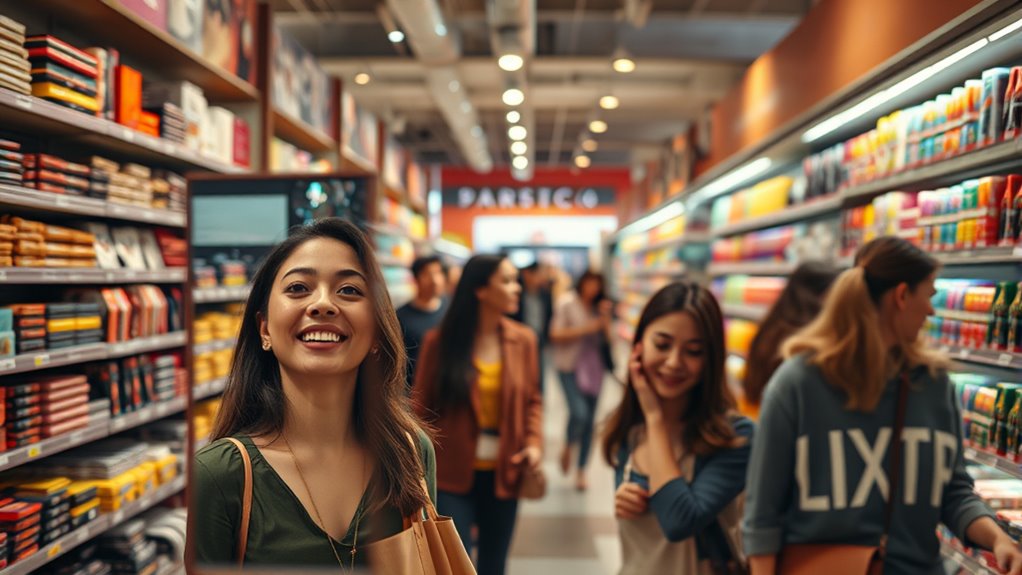
Understanding the psychology of sales is essential because it reveals how human behavior influences buying decisions. Retailers know that subtle cues can make a big difference in how much you spend, and they carefully design their stores to guide your choices. Two key elements they manipulate are pricing strategies and store layout. When you walk into a store, you might not realize how these tactics work together to encourage you to buy more than you initially intended.
Pricing strategies are crafted to make you perceive value in ways that benefit the retailer. For example, stores often use charm pricing, where items are priced just below a round number—like $9.99 instead of $10. This small difference makes the price seem considerably lower, triggering a psychological response that adds up over multiple items. Retailers also display higher-priced items prominently, knowing that these can serve as anchor points, making other items seem more affordable by comparison. Discounted or sale items are strategically placed near full-price products to entice you to make impulse purchases, feeling like you’re getting a deal. These pricing tactics tap into your desire to maximize value while minimizing costs, nudging you toward buying more than you planned.
Charm pricing and strategic placement encourage impulse buys by creating perceived value and affordability.
Your store layout is just as influential. Retailers design their space to slow you down and increase the likelihood of impulse buys. For instance, placing everyday essentials at the back of the store forces you to pass through sections filled with tempting items—snacks, magazines, or small gadgets—that you might not have originally intended to buy. The use of eye-level shelving for popular or high-margin products makes it easier for you to notice and pick them up. The arrangement of displays creates a natural flow that guides you through specific pathways, exposing you to more products. Additionally, many stores use a “maze-like” layout that discourages quick exits, encouraging you to spend more time browsing and, consequently, increasing your chances of making unplanned purchases. This deliberate design also leverages visual cues, which subconsciously draw your attention to certain items and influence your choices.
All these tactics work together to influence your subconscious mind. When you’re unaware of the strategy behind pricing and layout, you’re more susceptible to these psychological tricks. Retailers know that your perception of value, the convenience of store design, and the way products are arranged can considerably sway your buying decisions. By understanding these techniques, you become more mindful of your shopping habits, empowering you to make choices based on your true needs rather than being unknowingly manipulated by store psychology.
Top picks for "psychology stor trick"
As an affiliate, we earn on qualifying purchases.
Frequently Asked Questions
How Do Store Layouts Influence Consumer Behavior?
Store layouts influence your behavior by guiding your movement and choices. Clear store signage catches your eye and directs you to specific areas, while aisle design encourages browsing and impulse buys. Narrow aisles create a cozy feel, making you spend more time and money. You often find yourself drawn to popular displays and end caps, subtly increasing your likelihood of making unplanned purchases through strategic layout planning.
What Role Does Color Psychology Play in Sales Tactics?
Color psychology influences your purchasing decisions by leveraging color associations and emotional triggers. Stores use specific colors to evoke feelings like trust, excitement, or calm, guiding you toward certain products or behaviors. For example, red can stimulate urgency, while blue fosters trust. By understanding these tactics, you become more aware of how stores manipulate your emotions, helping you make more conscious choices instead of impulsive spending.
How Does Scent Marketing Affect Purchasing Decisions?
Imagine walking into a store and instantly feeling calm or energized—that’s scent marketing at work. It influences your purchasing decisions by engaging your senses through sensory branding, tapping into emotional triggers. These scents subtly create a memorable shopping experience, encouraging you to linger longer and buy more. Stores use this tactic like a modern-day alchemist, transforming the environment into a powerful tool for influencing your buying behavior.
Can Store Music Impact How Much You Spend?
Yes, store music can impact how much you spend. When store playlists create a relaxing or upbeat music mood, it influences your shopping behavior, encouraging you to linger longer and make more purchases. You might not even realize it, but the background music subtly shapes your mood and decision-making. So, next time you’re shopping, pay attention to the store’s playlist — it’s designed to entice you to spend more.
What Subconscious Cues Do Stores Use to Encourage Impulse Buying?
You’re subtly pulled in by visual cues and sensory triggers that ignite your impulse to buy. Soft lighting, enticing displays, and strategic product placement create an irresistible allure. The scent of fresh bread or the hum of background music heightens your senses, making you linger longer. These subconscious cues work together, nudging you to make spontaneous purchases without realizing why. Your environment is carefully crafted to maximize your spending instinctively.
Conclusion
By understanding these tricks, you can become a smarter shopper. Did you know that the average person spends 50% more time in stores when they’re distracted by displays and music? Recognizing these tactics helps you stay in control and avoid overspending. Next time you shop, be aware of how stores manipulate your mind—so you can make intentional choices rather than falling for clever sales tricks. Stay mindful and shop smarter!