

If you want immediate savings, coupons give you instant discounts on your shopping. Cashback rewards take longer to accumulate but can add up to substantial savings over time, especially if you shop regularly at the same stores. For quick savings, coupons work best, but for long-term benefits, cashback can be more rewarding. To see how combining both strategies can maximize your savings, keep exploring what fits your shopping style.
Key Takeaways
- Coupons provide immediate savings at purchase, while cashback accumulates over time, offering different long-term benefits.
- Coupons are ideal for weekly groceries and quick discounts; cashback is better for large or frequent purchases.
- Combining coupons and cashback maximizes overall savings and stretches your budget further.
- Cashback rewards require specific apps or portals and build up gradually, offering potential for bigger cumulative savings.
- The best strategy depends on shopping habits; using both methods together yields the most long-term financial advantage.
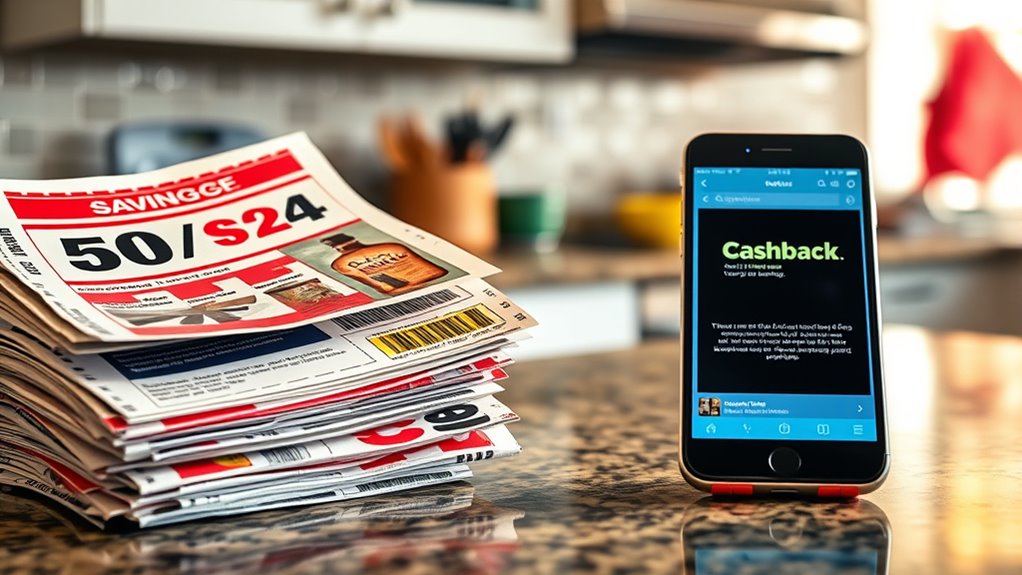
When it comes to saving money on your purchases, coupons and cashback offers are two popular strategies, but they work quite differently. Coupons typically provide immediate discounts at the point of sale, especially for groceries, helping you cut costs right away. Grocery discounts through coupons can be found in newspapers, store flyers, or digital platforms, making it easy to save on everyday essentials. Online deals, another form of coupons, often come with promo codes or digital coupons that you apply during checkout. These are especially handy when shopping online for clothes, electronics, or household items, allowing you to reduce the total price before completing your transaction. Using coupons for groceries and online deals gives you a sense of instant gratification—you see the savings right on your receipt or screen, which makes it straightforward to stick to your budget. Additionally, combining coupons with cashback offers can amplify your savings, especially on larger purchases or regular shopping trips.
Cashback offers, on the other hand, work differently. Instead of providing an immediate discount, cashback rewards you after your purchase, usually as a percentage of the money spent. You might need to use specific cashback apps or credit cards that offer these perks. For groceries, cashback can be earned when you shop at partnered stores or through digital platforms that track your spending and refund a part of it later. This makes cashback particularly appealing for larger purchases or regular shopping, where the rewards can add up over time. When shopping online, cashback portals often partner with hundreds of retailers, giving you money back on your purchases when you access stores through their links. Over the long run, cashback can accumulate into significant savings, especially if you frequently shop at the same retailers or use the same cashback platforms. Moreover, understanding the technological differences between projectors—such as DLP versus LCD—can help you choose the best device for your needs.
Choosing between coupons and cashback depends on your shopping habits. If you prefer immediate savings and want to lower your grocery bills right away, coupons win the day. They’re perfect for weekly grocery shopping, where discounts can make a noticeable difference. If you’re more focused on maximizing savings over time, cashback rewards can be more beneficial, especially when you make larger or more frequent purchases. The key is to combine both strategies when possible—use coupons for instant savings on groceries and online deals, and leverage cashback offers for bigger purchases or regular shopping. Over the long run, this approach can help you stretch your dollar further, ensuring you get the most out of every dollar spent. Ultimately, it’s about understanding how each method works and tailoring your shopping habits to maximize your savings potential.
Top picks for "coupon cashback long"
Open Amazon search results for this keyword.
As an affiliate, we earn on qualifying purchases.
Frequently Asked Questions
Are Cashback Offers Available Internationally or Only in Certain Regions?
Cashback offers are available internationally, but their regional availability varies depending on the program. You can find international programs that work across multiple countries, allowing you to earn cashback worldwide. However, some offers might be limited to specific regions due to local partnerships or regulations. It is crucial to check the regional availability of each cashback program before you sign up, ensuring you can take full advantage of the international benefits.
Can Combining Coupons and Cashback Maximize Savings Effectively?
Ever wondered if combining coupons and cashback can boost your savings? Absolutely! You can maximize savings through coupon stacking and cashback stacking, stacking multiple discounts on the same purchase. Just guarantee the stores permit these combinations. Using both methods together often yields greater savings than using either alone, making your shopping more budget-friendly. Why settle for less when you can get more by stacking coupons and cashback offers?
Do Cashback Programs Have Any Hidden Fees or Charges?
Cashback programs generally don’t have hidden fees, but it’s essential to check program transparency. Some programs may charge activation fees or have minimum payout thresholds that could impact your savings. Always read the terms carefully, especially any fine print related to fees or restrictions. By understanding the program’s transparency, you can avoid surprises and maximize your cashback benefits without losing money on hidden charges.
How Do Expiration Dates Impact the Value of Coupons and Cashback?
Expiration dates considerably impact the value of coupons and cashback offers. When a coupon’s expiration date passes, you lose the opportunity to save, making it less valuable. Similarly, cashback validity periods mean you must redeem within a specific timeframe or forfeit the benefits. To maximize savings, keep track of expiration dates and redeem coupons and cashback offers before they expire, ensuring you don’t miss out on potential savings.
Are There Specific Products or Categories That Benefit More From One Method?
Certain products and categories benefit more from coupons or cashback. For example, electronics and appliances often offer product-specific discounts through coupons, maximizing savings upfront. On the other hand, grocery and everyday essentials tend to provide category-based savings via cashback offers, which add up over time. You should focus on using coupons for high-ticket items and cashback for routine purchases to get the most long-term value.
Conclusion
Ultimately, whether coupons or cashback saves you more depends on your spending habits. Did you know that 75% of consumers miss out on cashback offers simply because they don’t look for them? By combining both strategies—using coupons for upfront discounts and cashback for ongoing savings—you can maximize your savings over time. Stay proactive, compare your options, and you’ll keep more money in your pocket in the long run.