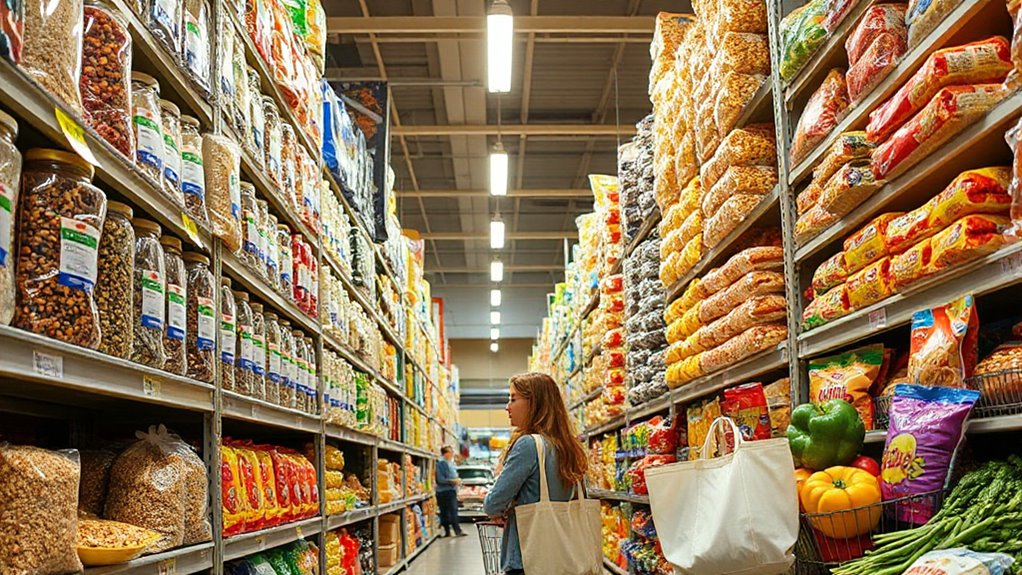

Buying in bulk saves you money when you buy items you regularly use and can store properly to prevent waste. Focus on non-perishable goods or household supplies, and look for discounts, sales, or warehouse club deals to maximize savings. Keep an eye on your consumption habits to avoid over-purchasing and spoilage. Proper storage techniques and understanding product shelf life help stretch your dollars further. Continue exploring for tips on making bulk shopping even smarter.
Key Takeaways
- Bulk buying offers savings when you regularly consume large quantities of non-perishable items or household essentials.
- Purchasing in bulk is cost-effective if you have adequate storage and can use or preserve items before they spoil.
- Take advantage of discounts, sales, or warehouse club memberships to maximize savings on bulk purchases.
- Buying in bulk saves money when you plan purchases around your consumption rate and avoid overbuying perishable goods.
- Proper storage and understanding food preservation extend shelf life, ensuring bulk purchases remain cost-effective over time.

Have you ever wondered how buying in bulk can save you money and reduce waste? It’s a smart move if you know how to leverage discount strategies and proper storage solutions. When you purchase larger quantities, you often get better prices per unit, which means significant savings over time. Retailers frequently offer discounts for bulk purchases, making it an excellent way to cut costs, especially on items you regularly use. However, to truly benefit, you need to consider whether you have the space and systems in place to store these larger quantities efficiently.
Using effective storage solutions is vital when buying in bulk. If you don’t have a designated area that keeps your items organized and accessible, you might find yourself overwhelmed or wasting product due to spoilage or expiration. Clear containers, shelving units, and labeling help guarantee you can see what you have at a glance, preventing unnecessary duplicates or waste. Proper storage also prolongs the shelf life of perishable goods, making bulk buying more economical rather than risking spoilage and throwing away money. Additionally, understanding the chemistry behind food preservation, such as controlling humidity and temperature, can further extend the lifespan of perishable items.
Before making a bulk purchase, it’s wise to evaluate your consumption habits. Are you actually going to use the entire amount before it expires? If not, buying in bulk might backfire by leading to waste rather than savings. For non-perishable items like canned goods, dry pasta, or household supplies, bulk buying tends to be more straightforward and cost-effective. For perishables, consider how quickly you consume them and whether you can store leftovers safely.
Discount strategies play a significant role in bulk buying as well. Look for sales, warehouse clubs, or store loyalty programs that maximize savings. Some stores offer special discounts on larger packages or have membership benefits that further reduce costs. Keep an eye out for coupons or promotional deals that can be combined with bulk pricing for even greater discounts. The key is to plan your purchases around these discount strategies, so you’re not tempted to buy more than you need just because it’s on sale.
Ultimately, buying in bulk saves you money when you’re strategic. It hinges on understanding your consumption patterns, implementing effective storage solutions, and taking advantage of discount strategies. When those elements align, you reduce per-unit costs, minimize waste, and streamline your shopping routine. But it’s not just about buying more; it’s about buying smarter. With the right approach, bulk shopping becomes a valuable tool for saving money and reducing environmental impact. Recognizing how chemical principles influence food preservation and packaging can also help you make more informed choices about storage and shelf life.
Frequently Asked Questions
How Do I Determine if Bulk Buying Suits My Household Size?
To determine if bulk buying suits your household size, consider your purchasing frequency and how much you use each item. If you have a small household, buying in bulk might lead to waste or spoilage. Larger households benefit more from bulk purchases because they consume items faster. Keep track of your consumption habits and compare the costs over time to see if bulk buying offers real savings for your household size.
Are There Specific Products That Never Benefit From Bulk Discounts?
Buying in bulk is like watering a plant that doesn’t need it—you waste money. Discounted electronics rarely benefit from bulk discounts because they tend to be expensive and seldom go on sale in large quantities. Similarly, perishable foods usually don’t save you money when bought in bulk, as they spoil quickly. Focus on non-perishable items or essentials to truly benefit from bulk discounts.
What Are the Best Storage Tips for Bulk Purchases?
To maximize your bulk purchases, focus on proper storage organization and maintain ideal shelf life. Use airtight containers to keep products fresh and prevent spoilage. Label items with purchase dates to track freshness. Store perishables in cool, dark places, and keep dry goods off the floor. Regularly check your stock, rotate older items to the front, and guarantee your storage space stays tidy to reduce waste and save money.
How Can I Avoid Waste When Buying in Bulk?
Think of bulk shopping as planting a garden—you want to harvest only what you’ll use. To avoid waste, plan your meals, buy only what fits your household’s needs, and store items properly to extend their freshness. This approach makes your shopping more cost-effective and reduces waste. Stay organized with labels and inventories, so nothing spoils or gets forgotten. Smart planning turns bulk buying into a sustainable, money-saving harvest.
Is Bulk Buying More Environmentally Friendly?
Bulk buying can be more environmentally friendly if you choose products with minimal packaging, reducing plastic waste and packaging impact. You actively cut down on single-use plastics and unnecessary packaging by purchasing larger quantities. However, if you’re not mindful, excess waste or spoilage can negate these benefits. Focus on eco-friendly packaging options and only buy what you’ll use to truly make bulk buying a greener choice.
Conclusion
So, next time you’re tempted to fill your cart with big packages, remember: buying in bulk is like planting a garden—it saves you time and effort in the long run, but only if you tend to it wisely. Watch for the right deals and don’t let things spoil before you get a chance to enjoy them. When you strike that perfect balance, you’ll find your wallet grows fat while your pantry stays happily full.