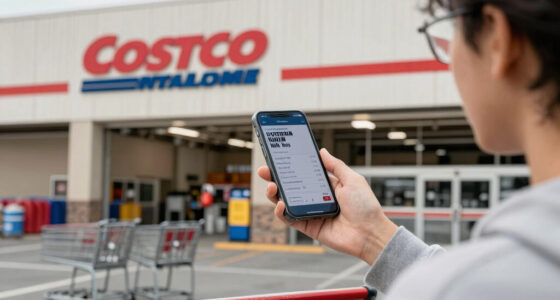
You often choose convenience over cost because you value saving time and reducing stress more than money. When you opt for quick meals or on-demand services, you’re making a mental calculation of the worth of your free hours. The time saved allows you to focus on other priorities or relax, which feels more rewarding than saving a few dollars. If you keep exploring, you’ll discover how your decision-making aligns with balancing efficiency and lifestyle needs.

Get your next haul delivered free with Prime
- Fast, free delivery on millions of items
- Prime Video, Amazon Music and more included
- Member-only deals all year
Key Takeaways
- People value their time highly and prefer spending it on meaningful activities rather than time-consuming chores.
- The opportunity cost of time saved often justifies paying extra for convenience.
- Higher costs for convenience reduce stress and improve overall lifestyle balance.
- Strategic decision-making favors efficiency, prioritizing free hours over additional expenses.
- Convenience offers tangible benefits like reduced effort, faster results, and increased leisure time.

Have you ever chosen a quick, expensive meal over a cheaper, time-consuming one? If so, you’re not alone. Many people prioritize convenience because it saves time, reduces stress, and often fits better into busy schedules. When making these choices, you’re engaging in a form of time saving strategies that weigh the value of your time against the extra cost. It’s a natural tendency to favor options that free up your hours, especially when your day is packed with responsibilities. Instead of spending hours grocery shopping, preparing ingredients, and cooking, grabbing a ready-made meal feels like an obvious win. While it might seem more expensive upfront, the real question is whether the time saved is worth the extra money spent. This brings in the idea of a cost benefit analysis, which helps you evaluate whether the convenience justifies the additional expense.
Choosing convenience over cost is a time-saving strategy worth considering in busy lives.
By doing a quick mental calculation, you realize that your time has a monetary value—whether you think of it as your hourly wage or simply the worth of your free time. When you factor in the hours spent on meal prep, cleaning, and cooking, that quick meal might save you hours each week. Those hours could be spent doing something more meaningful or relaxing, making the higher price a reasonable trade-off. This approach applies beyond food. Think about fast shipping, on-demand services, or quick errands. You’re often paying a premium because the time you save has a value that outweighs the extra expense. Recognizing the importance of time management helps clarify why many are willing to pay extra for convenience. Additionally, understanding the concept of opportunity cost can deepen your appreciation for these decisions, highlighting what you might be sacrificing in other areas of your life. For example, choosing convenience might mean sacrificing some savings or leisure time, but for many, the time saved provides a higher overall value.
In today’s fast-paced world, many individuals find that efficiency is crucial to maintaining a balanced lifestyle. People tend to accept higher costs for convenience because it reduces stress and increases overall satisfaction. You might find that spending more on a ride-share rather than parking, or choosing a pre-packaged option instead of preparing from scratch, results in a smoother day. You’re making a strategic decision, consciously or subconsciously, where the value of your time is prioritized. The key is understanding that convenience often costs more because it offers a tangible benefit—more free time or less hassle.
Ultimately, your willingness to pay for convenience hinges on how much you value your time and how efficiently you can assess the cost benefit analysis. You recognize that sometimes, paying extra isn’t just about money but about gaining hours that you can spend on other priorities. This mindset helps you navigate daily choices, balancing costs against the benefits of a more streamlined, less stressful life.
ready-made meal delivery service
As an affiliate, we earn on qualifying purchases.
As an affiliate, we earn on qualifying purchases.
Frequently Asked Questions
How Do Brands Justify Higher Prices for Convenience?
You’re willing to pay more because brands justify higher prices through perceived value and brand loyalty. They emphasize how convenience saves your time and effort, making it worth the extra cost. Brands build trust and emotional connections, encouraging you to choose their products again. This perceived value and loyalty often outweigh price considerations, making convenience the primary motivator in your purchasing decisions, even at a higher price point.
What Psychological Factors Influence Consumers to Choose Convenience?
You’re drawn to convenience because it taps into impulse buying and emotional comfort, even when it costs more. Ironically, you often prioritize immediate ease over savings, convinced that convenience eases your stress or satisfies a craving. That urge to quickly resolve a need or seek comfort makes you overlook the extra expense, showing how powerful emotional triggers are in swaying your choices toward convenience, regardless of the price.
Are There Long-Term Costs Associated With Prioritizing Convenience?
Yes, prioritizing convenience can lead to long-term costs like poor time management and increased environmental impact. When you choose quick solutions, you might save time temporarily but may struggle with inefficiency later. Additionally, convenience often involves more disposable products or energy use, harming the environment. Over time, these choices can accumulate, affecting your productivity and sustainability efforts, making it essential to weigh short-term gains against long-term consequences.
How Does Technology Impact Convenience Versus Cost Trade-Offs?
Technology enhances convenience by leveraging automation benefits and accessibility improvements, making tasks quicker and easier for you. While these benefits often come with higher costs upfront, they save you time and effort in the long run. You might pay more initially, but automation streamlines processes, and accessibility features guarantee inclusivity. Ultimately, technology shifts your focus from cost to the value of convenience, making daily life smoother and more efficient.
Can Convenience Lead to Dependency or Reduced Decision-Making Skills?
Convenience can subtly shape your habits, making you rely on quick solutions rather than developing strong decision-making skills. As you lean on easy options, you might experience decision fatigue, which dulls your ability to weigh choices critically. Over time, this habit formation can lead to a dependency on convenience, reducing your confidence in handling complex situations independently. Embracing mindful decisions helps maintain your autonomy and sharpens your judgment.
As an affiliate, we earn on qualifying purchases.
Conclusion
In the end, choosing convenience is like holding a warm, familiar lantern in the dark—bright, inviting, and easy to grasp. It promises comfort even if it costs a little more. Sometimes, the glow of ease outweighs the price, guiding you through the night with gentle certainty. Remember, it’s okay to chase that light; after all, life’s simplest pleasures often shine the brightest when convenience is just within reach.
As an affiliate, we earn on qualifying purchases.
As an affiliate, we earn on qualifying purchases.
Fall Picks
fall essentials
As an affiliate, we earn on qualifying purchases.