To start a budget aquarium, choose a smaller tank to save on costs and ease maintenance. Build your own simple filter using sponge filters or bio-balls, which are affordable and effective. Pick hardy, compatible fish like guppies or tetras to avoid costly complications. Keep up with regular water changes and avoid overcrowding to maintain water quality. Want to create a thriving, low-cost fishkeeping setup? Keep going to uncover more tips!
Key Takeaways
- Build a DIY filtration system using inexpensive materials like sponge filters or plastic bottles to save costs.
- Choose hardy, small fish such as tetras or guppies suitable for smaller tanks to reduce setup expenses.
- Opt for a compact tank size to lower initial purchase, equipment, and maintenance costs.
- Regularly maintain the tank with simple water changes and monitoring to prevent costly repairs later.
- Use affordable decorations and substrates, and research fish compatibility to avoid costly modifications.
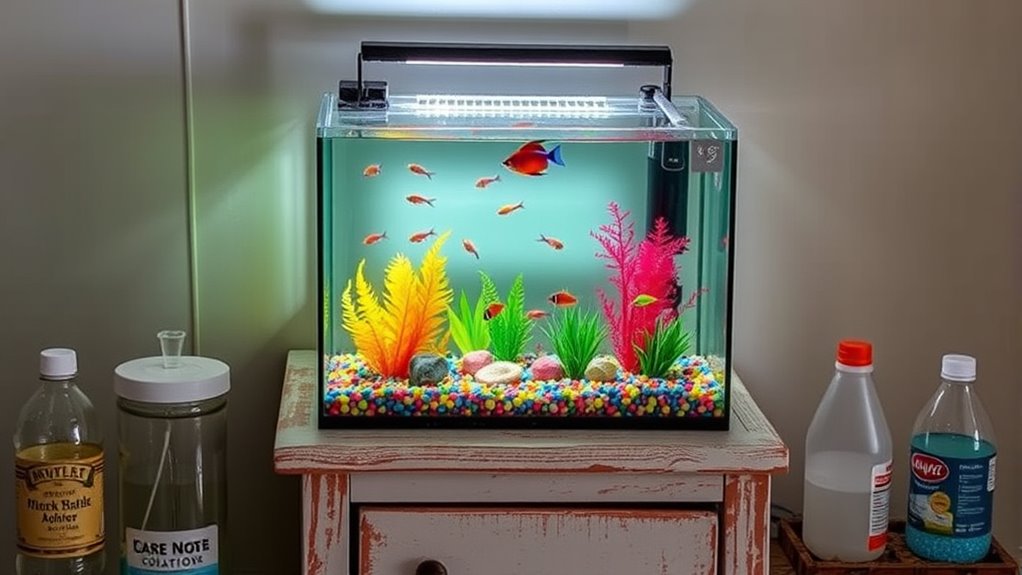
Setting up an aquarium doesn’t have to drain your wallet. With a little creativity and some research, you can create a thriving fish habitat without overspending. One of the most effective ways to save money is by opting for DIY filtration. Instead of buying expensive commercial filters, you can build your own using readily available materials like sponge filters, plastic bottles, or even bio-balls. DIY filtration systems are not only budget-friendly but also customizable to suit the specific needs of your fish and tank size. For example, sponge filters are simple to make, require minimal maintenance, and provide gentle filtration suitable for many small or delicate fish species. By doing this, you guarantee your aquatic environment remains healthy while keeping costs low.
When planning your aquarium, it’s crucial to take into account fish compatibility. Not all fish get along, and mixing incompatible species can lead to stress, injuries, or even fatalities. To keep your setup budget-friendly, choose fish that are known to coexist peacefully. Research each species’ temperament, size, and environmental needs before adding them to your tank. Community fish like tetras, guppies, and rasboras tend to be compatible with each other and are generally hardy, making them ideal for beginners. Avoid overcrowding your tank, as it can lead to poor water quality and stressed fish, which ultimately increases your maintenance costs. Proper fish compatibility not only creates a harmonious environment but also reduces the need for extensive tank modifications or costly treatments down the line.
Another way to save money while ensuring your fish thrive is to start with a smaller tank. While it might be tempting to go big, smaller tanks are cheaper to set up and maintain. They require less substrate, fewer decorations, and smaller filtration systems. Plus, they’re easier to monitor, so you’re less likely to encounter surprises that could lead to costly repairs. When choosing your tank size, keep in mind the adult size of your fish and their social behaviors. By selecting compatible species and a suitable tank size, you set yourself up for a successful, budget-friendly aquarium. Additionally, understanding the importance of a high-quality filtration system can significantly impact your tank’s health and long-term affordability.
Finally, don’t forget that maintaining your tank is key to avoiding costly replacements. Regular water changes, proper feeding, and monitoring water parameters are simple practices that keep your fish healthy and your tank running smoothly. With a little effort and some DIY ingenuity, you can enjoy the rewarding hobby of fishkeeping without breaking the bank.
Frequently Asked Questions
What Are the Best Beginner-Friendly Fish for Small Tanks?
You should start with beginner-friendly fish like bettas, guppies, or endlers, which are small and hardy. These fish are compatible with each other and easy to care for, making them perfect for small tanks. Remember, proper tank cycling is essential before introducing fish, as it helps establish beneficial bacteria. Always research fish compatibility to avoid aggression or stress, ensuring a healthy, enjoyable aquarium experience.
How Often Should I Test Water Parameters in a Budget Setup?
You should test your water parameters weekly, especially when setting up your tank, to maintain a healthy environment. Using affordable test kits makes this process easy and cost-effective. Regular water testing helps you catch issues early, such as pH swings or ammonia spikes, ensuring your fish stay healthy. As your tank stabilizes, you might reduce testing frequency to biweekly, but consistent monitoring remains key for a successful, budget-friendly aquarium.
Can I Reuse Aquarium Equipment From a Previous Setup?
Yes, you can reuse aquarium equipment from a previous setup, but you should first thoroughly clean and disinfect it. DIY filtration can be a cost-effective way to guarantee your fish stay healthy, but check for wear or damage. Reusing equipment saves money and time, yet always verify that it’s safe and functioning properly to maintain ideal fish health. Don’t skip this essential step to avoid surprises later.
What Are Low-Cost Options for Aquarium Decorations?
You can find affordable decorations by making DIY decorations using natural materials like rocks, driftwood, and aquatic plants. These are inexpensive, readily available, and safe for your fish. You might also repurpose household items or create themed backgrounds with paper or fabric. Not only do these options save money, but they also add a personal touch to your aquarium, making it a beautiful, budget-friendly environment for your fish.
How Do I Prevent Algae Growth Cheaply?
To prevent algae growth on a budget, you should focus on algae prevention by controlling light exposure and nutrient levels. Keep your tank lights on for only 8-10 hours daily and avoid overfeeding your fish. Use budget filtration options like sponge filters or DIY filters to maintain water quality. Regular water changes and live plants also help reduce excess nutrients, keeping algae at bay without extra costs.
Conclusion
Starting your aquarium on a budget proves that passion doesn’t have to come with a hefty price tag. With a little creativity and careful planning, you can create a vibrant aquatic world that’s both beautiful and affordable. Remember, a well-maintained tank is like a mirror to your dedication—reflecting your love for the hobby without draining your wallet. So plunge in, and let your aquatic adventure unfold—because the best things in life are often the simplest.