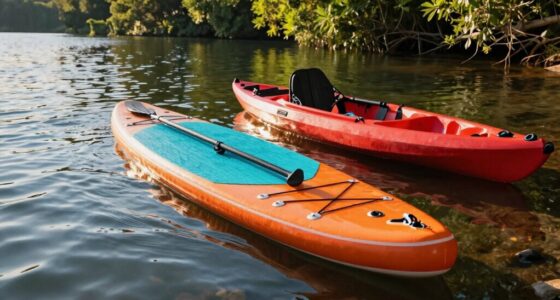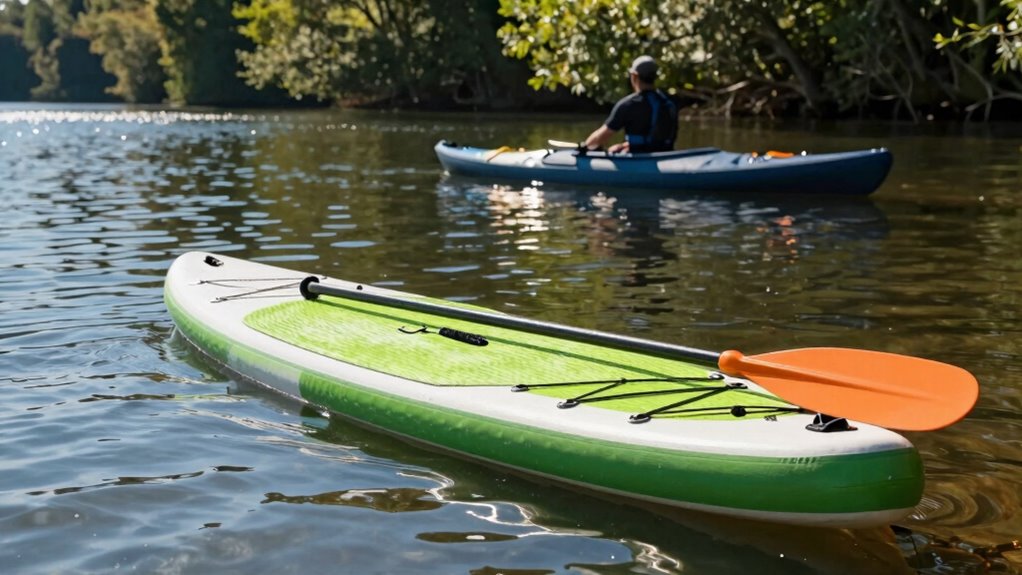

To choose between a paddle board and a kayak, consider your water activity goals and comfort. If you want an active, balancing experience on calm water, a paddle board might be best. For longer trips, fishing, or more storage, a kayak offers better support and space. Think about transport and storage ease, as well as water conditions and your skill level. Keep exploring to discover more details that can help you make the perfect choice.

Get your next haul delivered free with Prime
- Fast, free delivery on millions of items
- Prime Video, Amazon Music and more included
- Member-only deals all year
Key Takeaways
- Consider water conditions: paddle boards excel on calm waters, while kayaks perform better in choppy or rough conditions.
- Assess storage needs: kayaks offer better built-in storage for longer trips or gear-heavy activities.
- Think about activity type: paddle boards are ideal for balance-focused activities like yoga, whereas kayaks suit extended paddling or fishing.
- Evaluate transportation and storage: paddle boards are easier to carry and store for casual use, while kayaks may require more space and equipment.
- Match comfort and support preferences: kayaks provide more ergonomic support for long outings, while paddle boards offer active engagement on calm days.
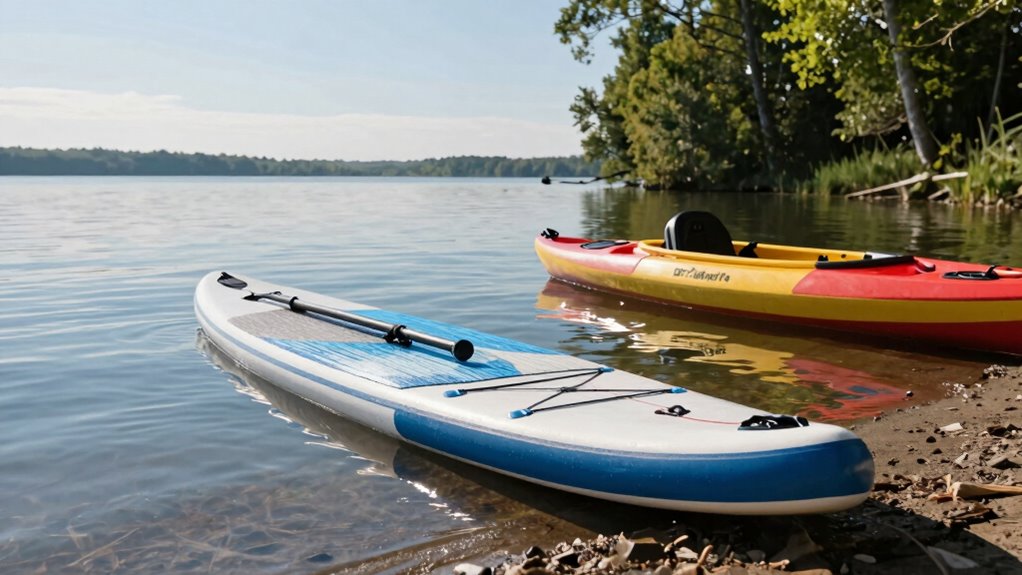
Are you trying to decide whether a paddle board or a kayak is the better choice for your next water adventure? The decision largely depends on what you value most in your experience. If you’re looking for something that offers a sense of balance and connection with the water, a paddle board might be the way to go. Paddle board stability is generally quite high, especially on calm waters, making it easier for beginners to stay upright and confident. The wide, flat surface provides a stable platform, allowing you to focus on paddling without worrying about tipping over. Plus, paddle boards are versatile—you can practice yoga, do fitness routines, or simply enjoy a peaceful glide along the shoreline.
On the other hand, if you prefer a more traditional watercraft that can carry more gear and offers a different kind of comfort, a kayak could be a better fit. Kayak storage options tend to be more practical for longer trips or when you want to bring along camping gear, snacks, or fishing equipment. Most kayaks come with built-in compartments or space for waterproof bags, making it easier to organize and secure your belongings. The sitting position in a kayak also offers a bit more support and protection from the elements, which can be a plus if you’re planning to be out on the water for hours. Additionally, storage capacity in kayaks is a key factor for those planning extended outings or multi-day adventures. Considering the stability of each craft can help you decide which will be easier for your skill level and water conditions.
Kayaks offer practical storage, support, and protection, ideal for long trips, camping, or fishing adventures.
When considering your choice, think about how much gear you want to bring along. Kayaks usually provide more storage space, which is ideal if you’re heading out for a day-long adventure or planning to explore remote spots. Paddle boards, while more limited in storage, can still carry small items in deck bags or waterproof backpacks, but they aren’t designed for hauling large loads. If you’re someone who prioritizes stability, you’ll find paddle boards to be quite forgiving on calm days, especially with a wide, stable design. However, keep in mind that paddle boards can be less stable on choppy waters, so your skill level and water conditions are important factors. Additionally, ease of transportation and storage of each craft can influence your decision depending on your available space and travel plans. Being aware of the environmental impact of your watercraft can also help you choose a more eco-friendly option.
Ultimately, your choice will hinge on your activity preferences, storage needs, and comfort. If you want easy balance and a more active, engaging experience, go for the paddle board. If you value storage capacity and a traditional feel, a kayak might be the better option. Both are fantastic ways to enjoy the water, so consider what suits your style and needs best before you make your decision.
inflatable stand up paddle board beginner package with paddle and leash
As an affiliate, we earn on qualifying purchases.
As an affiliate, we earn on qualifying purchases.
Frequently Asked Questions
Which Is More Suitable for Beginners?
For beginners, a kayak is generally more suitable because it offers better stability, helping you feel confident on the water. You’ll find kayak stability easier to manage, especially if you’re just learning. Paddle technique is also simpler since you sit down and use double paddles, which provides better control. Paddle boards require more balance and core strength, making them a bit more challenging for newcomers.
What Are the Maintenance Requirements for Each?
Maintenance for a paddle board is simple—you’ll want to rinse it with fresh water after each use and store it in a cool, shaded spot to avoid sun damage. Kayaks need similar care, with added attention to cleaning routines around locks and hinges. Both require regular inspections for cracks or damage, and proper storage tips include keeping them off the ground and covered. Basically, treat them well, and they’ll keep you floating happily—unlike your patience during a messy cleanup.
How Do Weather Conditions Affect Usage?
Weather conditions greatly impact your water adventures. Weather hazards like storms or heavy rain can make paddling unsafe, so always check forecasts first. Wind impact is vital; strong winds can destabilize a paddle board, making it harder to control, while a kayak’s enclosed design offers better protection. Calm, windless days are ideal for both, but always prioritize safety and avoid venturing out during adverse weather to guarantee a fun, safe experience.
Are There Specific Safety Gear Recommendations?
You need essential safety equipment for your water adventures, and protective gear is your best friend on the water. Always wear a life jacket, preferably a well-fitted personal flotation device, and consider a helmet if you’re paddling in rough or rocky waters. Bring a whistle or signaling device, and pack a waterproof first aid kit. Staying prepared keeps you safe, confident, and ready to conquer even the wildest waves!
Can I Use Both on the Same Water Body?
Yes, you can use both on the same water body, thanks to their watercraft versatility. Just make certain your equipment is compatible with each vessel, like life jackets, paddles, and safety gear. Keep in mind that paddle boards and kayaks may require different accessories or storage options. By understanding these factors, you can enjoy a seamless experience, switching between your paddle board and kayak without hassle or safety concerns.
recreational sit-in kayak with storage compartments
As an affiliate, we earn on qualifying purchases.
As an affiliate, we earn on qualifying purchases.
Conclusion
Ultimately, your choice between a paddle board and a kayak depends on your adventure style. Did you know that kayaking has been around for thousands of years, with over 3 million paddlers in the U.S. alone? Whether you prefer the stability and speed of a kayak or the versatility and fun of a paddle board, both options offer unique ways to explore the water. Pick what excites you most and get ready for your next aquatic adventure!
waterproof kayak dry bag for paddling trips
As an affiliate, we earn on qualifying purchases.
As an affiliate, we earn on qualifying purchases.
paddle board deck bag waterproof
As an affiliate, we earn on qualifying purchases.
As an affiliate, we earn on qualifying purchases.
Halloween Picks
halloween
As an affiliate, we earn on qualifying purchases.