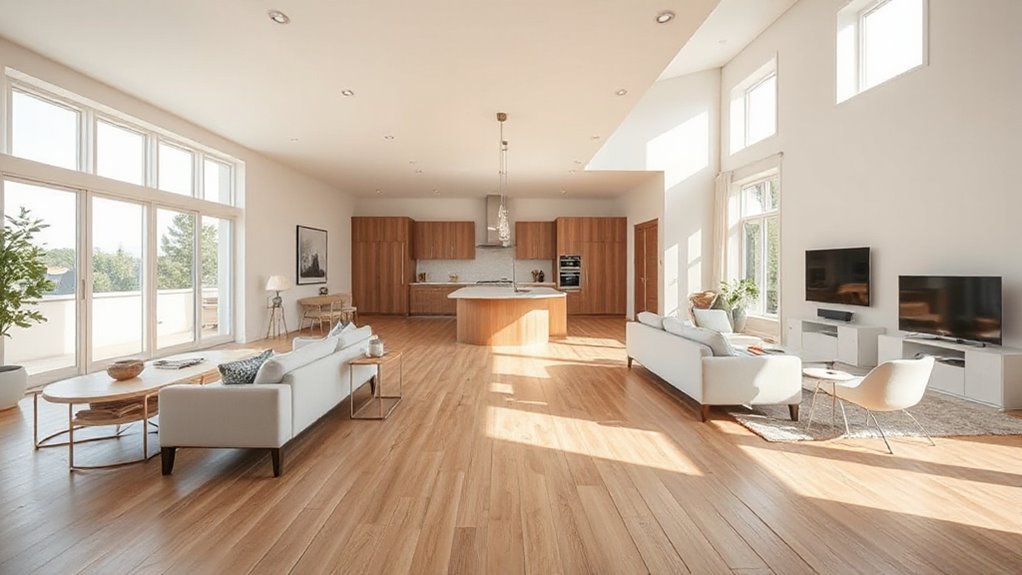

Open floor plans are trendy for creating a spacious, modern, and social living environment, making your home feel larger and more inviting. However, knocking down walls can reduce privacy, amplify noise, and make it hard to find quiet moments. If you value intimate spaces or need quiet for work or relaxation, open layouts might not be ideal. To learn more about balancing style and practicality, keep exploring the pros and cons of open floor plans.
Key Takeaways
- Open floor plans create spacious, modern environments that promote social interaction and a seamless aesthetic flow.
- They reduce privacy and quiet spaces, which can be problematic for work, relaxation, or individual retreats.
- Noise amplification is common, making it harder to contain sound and maintain tranquility within the home.
- Suitable mainly for social and active households; less ideal for those prioritizing privacy or quiet.
- Consider personal lifestyle needs carefully, as removing walls balances social benefits against potential privacy and noise challenges.
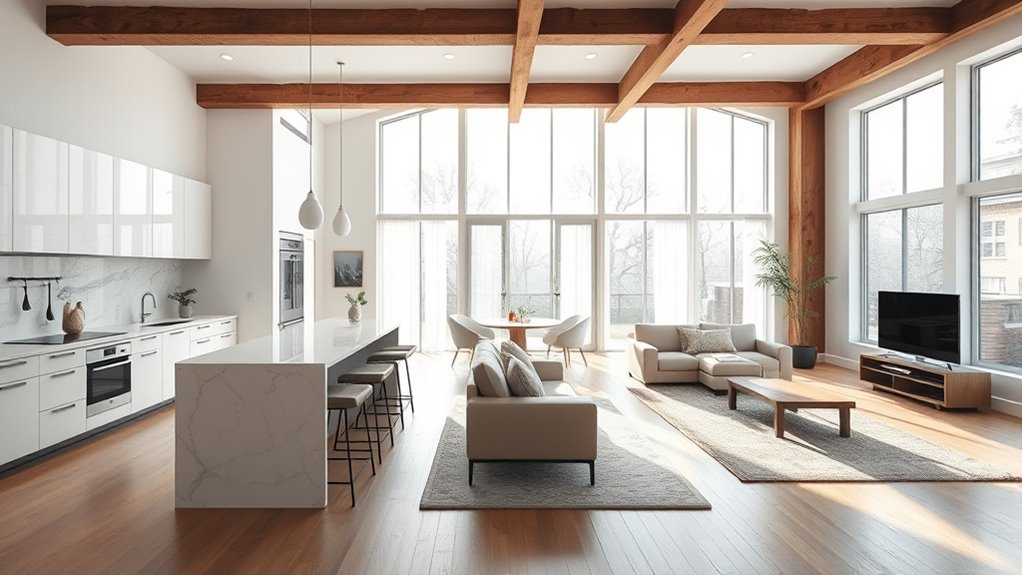
Have you ever wondered why open floor plans have become so popular? It’s because they create a sense of spaciousness and encourage social interaction, making your home feel larger and more inviting. But while they seem ideal for modern living, they come with some downsides you might not have considered. For example, privacy concerns quickly come into play when you remove walls that used to separate different rooms. If you love having a quiet space to retreat to or need a dedicated home office, an open layout might leave you feeling exposed or restless. Without walls, it’s harder to find a moment of solitude, especially if you’re hosting guests or have family members with different schedules. You could find yourself constantly adjusting your activities to avoid disturbing others or feeling like your personal space is compromised.
Open floor plans boost space and socializing but can compromise privacy and quiet.
Noise levels are another significant issue. Open floor plans tend to amplify sound, so conversations, television noise, or even footsteps become more noticeable across the entire space. If you’re someone who values peace and quiet or needs to focus on work or study, this can quickly turn into a frustration. The lack of physical barriers means sound travels freely, making it difficult to contain noise in one area. This can be especially problematic if you have children or live with multiple people, each with different routines or lifestyles. While open spaces are great for entertaining, they can also turn into a cacophony where every sound blends together, making it harder to relax or concentrate. Additionally, the importance of soundproofing techniques in balancing openness with tranquility is often overlooked but can greatly improve the living experience.
Ultimately, whether an open floor plan works for you depends on your lifestyle and priorities. If privacy concerns or noise levels are non-negotiable, you may want to think twice before knocking down those walls. But if you’re enthusiastic for a modern, social environment and are willing to manage the noise, an open layout could be just what your home needs.
Frequently Asked Questions
How Do Open Floor Plans Affect Home Privacy?
Open floor plans can impact your home privacy by increasing noise levels and making it harder to find quiet, private moments. You might find it challenging to concentrate or relax without walls to buffer sound. Privacy concerns also arise because activities in one area are more visible and audible from other spaces. To address this, consider adding strategic partitions or soundproofing, so you enjoy the open feel without sacrificing your privacy.
Are Open Layouts Suitable for Families With Young Children?
Open layouts can work for families with young children if you prioritize nursery safety and noise management. You’ll want to install safety gates and keep an eye on your kids easily. Use rugs, soft furnishings, and strategic furniture placement to dampen noise. While it’s a spacious setup, stay attentive to safety concerns and noise levels to create a comfortable environment for both kids and adults.
What Are the Energy Efficiency Implications of Knocking Down Walls?
Knocking down walls can reduce energy efficiency by causing insulation challenges that lead to heat loss or gain. Studies show open layouts can increase heating and cooling costs by up to 20%. Without proper insulation and HVAC adjustments, you might spend more on energy bills. To avoid this, plan for enhanced insulation and HVAC efficiency measures, ensuring your open space stays comfortable without boosting energy expenses.
How Does Open Plan Design Impact Home Resale Value?
You’ll likely see a boost in resale appeal and market demand with an open plan design, especially if it aligns with current trends. Buyers often favor spacious, flexible layouts that make homes feel larger and more inviting. However, consider your local market and target buyers, as some may prefer traditional layouts. Overall, an open floor plan can enhance your home’s attractiveness and potentially increase its resale value.
Can Open Floor Plans Accommodate Future Remodeling?
Think of your open floor plan as a flexible dance floor—ready for new moves. Yes, it can accommodate future remodeling, thanks to design flexibility. But beware of structural challenges—removing walls might hit a load-bearing wall or require reinforcements. Planning ahead guarantees your space adapts smoothly to your evolving needs, letting you dance through future renovations without missing a beat.
Conclusion
Open floor plans blend style with function, creating inviting spaces that foster connection. Yet, they can also feel overwhelming and lack privacy. Whether you see them as modern masterpieces or open to chaos, it’s all about your lifestyle and preferences. Like a bold painting or a subtle sketch, they’re a design choice that sparks debate. Ultimately, it’s your home—make it a space that reflects you, whether that’s open and lively or cozy and private.