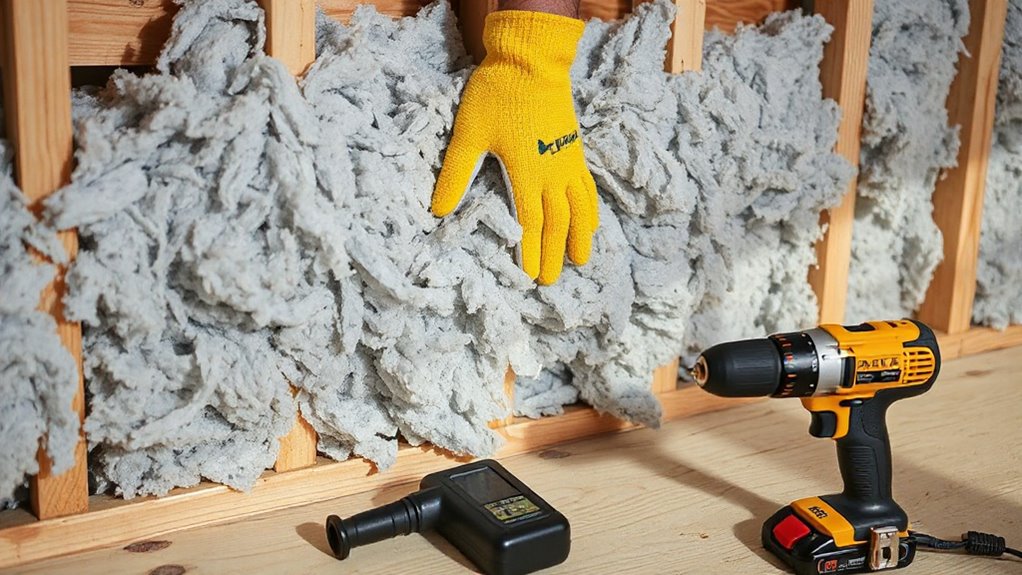

To cut down your energy bills with DIY insulation tricks, start by sealing all leaks around windows, doors, and vents using caulk or foam sealant. Then, choose the right insulation materials like fiberglass batts or spray foam, and install them properly, ensuring no gaps or compression. Focus on insulating attic spaces, gaps in rim joists, and basement foundations for maximum effectiveness. Keep safety in mind, and you’ll discover even more simple ways to boost your home’s energy efficiency.
Key Takeaways
- Seal all gaps, cracks, and leaks around windows, doors, and vents to prevent warm air from escaping.
- Choose appropriate insulation materials like fiberglass batts or spray foam, and install them properly without compression.
- Ensure proper R-value for your climate to maximize energy savings and comfort.
- Insulate attic and rim joists thoroughly to reduce heat transfer and improve overall efficiency.
- Use caulk and foam sealants to block air leaks before installing insulation for optimal results.
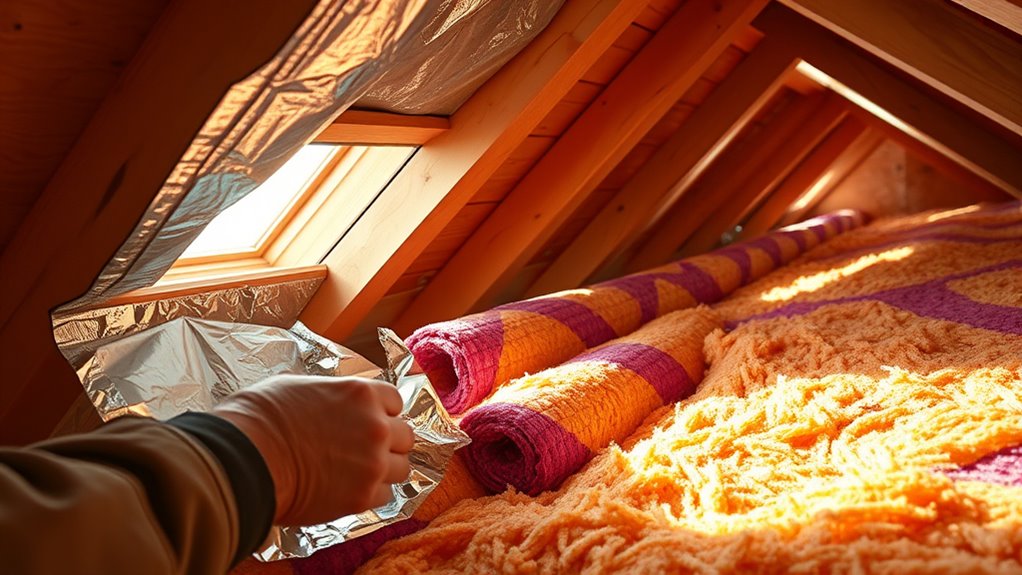
Insulating your home yourself can be an effective way to reduce energy bills and improve comfort. When you take on this project, choosing the right insulation materials is vital. There are several options available, including fiberglass batts, spray foam, cellulose, and foam boards. Each material has its pros and cons, so consider your specific needs, budget, and the area you’re insulating. For instance, fiberglass batts are affordable and easy to install, making them a popular choice for DIY projects. Spray foam offers superior sealing properties, but it requires more skill and safety precautions. Cellulose is environmentally friendly and good for filling irregular spaces, while foam boards are ideal for insulating exterior walls or basement foundations.
Once you’ve selected your insulation materials, mastering proper installation techniques is key to maximizing energy savings. First, confirm you properly prepare the space by cleaning and removing any obstructions. For wall cavities, measure carefully to cut insulation to fit snugly without gaps. When installing batts or rolls, avoid compressing the material, as it reduces its insulating value. Instead, keep the insulation fluffy and fit tightly between studs. When working with spray foam or foam boards, follow manufacturer instructions carefully—wear protective gear, and confirm proper ventilation. For spray foam, apply in thin layers and avoid over-application, which can cause issues down the line. Additionally, understanding the insulation R-value helps you choose materials that provide adequate thermal resistance for your climate.
Proper preparation and careful installation are key to maximizing insulation effectiveness and energy savings.
Sealing gaps and cracks is an essential part of effective insulation. Before installing insulation, check for leaks around windows, doors, and electrical outlets. Use caulk or foam sealant to close small gaps, making sure that your insulation can do its job without air leaks undermining its effectiveness. When installing insulation in attics, pay particular attention to sealing all penetrations and vents to prevent warm air from escaping. In crawl spaces or basements, insulate rim joists and seal any openings to prevent drafts and moisture issues.
It’s also important to understand the proper techniques for handling insulation materials. For fiberglass batts, wear gloves, long sleeves, and a mask to avoid irritation. For spray foam, exercise caution to prevent over-spraying and ensure even coverage. If you’re installing insulation around electrical fixtures, use fire-resistant materials and maintain clearances as recommended by safety standards. When you follow these installation techniques, you’ll not only improve your home’s energy efficiency but also create a safer environment.
Frequently Asked Questions
How Do I Determine Which Insulation Type Is Best for My Home?
To determine the best insulation materials for your home, consider your climate, budget, and space. Research different types like fiberglass, foam, or cellulose, and evaluate their R-values for efficiency. Also, think about installation techniques—some materials are easier to install yourself, while others may require professional help. Consult local building codes and get expert advice if needed, ensuring you choose the right insulation for ideal energy savings.
What Safety Precautions Should I Take When Insulating Myself?
Before you start, remember safety is vital. You should always wear protective gear—gloves, goggles, and a mask—to prevent irritation and inhalation of fibers. Make certain proper ventilation in the work area to avoid inhaling dust or fumes. Keep a fire extinguisher nearby, and read all safety instructions carefully. If you’re unsure, consider consulting a professional. Your safety isn’t worth risking for a quick fix.
Can DIY Insulation Improve Soundproofing in My Home?
Yes, DIY insulation can improve soundproofing in your home. Using the right insulation materials, such as mineral wool or foam boards, enhances soundproofing benefits by reducing noise transmission between rooms. To maximize results, focus on sealing gaps and installing insulation properly around walls, floors, and ceilings. This not only cuts down noise but also boosts overall comfort, making your space quieter and more peaceful.
How Often Should I Inspect or Replace My Home Insulation?
You should inspect your home insulation at least once every 1 to 2 years to catch any damage or settling early. The replacement frequency depends on the material—fiberglass typically lasts around 15-20 years, while spray foam can last up to 80 years. Regular inspections help you determine if repairs or replacements are needed, ensuring your insulation remains effective in reducing energy bills and maintaining comfort.
Are There Any Rebates or Financial Incentives for DIY Insulation Projects?
You can often score government grants and tax credits for your DIY insulation projects, which can save you a pretty penny. It’s worth digging into local, state, or federal programs that support energy-efficient upgrades. Sometimes, these incentives are a goldmine if you’re willing to do the work yourself. Keep an eye out for rebates, as they can make your insulation efforts both cost-effective and rewarding in the long run.
Conclusion
By tackling your home insulation yourself, you could save up to 20% on energy bills each year. Imagine shrinking your heating and cooling costs enough to cover a weekend getaway or new gadgets. With just a few simple DIY tricks, you’re not only making your home more comfortable but also keeping more money in your pocket. Start insulating today, and watch your energy bills—and your savings—drop dramatically.