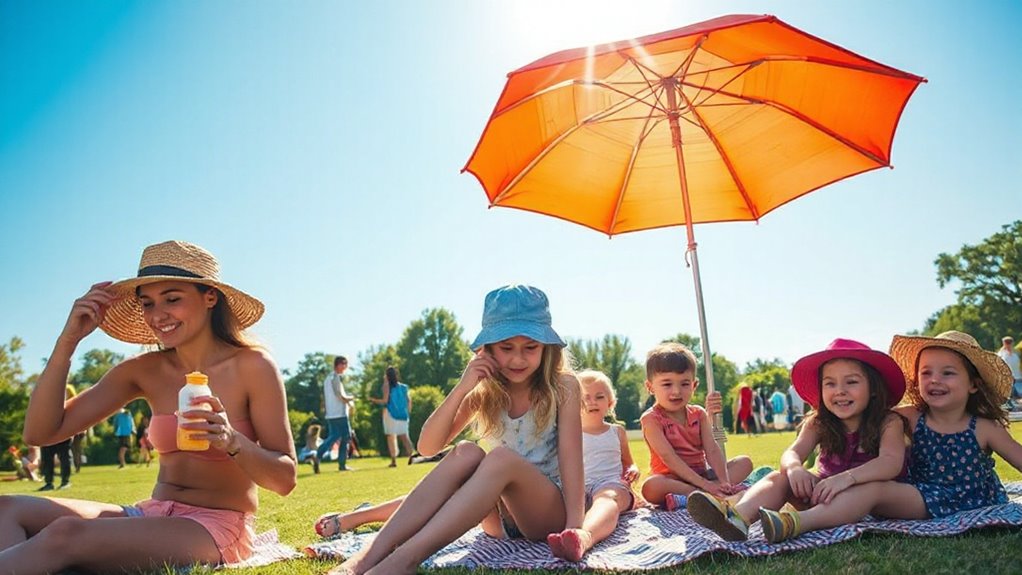

To protect your skin on a budget, choose affordable sunscreens with SPF 30+ and broad-spectrum coverage, especially during sales or with coupons. Wear cost-effective UPF clothing, hats, and sunglasses, and plan outdoor activities during early morning or late afternoon hours. Reapply sunscreen regularly, and use physical barriers like clothing and shade to reduce exposure. Smart shopping and simple strategies help keep you safe without overspending—discover more ways to stay protected below.
Key Takeaways
- Use affordable, broad-spectrum sunscreens SPF 30+ during sales or with coupons for cost savings.
- Wear UPF clothing and accessories like hats and sunglasses to physically block UV rays.
- Plan outdoor activities during early morning or late afternoon hours to minimize sun exposure.
- Reapply sunscreen every two hours and use natural oils or homemade remedies as supplementary protection.
- Seek shade and limit direct sun contact during peak hours to reduce skin damage without extra cost.

Protecting your skin from the sun doesn’t have to break the bank. You can find affordable sunscreen options that offer great protection without costing a fortune. Many drugstores carry budget-friendly brands that have been tested for SPF effectiveness, so you don’t need to overspend to stay safe. Look for sunscreens labeled with broad-spectrum protection and at least SPF 30. These options are often cheaper than designer brands but still provide reliable defense against harmful UV rays. Shopping during sales or using coupons can further reduce the cost, making sun protection accessible for everyone.
In addition to affordable sunscreen options, exploring DIY sun protection methods can help you save money and stay protected. Wearing clothing with UPF (Ultraviolet Protection Factor) can serve as a natural barrier against the sun, especially during peak hours. Lightweight, long-sleeved shirts, wide-brim hats, and UV-protective sunglasses are cost-effective investments that last for years. Applying a thin layer of natural oils or homemade sunscreen recipes—using ingredients like zinc oxide and coconut oil—can also be a DIY sun protection method, but keep in mind that these homemade solutions might not always offer the same broad-spectrum coverage as commercial sunscreens. Still, they can supplement your sun safety routine, especially when combined with physical barriers.
You don’t need to spend a lot to stay protected. Opt for multi-use items like hats and sunglasses that shield your face and eyes from UV exposure. Planning outdoor activities during early morning or late afternoon hours can also reduce the risk of sun damage, allowing you to enjoy the outdoors safely without constantly relying on expensive products. When applying sunscreen, do so generously and reapply every two hours, especially if you’re sweating or swimming. Remember, even the most affordable products are effective only if used properly. Being aware of UV protection strategies can help you maximize your sun safety routine without extra costs.
Finally, educating yourself about sun safety can help you make smarter choices. Recognize the importance of limiting direct sun exposure during peak hours and seek shade whenever possible. These simple, budget-friendly strategies can considerably reduce your risk of skin damage while keeping your expenses low. With a little effort and some smart shopping, you can protect your skin effectively without overspending.
Frequently Asked Questions
How Can I Tell if My Sunscreen Is Still Effective?
You can tell if your sunscreen is still effective by checking its expiration date—most sunscreens last about three years. If it’s past that, it may have lost some UV protection. Also, look for changes in color, texture, or smell, which indicate degradation. If unsure, it’s safer to substitute it to ensure you get the full sun protection you need. Always store sunscreen in a cool, dry place for maximum effectiveness.
Are There Natural Alternatives to Commercial Sunscreen?
You might find natural remedies and homemade formulations as effective alternatives to commercial sunscreen, especially when you stumble upon ingredients like zinc oxide or red raspberry seed oil. These natural options provide some sun protection, but remember, their SPF levels vary and may not be as reliable. Always test a small patch first and reapply often to stay safe under the sun.
What Clothing Offers the Best Sun Protection?
You should choose clothing made from UV resistant fabrics for the best sun protection. Look for long-sleeved shirts, wide-brimmed hats, and pants that provide adequate coverage according to coverage recommendations. Darker colors and tightly woven materials also enhance protection. These options are affordable, effective, and help shield your skin from harmful UV rays without the need for expensive sunscreens, keeping you safe while enjoying outdoor activities.
How Often Should I Reapply Sunscreen During the Day?
Think of sunscreen as your skin’s shield; you need to reinforce it regularly. Reapplication frequency is every two hours, especially if you’re sweating or swimming. Remember, sunscreen’s lifespan is limited—its protection diminishes over time. Don’t wait too long to reapply, or your shield weakens. Staying vigilant keeps your skin safe and your sun protection effective, ensuring you enjoy sunny days without worry.
Can Diet Help Improve My Skin’s Sun Resistance?
Yes, your diet can help improve your skin’s sun resistance. By increasing your antioxidant intake—think berries, nuts, and leafy greens—you boost your skin’s natural defenses against UV damage. Staying well-hydrated with plenty of water also supports skin repair and resilience. While diet alone isn’t a substitute for sunscreen, combining these habits with proper sun protection can make your skin more resilient and help prevent damage from sun exposure.
Conclusion
Protecting your skin doesn’t have to break the bank. Just like a trusty umbrella shields you from rain without costing a fortune, affordable sun safety measures can keep you safe without overspending. I once spent a summer hiking with a homemade hat and SPF lotion from the dollar store—by the end of the day, I was as protected as anyone with high-end gear. Remember, simple, budget-friendly steps can make all the difference in enjoying sunny days safely.