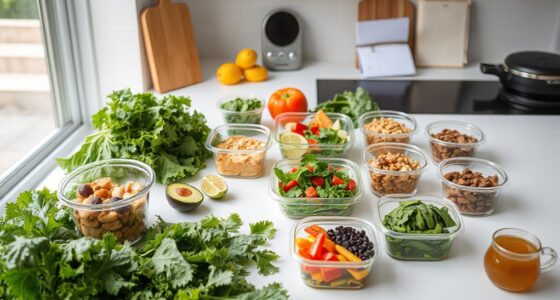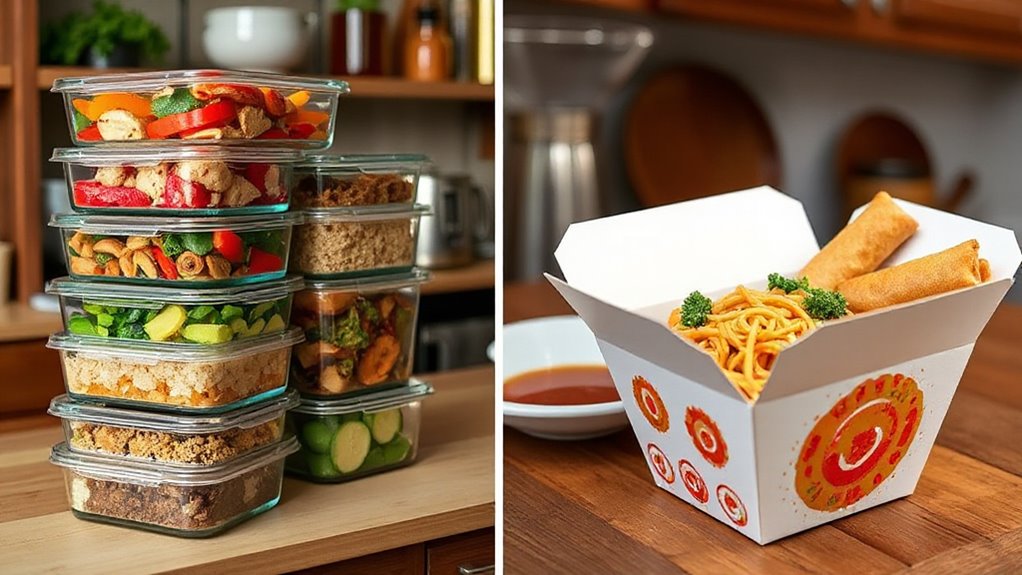

Cooking at home through meal prepping can save you hundreds of dollars each month compared to constantly ordering takeout. By planning meals, buying affordable ingredients, and cooking in bulk, you control costs, reduce waste, and make healthier choices. While takeout offers convenience, it adds up quickly. If you keep up with your meal prep routine, you’ll discover how much money and time you can save over time. Keep going to see exactly how much your habits can improve.
Key Takeaways
- Home-cooked meals typically cost significantly less than frequent takeout, saving hundreds of dollars monthly.
- Meal prepping reduces impulse purchases and food waste, maximizing savings over time.
- Planning and using affordable ingredients lower grocery expenses compared to restaurant prices.
- Preparing meals in advance decreases reliance on costly last-minute takeout options.
- Consistent home cooking supports healthier eating, potentially reducing healthcare costs long-term.

Deciding between meal prepping and takeout often comes down to your priorities for convenience, cost, and nutrition. When you choose to cook at home, you have control over the ingredients you use, which can make a significant difference in your budget. Affordable ingredients like rice, beans, seasonal vegetables, and bulk meats help keep costs low while still offering nutritious meals. By planning your meals ahead of time, you can take advantage of sales and discounts, ensuring you’re not overspending on last-minute takeout orders. This approach also allows you to stretch your dollar further, especially when compared to the often higher prices of restaurant or fast-food options.
Time management plays a vital role in determining whether meal prepping is worthwhile for you. Preparing meals in advance might seem time-consuming initially, but it actually saves you time during busy weekdays. When you set aside a specific day to cook multiple meals, you eliminate daily decision-making about what to eat and reduce the time spent on repetitive cooking. This means you’re less likely to resort to takeout when you’re pressed for time. Instead, you’ll have ready-to-eat, healthy options waiting in your fridge or freezer, which can be quickly reheated. Efficient meal prep also encourages batch cooking, allowing you to prepare larger quantities of affordable ingredients and divide them into portions. This not only streamlines your weekly routine but also minimizes the frequency of cooking from scratch.
Another benefit of meal prepping is that it helps you make more mindful choices about what you eat. When you plan your meals, you’re less tempted to grab unhealthy takeout options driven by convenience or cravings. You can incorporate a variety of nutritious ingredients, ensuring balanced meals that support your health goals. Plus, with practice, you’ll become more skilled at managing your time and shopping efficiently, reducing waste and unnecessary trips to the store. Additionally, understanding the importance of family photoshoot fails teaches us to plan better to avoid unexpected mishaps that could disrupt your meal prep schedule.
Ultimately, the decision hinges on how well you can balance your schedule with the benefits of home-cooked meals. If you prioritize saving money and enjoy controlling what goes into your food, meal prepping is a smart choice. It allows you to make the most of affordable ingredients while giving you better control over your diet. When managed well, it makes your weekly routine smoother and more economical. On the other hand, if time is tight and convenience is your top priority, takeout might fit your lifestyle better—though it often comes at a higher cost. Balancing these factors can help you make smarter, more satisfying choices for your meals.
Top picks for "meal prepp takeout"
Open Amazon search results for this keyword.
As an affiliate, we earn on qualifying purchases.
Frequently Asked Questions
How Does Meal Prepping Impact Long-Term Health and Nutrition?
Meal prepping boosts your long-term wellness by helping you maintain nutritional consistency. When you plan and prepare meals, you control ingredients, portion sizes, and nutrient balance, reducing reliance on unhealthy takeout options. This habit encourages better eating habits over time, supporting sustained health. By consistently choosing nutritious foods, you foster long-term health benefits, making meal prepping a key strategy for improving overall nutrition and wellness.
What Are the Environmental Benefits of Cooking at Home Versus Takeout?
Cooking at home helps reduce your environmental impact by lowering food waste and decreasing your carbon footprint. When you prep meals yourself, you control portion sizes and avoid excess packaging, which cuts down on waste. Plus, you can choose sustainable ingredients, further reducing environmental harm. Overall, cooking at home promotes eco-friendly habits, making a positive difference for the planet compared to ordering takeout.
How Can Meal Prepping Accommodate Dietary Restrictions and Preferences?
Think of meal prepping as a tailor-made suit for your diet. You can easily accommodate dietary restrictions and preference flexibility by customizing ingredients and portion sizes. Batch cooking allows you to select specific proteins, grains, or vegetables, ensuring each meal aligns with your needs. This approach gives you control over allergens, calorie counts, or specific nutritional goals, making healthy eating both convenient and personalized to your lifestyle.
What Are Cost-Effective Tips for Beginners Starting Meal Prep?
To start meal prepping on a budget, focus on budget-friendly ingredients like rice, beans, and seasonal vegetables. Use portion control techniques to avoid waste and stretch your meals further. Plan your recipes ahead, buy in bulk, and prep meals in advance to save both time and money. These simple steps help you stay within your budget while enjoying healthy, homemade meals every week.
How Does Meal Prepping Influence Grocery Shopping Habits?
Like a master painter shaping a canvas, your meal prepping refines your grocery shopping habits. It encourages you to craft a precise grocery list, focusing on essentials and reducing impulse buys. With meal prep, your shopping frequency decreases, saving time and money. You shop smarter, buying in bulk and planning ahead, making each trip more intentional. This disciplined approach transforms grocery shopping from a chore into a strategic, cost-effective activity.
Conclusion
Choosing between meal prepping and takeout is like steering your ship through calm waters or wild storms. When you prep meals at home, you’re the captain of your budget and health, steering clear of hidden costs and empty calories. Takeout might seem quick, but it’s like chasing rainbows—beautiful but fleeting. Take control of your culinary voyage, and you’ll find that cooking at home transforms your savings into a steady stream, fueling your journey toward better health and wallet peace.