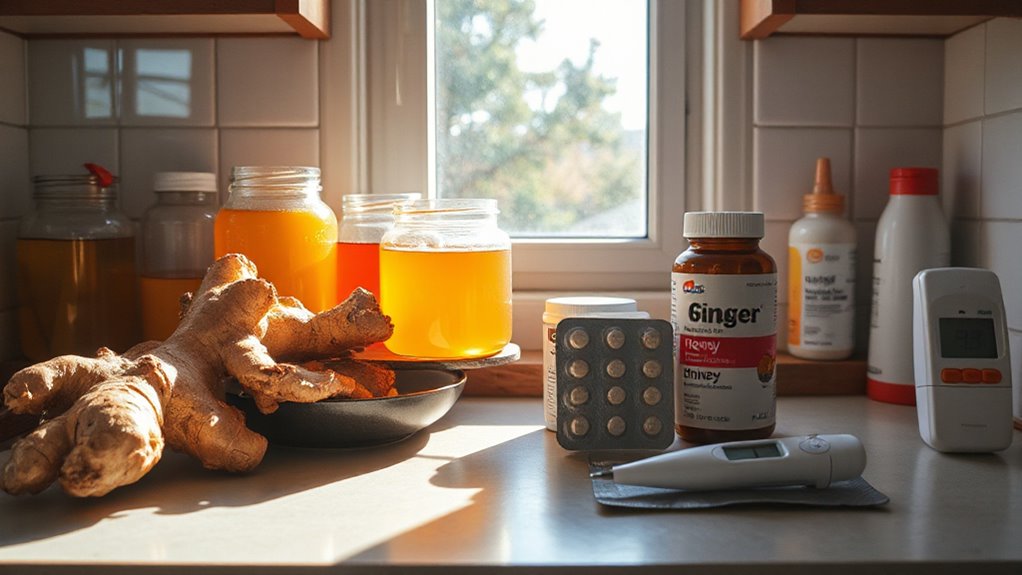

When choosing between home remedies and OTC medicines for common ailments, consider your preferences and the severity of your symptoms. Home remedies like honey for sore throats or ginger for nausea are budget-friendly, natural, and easy to access for minor issues. OTC options offer precise dosages and faster relief, especially if symptoms persist. Understanding the differences helps you make informed choices, and there’s more to discover if you continue exploring these options.
Key Takeaways
- Natural remedies are affordable, accessible, and suitable for minor ailments, often based on traditional use.
- OTC medications provide precise dosages, faster relief, and targeted treatment for common symptoms.
- Natural remedies are generally free from synthetic chemicals, while OTC drugs may have side effects or interactions.
- For persistent or worsening symptoms, OTC options are more effective and advisable.
- Combining home remedies and OTC medications can optimize budget-friendly health management.

Have you ever wondered whether home remedies or over-the-counter (OTC) medications are better for treating minor health issues? The choice often depends on what you prefer and what’s available, but understanding the differences can help you make informed decisions. When it comes to home remedies, you’re tapping into natural ingredients that have been used for generations. Think honey for sore throats, ginger for nausea, or peppermint oil for headaches. These natural ingredients are appealing because they’re generally affordable, readily accessible, and free from many synthetic chemicals. Plus, many people appreciate the simplicity and tradition behind using natural remedies, feeling reassured that they’re using something familiar and gentle on their bodies.
On the other hand, pharmaceutical options—your OTC medications—offer a different set of advantages. They’re formulated with precise dosages and undergo rigorous testing to ensure safety and efficacy. When you choose OTC drugs like ibuprofen for pain or antihistamines for allergies, you benefit from predictable results and quick relief. These medications are designed to target specific symptoms efficiently, often providing faster comfort than natural remedies. However, they can sometimes carry side effects or interactions, especially if you’re taking other medications or have underlying health conditions. That’s why it’s important to read labels carefully and follow dosage instructions.
Deciding between natural ingredients and pharmaceutical options boils down to your personal preferences and the nature of your minor ailment. For minor issues like a cough or mild headache, many find that home remedies are a good starting point. They’re cost-effective and can often be used safely without a prescription. Yet, if symptoms persist or worsen, OTC medications might be the better choice for rapid relief and more targeted treatment. Some people prefer to combine both approaches—using natural ingredients for ongoing support while turning to OTC medicines when immediate relief is necessary. Additionally, understanding the contrast ratio of remedies can help you evaluate their effectiveness based on your specific needs.
Frequently Asked Questions
Are Home Remedies Suitable for Severe Health Conditions?
Home remedies aren’t appropriate for severe health conditions because severity concerns demand professional medical treatment. While they may help with minor issues, their efficacy limitations become evident with serious ailments. You shouldn’t rely solely on home remedies if symptoms worsen or persist. Instead, seek immediate medical attention to ensure proper diagnosis and effective care, as delaying professional help could worsen the condition or lead to complications.
Can OTC Medicines Cause Long-Term Health Issues?
Like Pandora’s box, OTC medicines can cause long-term health issues if you’re not careful. They may lead to potential interactions with other drugs or underlying conditions, so ongoing use without proper guidance risks compromising your safety. While they’re convenient, you should consider the potential long-term safety and consult a healthcare professional for proper dosage and duration, ensuring you don’t unintentionally open the door to future health problems.
How Do I Choose Between Home Remedies and OTC Options?
When choosing between home remedies and OTC options, consider your specific symptoms and health history. Herbal alternatives can be effective for mild issues and often cost less, making them a good first step. However, if symptoms persist or worsen, OTC medicines provide quick relief and are backed by research. Weigh the cost considerations and safety, and consult a healthcare professional if you’re unsure, to make the best choice.
Are There Any Risks Using Natural Remedies Alongside Medications?
Using natural remedies alongside medications can pose risks like herbal interactions and medication interference. You might unknowingly diminish your medication’s effectiveness or cause side effects. Always check with your healthcare provider before mixing remedies, especially if you’re taking prescription drugs. Being cautious helps prevent adverse reactions, ensuring your treatments work safely together. Stay informed about potential herbal interactions to protect your health while exploring natural options.
When Should I Consult a Healthcare Professional Instead of Home or OTC Remedies?
When symptoms seem serious, seek swift, specialized support instead of solely sticking to simple solutions. If your symptom severity escalates or persists despite home or OTC remedies, you should consult a healthcare professional. Don’t delay if you experience severe pain, high fever, or unusual symptoms. Prompt professional consultation guarantees proper diagnosis and personalized treatment, preventing potential complications and promoting quick and safe recovery.
Conclusion
Ultimately, choosing between home remedies and OTC medicines is like picking your favorite tool in a toolbox—you know best what works for you. While home remedies can feel like a warm hug from the past, OTC options offer quick relief when time’s tight. Listen to your body and consider your budget, because the right cure can turn a small bump in the road into just a bump, not a detour. Trust your instincts and stay healthy!