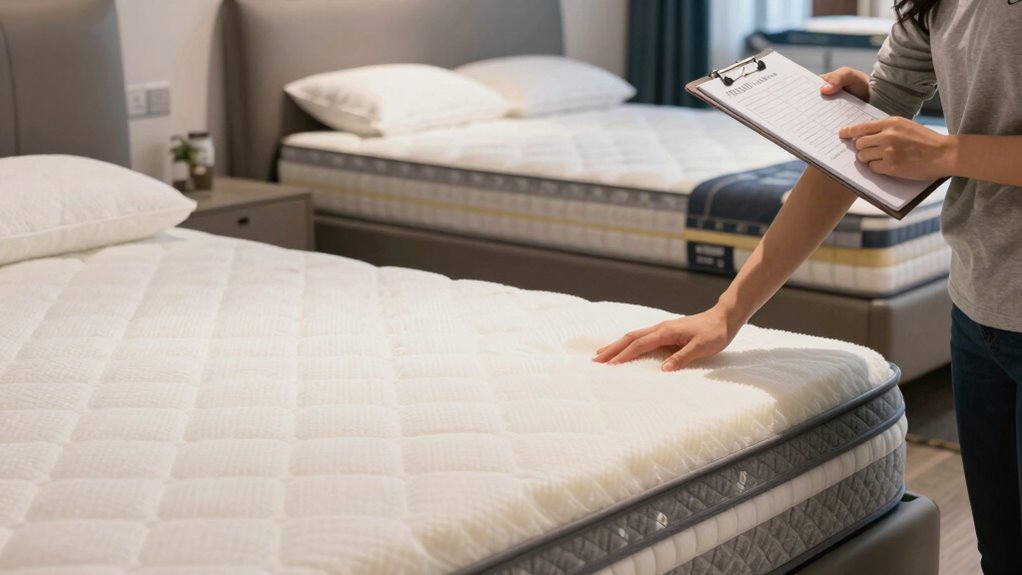

To shop for a mattress without guessing, start by understanding your sleep preferences, including your favorite sleep position and whether you prefer a softer or firmer surface. Test different materials in-store by lying down for at least 10-15 minutes, paying attention to support and pressure relief. Check for certifications like GOTS or GOLS to guarantee quality and sustainability. Considering trial periods, return policies, and asking questions will help you choose confidently—there’s more to discover that can make your decision even easier.

Get your next haul delivered free — and shop member deals
- Fast, free delivery on millions of items
- Access to Prime Big Deal Days deals on October 6–7
- Prime Video, Amazon Music and more included
Key Takeaways
- Test mattresses in-store by lying down in your usual sleep position for at least 10-15 minutes.
- Understand your sleep preferences, including firmness, material, and support needs based on your sleep style.
- Ask about mattress materials, certifications, and manufacturing processes to ensure quality and sustainability.
- Take advantage of trial periods and review return policies before making a final decision.
- Prioritize comfort, support, and personal preference over price to choose a mattress that truly suits your needs.

Are you overwhelmed by the endless options when shopping for a mattress? With so many choices available, it’s easy to feel lost in a sea of comfort levels, materials, and brands. To make an informed decision, start by understanding what suits your sleeping style and preferences. Think about whether you prefer a softer surface or something firmer, and consider your primary sleep position—side, back, or stomach—as it influences the type of mattress that will support you best.
Memory foam is a popular choice for many because it contours to your body, providing personalized support and pressure relief. If you’re considering memory foam, test it out in the store by lying down for a few minutes to see if it feels comfortable and supportive. Keep in mind that some memory foam mattresses retain heat, so if you tend to sleep hot, look for options with cooling gels or breathable covers. Alternatively, if eco-friendliness is a priority, explore mattresses made from organic materials. Organic materials, such as natural latex or certified organic cotton and wool, not only reduce exposure to chemicals but also tend to be more sustainable. These mattresses often come with certifications like GOTS or GOLS, so check for those to ensure genuine organic content.
Memory foam contours to your body but check for cooling features if you sleep hot. Organic options are more sustainable.
When shopping, don’t just rely on labels or marketing claims. Instead, ask questions about the materials used, manufacturing processes, and warranty. Testing the mattress in person is crucial; lie down in your typical sleep position for at least 10-15 minutes to gauge comfort and support. Pay attention to how your body feels—if your hips or shoulders sink excessively or if your back feels strained, it’s a sign you might need a different firmness level or material. Additionally, understanding the materials used in mattresses can help you make a more informed choice about durability and comfort. Knowing about the manufacturing processes can also give insight into the quality and sustainability of the product. It’s beneficial to consider the testing methods and how they relate to real-world sleep conditions. A comprehensive understanding of sleep ergonomics can help you select a mattress that promotes proper spinal alignment and reduces discomfort. Furthermore, reading reviews and seeking certifications can provide additional assurance about the mattress’s safety and quality. Remember, a mattress is an investment in your health, so prioritize quality over price. Cheaper options may save you money upfront but could lead to discomfort and the need for replacement sooner.
Finally, consider trial periods and return policies. Many brands now offer extended trial periods, giving you time to sleep on the mattress and see if it truly fits your needs. Be cautious of aggressive sales tactics or promises that sound too good to be true. Instead, gather information, test different options, and listen to your body. With a clear understanding of your preferences and some diligent research, you can choose a mattress that provides restful sleep without guesswork or regret.
memory foam mattress with cooling gel
As an affiliate, we earn on qualifying purchases.
As an affiliate, we earn on qualifying purchases.
Frequently Asked Questions
How Long Should I Test a Mattress In-Store?
You should test a mattress in-store for at least 10 to 15 minutes to gauge sleep comfort and mattress firmness accurately. During this time, lie down in your usual sleeping position and pay attention to how it supports your body. Don’t rush—spending enough time helps you feel if the mattress provides the right level of comfort and firmness, ensuring you make a confident, well-informed decision.
What’s the Best Time of Year to Buy a Mattress?
Spring and fall are the best times to buy a mattress, as retailers often offer significant savings during these seasonal shifts. During these periods, you can find deals that support your sleep cycle and suit your desired mattress firmness. Shopping then helps you snag a sturdy, supportive mattress without sacrificing comfort. Keep an eye on sales, and you’ll sleep soundly in a season that supports both your budget and your bedtime bliss.
Are Online Mattresses as Good as In-Store Ones?
Online mattresses can be just as good as in-store ones if you do your research. Many brands offer a sleep trial, so you can test the mattress with your bed frame at home risk-free. Look for reviews and reputable companies that prioritize quality and customer satisfaction. A good online mattress, combined with an appropriate bed frame and a generous sleep trial, guarantees you get the comfort you need without guesswork.
How Do I Know if a Mattress Is Hypoallergenic?
Your mattress could be a fortress against allergies or a sneaky allergen trap. To know if it’s hypoallergenic, check for allergy testing and material safety info from the manufacturer. Look for labels like “hypoallergenic” or certifications that guarantee the mattress resists dust mites and mold. You can also ask about the materials used, making sure they’re safe and unlikely to trigger allergies, keeping your sleep environment as pure as a mountain stream.
What Warranty Should I Expect With My Mattress Purchase?
You should expect warranty coverage that protects against manufacturing defects and typically lasts between 5 to 10 years. Check the warranty duration carefully, as longer warranties often indicate better quality. Make sure to read the fine print for coverage details, including what’s included and any conditions that could void the warranty. A solid warranty gives you peace of mind, knowing your investment is protected for years to come.
organic latex mattress certified GOTS
As an affiliate, we earn on qualifying purchases.
As an affiliate, we earn on qualifying purchases.
Conclusion
Shopping for a mattress might seem intimidating, but think of it like choosing a partner—you want someone who supports you and makes you feel comfortable. When I picked my mattress, I tested several and trusted my instincts, just like I would with a friend. Remember, the right mattress isn’t about the fanciest features; it’s about what feels right for you. Trust your gut, do your research, and you’ll find your perfect match—sleep will thank you.
firmness level mattress for back sleepers
As an affiliate, we earn on qualifying purchases.
As an affiliate, we earn on qualifying purchases.
mattress with trial period and return policy
As an affiliate, we earn on qualifying purchases.
As an affiliate, we earn on qualifying purchases.
Halloween Picks
halloween
As an affiliate, we earn on qualifying purchases.