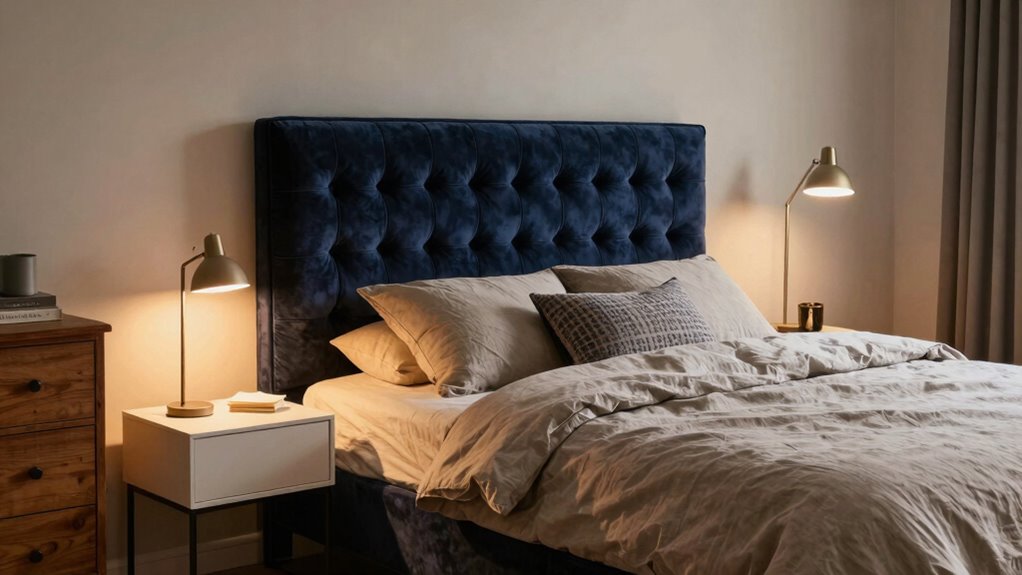

To make your bedroom furniture feel cohesive without matching, focus on a unified color palette by choosing a dominant hue and adding complementary shades for accessories. Mix textures carefully, combining smooth surfaces with softer fabrics for visual interest. Balance finishes and shapes to create harmony, using rounded pieces with angular furniture. Layer decor thoughtfully by repeating colors and textures, which ties everything together. Keep exploring how these principles can transform your space into a cohesive haven.

Get your next haul delivered free — and shop member deals
- Fast, free delivery on millions of items
- Access to Prime Big Deal Days deals on October 6–7
- Prime Video, Amazon Music and more included
Key Takeaways
- Use a consistent color palette with dominant hues and complementary accents to create visual harmony.
- Mix textures thoughtfully by combining smooth surfaces with soft fabrics for depth and interest.
- Match furniture finishes subtly and balance sleek with tactile elements to unify the look.
- Incorporate varied shapes and sizes to add personality while maintaining overall visual flow.
- Layer decor with coordinated colors and textures to enhance cohesion without matching everything exactly.
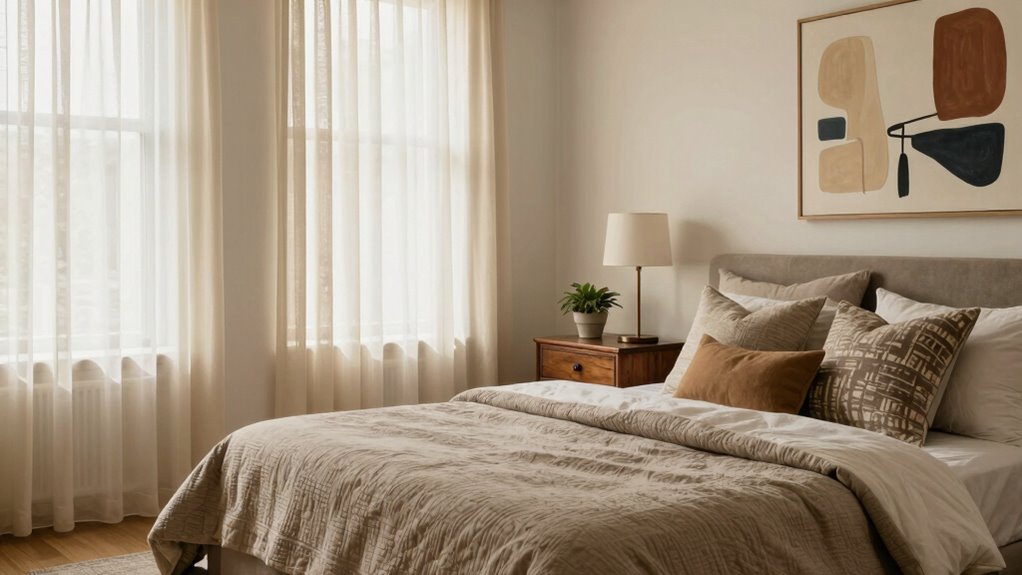
Creating a cohesive bedroom furniture look can transform your space from cluttered to stylish, but it often feels challenging to pull everything together seamlessly. One effective way to achieve this is through thoughtful color coordination. Instead of matching every piece perfectly, focus on selecting a color palette that ties your furniture and accessories together. For example, choose a dominant hue for your bed frame or dresser and incorporate complementary shades in your bedding, curtains, or rugs. This creates visual harmony without everything having to be exactly the same. You can also use neutral tones as a base, adding pops of color with smaller accessories, which helps everything feel connected yet interesting.
Use a cohesive color palette and neutral tones with pops of color for a stylish, unified bedroom look.
Along with color, texture mixing plays a crucial role in making your furniture look cohesive, even when pieces are different styles or finishes. Mixing textures adds depth and character to your room, preventing it from feeling flat or overly uniform. Think about combining smooth surfaces like a sleek wooden dresser with softer elements such as a plush throw blanket or a woven basket. Incorporate different materials—metal, fabric, wood, or leather—to create visual interest and tactile variety. When done thoughtfully, contrasting textures can highlight individual pieces while still contributing to a unified look. Paying attention to material harmony can help you strike the right balance and avoid visual clutter.
You don’t need every piece to match perfectly, but you do want them to work together. Pay attention to the finishes and materials of your furniture. For instance, if you have a modern metal bed frame, balance it with textured bedding and a wooden nightstand. This way, the metal’s sleekness is softened by tactile elements, making the space feel intentional and connected. Also, consider the scale and shape of your furniture. Mixing different sizes and forms adds personality without disrupting the overall harmony. A rounded mirror paired with angular furniture, for example, brings balance and interest. Incorporating visual flow helps guide the eye smoothly around the room, creating a cohesive atmosphere.
Finally, layering your decor thoughtfully reinforces cohesion. Use similar color tones or textures in your accessories to tie the look together. A woven basket, a fabric lampshade, and a patterned throw can all share a common palette or texture theme, subtly linking each element. Incorporating design principles such as balance and rhythm can further unify your space. By focusing on color coordination and texture mixing, you emphasize a curated, cohesive appearance without the need for everything to match exactly. The end result will be a stylish, inviting bedroom that feels thoughtfully curated, reflecting your personality while maintaining visual harmony.
Frequently Asked Questions
Can Mixing Different Wood Tones Still Look Cohesive?
Yes, mixing different wood tones can look cohesive if you focus on color coordination and texture blending. You can balance warm and cool tones or contrast light and dark woods to create visual interest. Incorporate complementary or neutral colors through accessories, bedding, or rugs to unify the space. Additionally, blending textures—like smooth and rough surfaces—helps tie different wood finishes together, making your bedroom feel intentional and stylish.
How Do I Choose Accessories That Unify Bedroom Furniture Styles?
Choosing accessories is like assembling a puzzle; each piece should complement the others. Focus on color coordination and mix textures to unify your bedroom furniture styles. Incorporate rugs, pillows, or art that share similar hues or tactile qualities. This approach creates visual harmony, even with diverse furniture styles. By balancing color and texture, your accessories will tie everything together seamlessly, making your space look intentional and cohesive.
Is It Better to Stick to a Single Design Era or Mix Styles?
You should mix styles to create a unique look, blending vintage charm with minimalist contrast. Sticking to a single design era can feel cohesive, but mixing allows your personality to shine. Use vintage pieces as focal points and pair them with sleek, modern furniture to balance the room. This contrast adds interest and depth, making your bedroom feel curated and inviting without being overly matched or chaotic.
How Much Variation in Furniture Height Is Acceptable?
Think of furniture height variation as a dance, where harmony is key. You can have a difference of about 4-6 inches between pieces without disrupting flow. Focus on color coordination and furniture proportions to keep your space balanced. Taller pieces like dressers or headboards should complement shorter nightstands or chairs. Too much variation can feel disjointed, but a slight difference adds visual interest and depth to your bedroom’s cohesive look.
Can I Use Paint to Make Mismatched Furniture Feel Cohesive?
Yes, you can use paint to make mismatched furniture feel cohesive. Focus on color coordination by choosing a unifying color palette, perhaps with different shades of the same hue. Incorporate texture blending by using matte, gloss, or textured finishes to create visual harmony. Painting furniture in similar tones or finishes ties the pieces together, giving your bedroom a cohesive look without matching everything exactly.
Conclusion
By thoughtfully blending textures, colors, and styles, you create a bedroom that feels harmoniously curated rather than merely coordinated. Embrace subtle nuances and allow each piece to whisper its unique charm, gently guiding your space toward refined unity. Remember, often it’s the delicate balance and understated details that elevate your room’s character, turning an ordinary ensemble into a sophisticated sanctuary. With patience and an eye for finesse, your bedroom will exude a timeless, effortless elegance.
Fall Picks
fall essentials
As an affiliate, we earn on qualifying purchases.