
Carpooling and ride sharing can save you a lot by reducing parking fees and splitting fuel costs, especially if you drive an electric vehicle. You might avoid expensive parking spots or access reserved spaces that offer discounts or priority, further cutting expenses. Over time, these savings add up each month, easing your budget and relieving stress during commutes. Keep exploring to discover tips on maximizing your savings and making ride sharing even more affordable.
Key Takeaways
- Sharing rides cuts parking fees and enables cost splitting, leading to significant monthly savings.
- Using electric vehicles in carpools reduces fuel and charging costs, boosting overall savings.
- Access to priority or reserved parking spots minimizes parking expenses and time spent searching.
- Carpooling decreases individual transportation costs, including fuel, parking, and tolls.
- Reduced traffic congestion and emissions from ride sharing contribute to environmental and financial benefits.
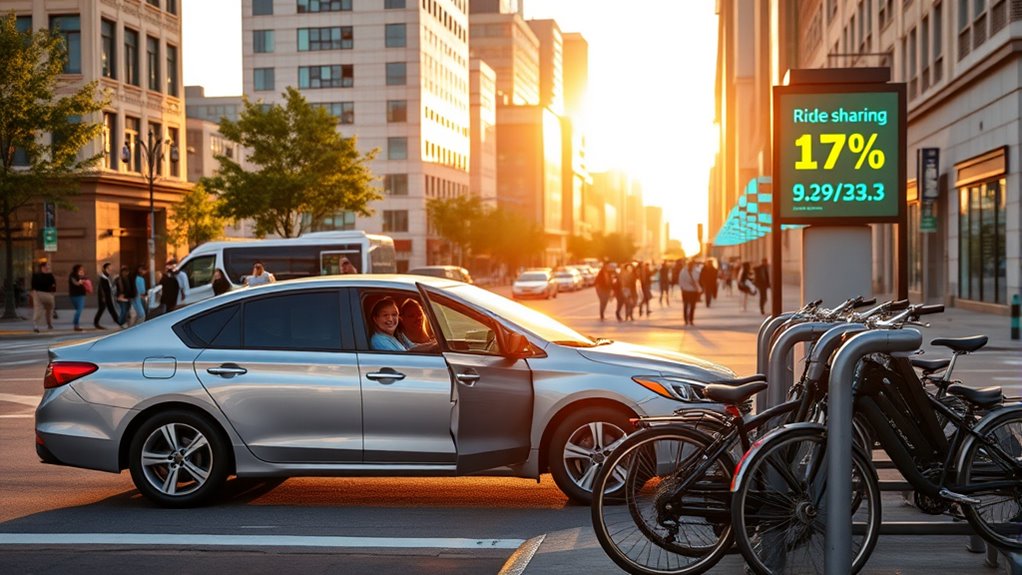
Have you ever contemplated how carpooling and ride sharing can make your daily commute easier and more affordable? When you team up with others, you reduce the number of vehicles on the road, which directly impacts your expenses. One of the most tangible savings comes from lowering your parking fees. If you drive solo to work, chances are you’re paying a premium for parking spaces, especially in busy city centers. Carpooling means you can split these costs, sometimes even avoiding parking fees altogether if you share a ride to designated carpool lots or park-and-ride facilities. This alone can save you a significant amount each month.
Sharing rides cuts parking costs and saves you money each month.
Moreover, the rise of electric vehicles (EVs) adds another layer of savings to think about. If you and your ride-sharing partners own EVs, you’ll benefit from reduced fuel costs since electricity is cheaper than gasoline. Charging an electric vehicle at home or at compatible charging stations is often more economical, especially when costs are split among multiple users. Plus, some cities and regions offer incentives for electric vehicle owners, such as free or discounted parking, further decreasing your travel expenses. When you share a ride with EVs, you not only save on fuel but also enjoy these additional perks, making your commute even more budget-friendly.
Another benefit of carpooling and ride sharing is the potential to access reserved lanes or priority parking spots in some urban areas. These exclusive spaces often come with a fee, but if you’re sharing rides, you can avoid or split these costs. The convenience of having a designated spot for your carpool or ride-share vehicle minimizes time spent circling for parking and reduces stress during busy mornings. Over time, these savings add up, especially if you commute daily. Additionally, many cities are introducing incentives for ride-sharing programs, such as reduced tolls or free parking for carpools, recognizing the environmental and traffic-reducing benefits they provide.
In essence, carpooling and ride sharing not only cut down your transportation costs but also contribute to a more sustainable environment. By sharing rides, particularly with electric vehicles, you maximize savings on fuel, parking fees, and related expenses. The more you participate, the more you stand to save—money that can go toward other priorities or leisure activities. Plus, you get to enjoy a less stressful commute, knowing you’re doing your part to reduce congestion and emissions. So, next time you plan your daily route, think about the financial and environmental benefits of sharing your ride. It’s a simple change that can make a big difference in your wallet and the planet. Understanding transportation costs can help you make more informed decisions about your commuting options.
Frequently Asked Questions
How Do Ride-Sharing Apps Verify Driver and Passenger Safety?
Ride-sharing apps verify driver and passenger safety through thorough background checks that screen for criminal history and driving records. They also include app safety features like real-time GPS tracking, emergency buttons, and ride-sharing reviews. As a rider, you can feel confident knowing these measures help guarantee safety. Always review driver ratings and trust the app’s safety tools to protect yourself during your trip.
Are There Legal Liabilities if an Accident Occurs During Carpooling?
Liability concerns can feel like walking a tightrope when an accident happens during carpooling, but legal protections can help balance your safety. If you’re a passenger, you’re generally protected under state laws and ride-sharing company policies. As a driver, you might face some liability, but many apps provide insurance coverage during trips. Always check local laws and platform policies to understand your legal responsibilities and safeguard yourself.
How Is Insurance Coverage Handled for Carpooling Trips?
Your insurance coverage for carpooling trips depends on your insurance policies. Typically, liability coverage kicks in if an accident occurs, but it may differ based on your policy and local laws. Some insurance companies offer additional ride-sharing or ride-hailing endorsements to guarantee full liability coverage. Always check with your insurer to understand how liability coverage applies during carpooling, and consider adding specific coverage if needed for peace of mind.
Can Carpooling Be Cost-Effective for Long-Distance Travel?
Yes, carpooling can be cost-effective for long-distance travel. You’ll enjoy significant cost savings on fuel and tolls while sharing expenses with others. Plus, it enhances travel convenience by reducing the stress of driving alone and offering a more social experience. Just coordinate schedules and routes carefully to maximize your savings and guarantee a smooth trip. Overall, carpooling makes long-distance travel more affordable and enjoyable.
What Are the Environmental Impacts of Widespread Ride-Sharing Usage?
Widespread ride-sharing can considerably reduce your carbon footprint by decreasing the number of vehicles on the road, which helps lower urban pollution. When more people share rides, fewer cars emit harmful gases, improving air quality. However, if ride-sharing leads to increased traffic or empty backhauls, it might offset some environmental benefits. Overall, you contribute to a cleaner environment by choosing ride-sharing, but mindful use maximizes its positive impact.
Conclusion
Carpooling and ride sharing can substantially cut your travel costs, saving you up to 40% on daily commutes. Imagine splitting a $20 daily ride with just one other person—you’re saving $8 each day! Not only does this boost your wallet, but it also reduces traffic and pollution. So, next time you plan your trip, consider sharing your ride—you’ll save money and help the environment at the same time.