

Paying your kids allowances for chores can be a great way to teach them responsibility, money management, and the value of earning. It helps children understand that work has rewards and encourages good financial habits like saving and budgeting. Tying allowances to chores also reinforces effort and accountability, preventing entitlement. If you want to explore how to balance allowances with other lessons or strategies, there’s more to contemplate that can benefit your family’s approach.
Listen free for 30 days with Audible
Thousands of audiobooks and originals — cancel anytime.
As an affiliate, we earn on qualifying purchases.
Key Takeaways
- Paying for chores teaches children about earning money and the value of effort.
- Linking allowances to chores promotes responsibility and work ethic.
- Not paying for chores can foster intrinsic motivation and family cooperation.
- Using allowances as rewards helps develop financial literacy and money management skills.
- The decision depends on parenting goals, teaching priorities, and encouraging responsibility versus intrinsic motivation.
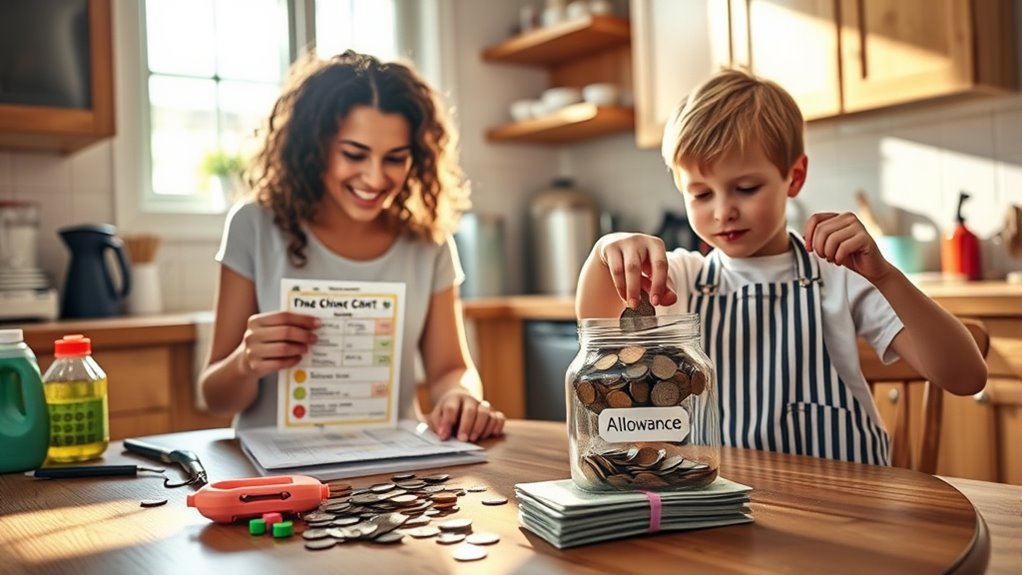
Many parents give allowances to teach kids about money management and responsibility. When you decide to do this, you’re giving your child a chance to learn about financial literacy—the skills needed to understand and handle money effectively. Allowances can serve as practical tools to help children grasp the value of money, showing them that earning and spending come with consequences. By tying allowances to chores or responsibilities, you’re not just handing out cash; you’re creating opportunities for your child to develop essential financial habits.
Understanding the value of money is crucial at an early age because it shapes how kids will approach spending, saving, and giving in the future. When your child receives an allowance, they learn that money isn’t infinite and that they have to make choices about what to buy or save. If an allowance is tied to chores, it reinforces the idea that earning money involves effort and responsibility. This connection helps children see that work and reward go hand in hand, building a sense of fairness and understanding of how the economy works.
Moreover, linking allowances to chores can teach your child discipline and work ethic. When they know that completing tasks leads to earning money, they’re more likely to take responsibility seriously. It’s an opportunity to set clear expectations and establish routines, which are vital skills for managing money throughout life. When kids understand that chores contribute to their allowance, they also grasp that money isn’t just handed out freely—it’s earned through effort. This understanding can help prevent entitlement and encourage a more mindful approach to spending.
However, it’s essential to communicate clearly about the connection between chores, allowances, and the value of money. Explaining that chores are part of contributing to the household and that the allowance is a reward for their effort helps your child see the bigger picture. It’s also a good way to introduce concepts like budgeting and saving. For example, you might encourage them to set aside a portion of their allowance for savings or charity, reinforcing the idea that money can be used thoughtfully.
In the end, whether you choose to tie allowances to chores or not, the goal is to foster financial literacy and help your child develop a realistic understanding of money. By doing so, you’re equipping them with essential skills that will benefit them throughout life, making sure they appreciate the value of money and learn how to handle it responsibly.

Trail maker 17" Backpack – Reflective School Backpack with Padded Straps, Water Bottle Pockets for Kids & Adults, School Travel Camp (Navy)
- Classic 17-inch design: Suitable for school, travel, and camp
- Lightweight and durable: Comfortable padded straps for all-day wear
- Reflective safety strip: Enhances visibility in low light conditions
As an affiliate, we earn on qualifying purchases.
Frequently Asked Questions
What Is the Ideal Age to Start Giving Kids Allowances?
You should start giving kids allowances around age 5 or 6, as this is when they show developmental readiness to understand earning and managing money. Age considerations are important, but focus on their ability to grasp basic concepts of responsibility and value. Early allowances can teach money habits, but keep expectations realistic. By starting at this age, you help your child develop financial skills gradually and appropriately for their growth.
How Much Allowance Should I Give My Child Weekly or Monthly?
You should give your child an age-appropriate allowance that reflects their responsibilities and maturity. Typically, a good starting point is $1 to $5 per week per year of age, adjusting for their understanding and workload. For example, a 7-year-old might get $7 weekly. Keep allowance amounts consistent and tied to chores or responsibilities, helping them learn money management and the value of effort.
Should Allowances Be Tied to Specific Chores or General Responsibilities?
You should consider using chore-based allowances to motivate your kids to complete specific tasks, which helps teach responsibility. Alternatively, responsibility-based allowances reward overall good behavior and effort, fostering independence. Both methods have benefits; chore-based allowances target particular skills, while responsibility-based allowances encourage a broader sense of accountability. Choose what aligns best with your parenting goals, or combine both approaches to balance task completion and personal growth.
How Can I Teach Kids the Value of Money Through Allowances?
You can teach kids the value of money by giving them an allowance tied to their efforts, which promotes financial literacy and understanding earning rewards. Encourage them to save, budget, and spend responsibly, explaining how money works. Use their allowance as a tool for lessons on delayed gratification and decision-making, helping them see the connection between work and rewards, and fostering healthy money habits early on.
Are There Alternative Ways to Incentivize Children Besides Allowances?
You don’t have to rely solely on allowances; there are countless ways to motivate your kids. Try using reward systems like stars, certificates, or extra screen time to boost parental motivation and reinforce good habits. These methods can be more impactful than money, making your child feel proud and appreciated. You’re shaping their values and work ethic with creative incentives that truly stick, like setting off fireworks of motivation!
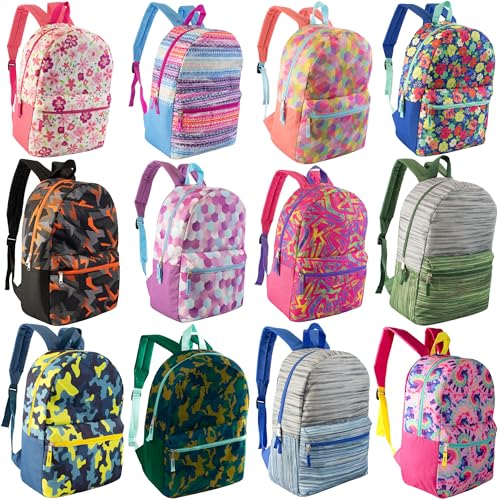
24-Pack 17" School Backpacks for Kids - Backpacks in Bulk for Elementary, Middle, and High School Students, 24 Assorted Colors
- Bulk Pack for Savings: 24 backpacks in one purchase
- Ideal for Promotions: Great for giveaways and events
- Classic Design: Timeless style with zipper compartments
As an affiliate, we earn on qualifying purchases.
Conclusion
Ultimately, whether you pay your kids for chores is a personal choice, much like planting seeds that will grow into responsible adults. If you choose to give allowances, it’s a tool to teach money management and independence. But remember, chores should also be about instilling values, not just rewards. Striking a balance is like walking a tightrope—steady and thoughtful—so your kids learn the true worth of effort beyond just the paycheck.

BJLFS Blue Backpack for School Women Girls, Waterproof Bookbag Cute High School Backpack for Men Teen Boys, Lightweight Travel College Backpacks Mochilas Escolares para Casual Daypack Rucksack
- Dimensions and Capacity: 17.7x12.9x6.6 inches, 24L capacity
- Lightweight Design: Weighs only 1.1LB/0.5KG
- Laptop Compatibility: Fits 14-inch laptops
As an affiliate, we earn on qualifying purchases.

Kids School Backpack for Boys Girls,Large Capacity Bookbag(Navy Blue)
- Durable Water-Resistant Fabric: High-density nylon, stain-resistant, easy to clean
- Comfortable Adjustable Straps: Widened, thickened, with breathable back panel
- Spine Protection Design: Padded back panel for healthy growth
As an affiliate, we earn on qualifying purchases.
Flea & tick season Picks
flea and tick prevention
As an affiliate, we earn on qualifying purchases.