Before adding a water filtration system, start by understanding your water quality through testing or reports, so you know what contaminants to target. Choose a system suited to your needs, whether that’s activated carbon, reverse osmosis, or UV purification. Consider your household size, usage, and budget for ongoing costs. Proper installation and certification guarantee safety and performance. If you want to make the best choice tailored to your needs, keep exploring how each aspect fits your situation.
Key Takeaways
- Test your water to identify specific contaminants and determine the most suitable filtration technology.
- Choose a system that matches your household’s water usage, size, and flow rate needs.
- Consider installation complexity and whether professional help or DIY setup is appropriate.
- Verify certifications (e.g., NSF) to ensure the system’s safety and performance standards.
- Factor in upfront costs, ongoing maintenance, and filter replacement schedules for long-term efficiency.
Are you concerned about the quality of your tap water? If so, understanding water quality and the different filtration types available can help you make an informed decision. The water you use daily can contain contaminants like chlorine, lead, bacteria, and other impurities that affect taste, smell, and safety. Knowing what’s in your water is the first step; you might consider getting a water test kit or reviewing your local water quality report. Once you have a clear picture of what’s in your water, you can explore filtration types that target those specific issues. Different systems are designed to remove different contaminants, so matching your needs with the right filtration method is key.
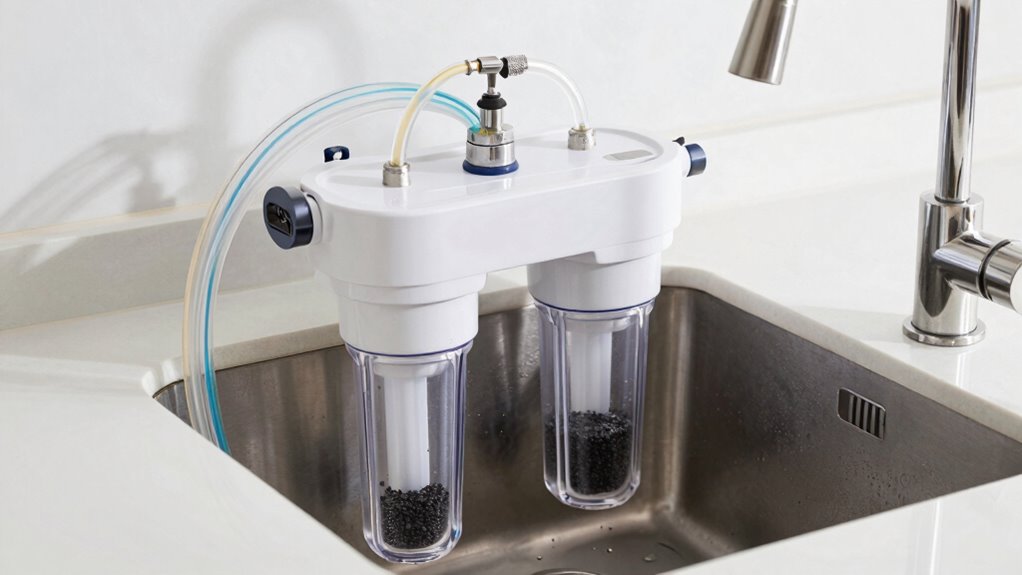
There are several common filtration types to consider, each with its own strengths. Activated carbon filters are among the most popular because they effectively remove chlorine, bad odors, and organic compounds that affect taste and smell. Reverse osmosis systems go deeper, filtering out heavy metals, salts, and other dissolved solids, making water safer for drinking and cooking. UV purifiers use ultraviolet light to kill bacteria and viruses, which is especially important if your water source is untreated or compromised. Some filtration systems combine these technologies to provide comprehensive protection, giving you peace of mind knowing your water is clean and safe. Additionally, understanding water quality testing can help you identify the specific contaminants present in your water, guiding your filtration choices more effectively. Regularly monitoring water quality can also ensure your filtration system continues to perform optimally over time. Research shows that contaminant removal varies among filtration methods, so selecting the appropriate system depends on your specific water issues. Staying informed about water safety standards can further help you select the best filtration solution for your needs.
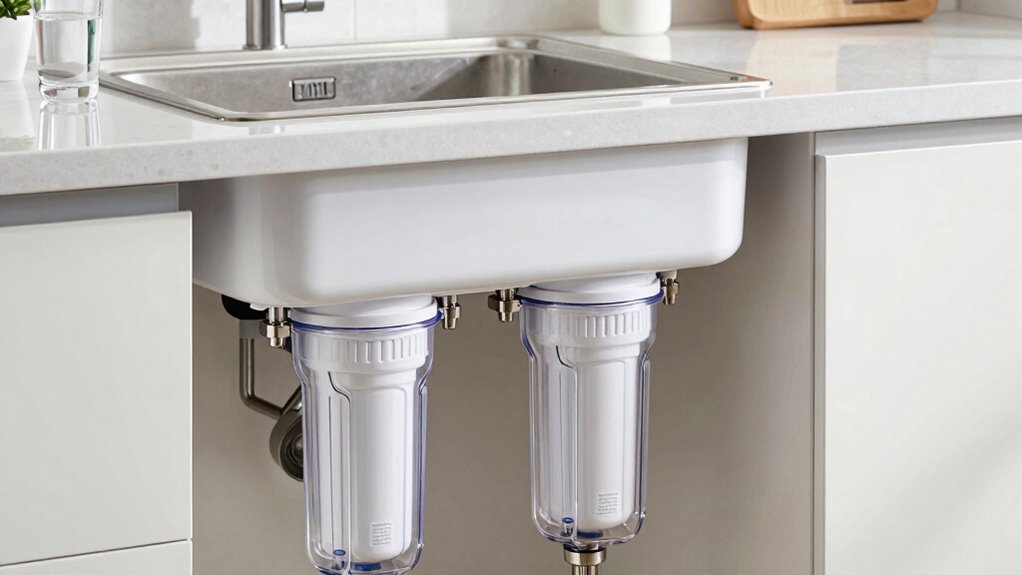
Before installing a filtration system, think about your household’s water usage and the flow rate you need. Larger families may require more robust systems with higher capacities, while single users might opt for smaller, under-sink units. Also, consider the upfront costs, ongoing maintenance, and filter replacement schedules. Some systems require frequent cartridge changes, while others may need only annual maintenance. It’s worth investing in quality filters because cheaper options might save money initially but often don’t last as long or perform as well.
Installation is another crucial aspect. Some filtration types are DIY-friendly, fitting easily under your sink or on your countertop. Others might require professional installation, especially whole-house systems connecting directly to your main water line. Make sure you understand the installation process and whether it fits your skills and budget. Finally, check reviews and certifications from organizations like NSF International, which verify that the filters meet safety and performance standards. By considering these factors — water quality, filtration types, household needs, costs, and installation — you’ll be well-equipped to choose a water filtration system that improves your water quality and supports your health.

Bestprod All-New 21 in 1 Drinking Water Testing Kit Strips, Home Tap and Well Water Test Kit for Hardness, Lead, Iron, Copper, Chlorine, Fluoride
- Clear, Easy-to-Read Results: Provides clear results for all substances
- Simple to Use: Add water, set timer, read results
- User-Friendly Guide: Includes easy-to-understand instructions
As an affiliate, we earn on qualifying purchases.
As an affiliate, we earn on qualifying purchases.
Frequently Asked Questions
How Often Should I Replace the Filters in My System?
You should replace your filters based on the filter lifespan and the manufacturer’s recommended replacement schedule. Typically, filters need changing every 3 to 6 months, but this can vary depending on water quality and usage. Regularly check your system’s indicators or perform routine inspections to guarantee peak performance. Staying on top of your replacement schedule keeps your water clean and your system functioning efficiently.
Are Water Filtration Systems Effective Against All Contaminants?
Think of water filtration systems as a skilled gardener, but even they can’t weed out every single contaminant. While they effectively reduce many contaminant types like bacteria, chlorine, and heavy metals, they have filtration limitations for certain viruses or chemicals. So, you should know that no system guarantees 100% removal of all contaminants. It is crucial to choose a system tailored to target the specific impurities present in your water source.
What Is the Initial Setup Cost for a Home Filtration System?
The initial setup cost for a home filtration system varies, typically ranging from $100 to $1,500, depending on the system type and complexity. You should consider cost considerations like installation fees and equipment quality. Also, factor in maintenance requirements, as some systems need regular filter changes or professional servicing, which can add to ongoing expenses. Planning for both upfront costs and ongoing maintenance guarantees you select the right system for your needs.
Can I Install the System Myself or Need Professional Help?
You can usually tackle DIY installation, but it’s like assembling a complex puzzle—you need patience and the right tools. If you’re comfortable with plumbing and follow the manufacturer’s instructions closely, you can save money and do it yourself. However, for a seamless, worry-free setup, professional assistance guarantees the system’s peak performance and safety. Consider your skills and comfort level before deciding whether to go DIY or hire an expert.
Do Filtration Systems Remove Beneficial Minerals From Water?
Filtration systems can remove some beneficial minerals from water, affecting mineral retention. However, many systems are designed with water remineralization features that add essential minerals back into your water after filtration. If you’re concerned about losing nutrients, look for systems that include remineralization options. This way, you enjoy clean, safe water without sacrificing beneficial minerals, ensuring your water remains both pure and healthful.

iSpring RCC7AK-BN NSF Certified, 75 GPD, Alkaline 6-Stage Reverse Osmosis System, pH+ Remineralization RO Water Filter System Under Sink Patented Top-Mounted Faucet Design for Easy Installation
- Patented Top-Mounted Faucet Design: Easy above-sink installation
- Mineral Boost Stage: Adds essential minerals and balanced pH
- Transparent Filter Housing: Monitor contaminant buildup easily
As an affiliate, we earn on qualifying purchases.
As an affiliate, we earn on qualifying purchases.
Conclusion
Before you choose your water filtration system, understand the importance of purity, the necessity of maintenance, and the impact on your health. Know the options available, consider your needs, and prioritize quality over cost. Because clean water is essential, because safe water is a right, because a well-chosen system protects your family—your health, your home, your peace of mind. Make informed choices, make confident decisions, and enjoy the clarity of pure, safe water every day.

ICEPURE 10" x 4.5" Whole House Sediment Activated Carbon Water Filter 3Pack
- Certifications and Water Quality: Certified by IAMPO, NSF/ANSI 42, BPA free
- Filtration Lifetime: Lasts 6 months or 30,000 gallons
- Filter Dimensions: 10 x 4.5 inches standard size
As an affiliate, we earn on qualifying purchases.
As an affiliate, we earn on qualifying purchases.
As an affiliate, we earn on qualifying purchases.