To choose a table saw that fits your projects, focus on matching its blade technology, motor power, and capacity to your specific tasks. Consider safety features like blade guards and flesh detection to protect yourself. Build quality, adjustable fences, and dust collection systems also matter for accuracy and a clean workspace. Prioritizing these factors guarantees your saw performs well and stays safe, helping you take on more complex projects with confidence—stay tuned to learn more about selecting the perfect saw for your needs.

Get your next haul delivered free with Prime
- Fast, free delivery on millions of items
- Prime Video, Amazon Music and more included
- Member-only deals all year
Key Takeaways
- Assess your project types to determine necessary blade technology and precision requirements.
- Match motor power and capacity to handle the size and hardness of your materials.
- Prioritize safety features like blade guards and anti-kickback pawls for secure operation.
- Ensure build quality and adjustable components for accurate, stable cuts.
- Choose an effective dust collection system to maintain a clean, safe workspace.
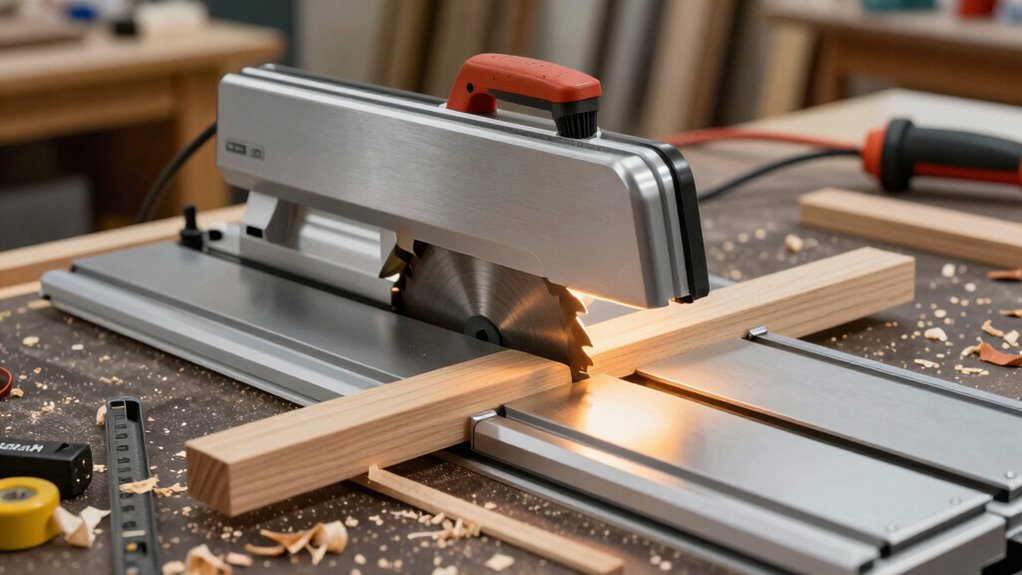
Are you overwhelmed by the variety of table saws available and unsure which one best suits your needs? With so many options on the market, it’s easy to feel lost in the details. The key is to focus on what you’ll be using the saw for and what features matter most to you. One of the first things to deliberate on is blade technology. Different table saws come equipped with blades designed for specific tasks—some are optimized for ripping thick hardwoods, while others excel at fine crosscutting or detailed work. Look for saws with blades that can be easily swapped out or adjusted to match your project needs. A high-quality blade not only improves cut precision but also prolongs the life of your saw and reduces waste. Considering blade technology can help ensure your saw performs efficiently for your specific projects. Additionally, examining the saw’s motor power and capacity can help determine whether it can handle your workload without strain. Safety features are equally important, especially if you’re working alone or handling larger projects. Modern table saws come with various safety innovations, such as blade guards, riving knives, anti-kickback pawls, and flesh detection systems. These features are designed to prevent accidents and protect you during operation. For example, blade guards cover the spinning blade and help keep your hands away from the cutting edge, while riving knives prevent kickback by keeping the cut kerf open. Anti-kickback pawls catch material that tries to pin or bounce back toward you, reducing the risk of injury. Flesh detection systems are advanced safety tech that automatically stop the saw if contact with the blade is detected. Incorporating Safety features into your selection can significantly reduce workplace hazards and promote safer woodworking practices. When considering safety, it’s also important to evaluate the overall build quality** of the saw, including sturdy fences and reliable mechanisms for adjusting blade height and angle that contribute to accuracy and safety. As you evaluate different models, think about how these safety features integrate into your workflow. If you’re a beginner, prioritizing safety features can provide peace of mind and help build good habits. If you’re more experienced, you might focus on ease of adjustment and precision features, but never overlook safety. Additionally, consider the overall build quality—sturdy fences, reliable mechanisms for adjusting blade height and angle, and stable bases all contribute to safer, more accurate cuts. When choosing a saw, also consider dust collection systems**, as they help maintain a cleaner workspace and improve visibility during cuts.
Choosing the right blade technology enhances cut quality, prolongs saw life, and matches your project needs.
Choosing the right table saw isn’t just about the initial cost or brand reputation; it’s about matching the saw’s capabilities to your projects. Pay close attention to blade technology to ensure you get the right cut quality, and never disregard safety features—they’re your best defense against accidents. When you pick a saw that aligns with your needs and includes essential safety features, you’ll enjoy your woodworking projects with confidence, knowing you’re equipped to work efficiently and safely.
Products Worth Considering

HP Sprocket Portable 2×3 Instant Photo Printer, Lilac, with ZINK Paper Bundle

Logitech MX Mechanical Wireless Illuminated Keyboard, Tactile Quiet, Graphite

FLEXISPOT 60 x 30-Inch Bamboo Electric Standing Desk with White Frame
As an affiliate, we earn on qualifying purchases.
Frequently Asked Questions
What Safety Features Should I Look for in a Table Saw?
You should look for safety features like a reliable blade guard to protect your hands from accidental contact and an anti-kickback system to prevent the wood from being thrown back at you. These features greatly reduce the risk of injuries. Make sure the saw has easy-to-engage safety mechanisms, and always follow safety guidelines. Prioritizing these safety features helps you work confidently and securely on your projects.
How Much Space Do I Need for a Table Saw?
Think of your workspace like a well-laid-out kitchen—you need enough room to chop, prep, and move freely. For a table saw, you’ll want at least 3-4 feet of clearance in front and to the side. Consider the blade size; larger blades need more space. A sturdy fence requires space to operate smoothly. Ensuring ample room helps you work safely and comfortably, just like a well-organized kitchen.
Can I Use a Portable Table Saw for Heavy-Duty Projects?
You can use a portable table saw for heavy-duty projects, but it depends on its portable power and heavy duty capacity. Look for models with robust motors, sturdy construction, and high cutting capacities. While many portable saws handle tough tasks, some might struggle with large, demanding cuts. If your projects regularly involve heavy-duty work, consider a more powerful, stationary saw for better performance and safety.
What’s the Best Way to Maintain and Clean My Table Saw?
To maintain your table saw, regularly check blade alignment to guarantee precise cuts. Clean the saw thoroughly after each use, removing sawdust and debris from the blade and motor area. Use a brush or compressed air for dust collection to prevent buildup that can affect performance. Lubricate moving parts as needed, and inspect the blade for dullness or damage. Proper maintenance keeps your saw safe, efficient, and prolongs its lifespan.
Are There Specific Brands Known for Durability and Reliability?
You should consider brands like DeWalt, Makita, and Bosch, which are renowned for their durability and reliability. Their strong brand reputation stems from consistent quality and durable construction, making them dependable for various projects. When choosing a saw, look into durability factors such as sturdy materials, solid build quality, and positive user reviews. These brands typically meet high standards, ensuring your investment lasts through many woodworking tasks.
Conclusion
Choosing the right table saw is like finding the perfect pair of shoes—you need comfort, fit, and purpose. I once underestimated the importance of power and precision, thinking any saw would do, until I struggled with uneven cuts on a big project. Remember, investing in the right tool isn’t just about convenience; it’s about turning your ideas into reality smoothly. When you pick wisely, every cut becomes a step closer to mastery.