
To preserve your clothes for next year, start by thoroughly cleaning and drying all items before storage. Use airtight containers, vacuum-sealed bags, or sturdy bins with labels to keep clothes organized and protected from dust, pests, and moisture. Wrap delicate fabrics in acid-free tissue paper, and store frequently used pieces within easy reach. Proper organization maximizes space and prevents damage. Keep effects tidy—if you want detailed steps, you’ll find useful tips as you continue.
Key Takeaways
- Clean and thoroughly dry all clothes before storing to prevent mold, odors, and pest attraction.
- Use airtight containers, vacuum-sealed bags, or sturdy bins to protect garments from moisture and pests.
- Wrap delicate fabrics in acid-free tissue paper and consider garment bags for fragile or stretch-prone items.
- Label storage containers clearly and organize items by category for easy access and seasonal swaps.
- Store less-used items in hidden or higher shelves, and maximize space with vertical stacking and efficient arrangement.
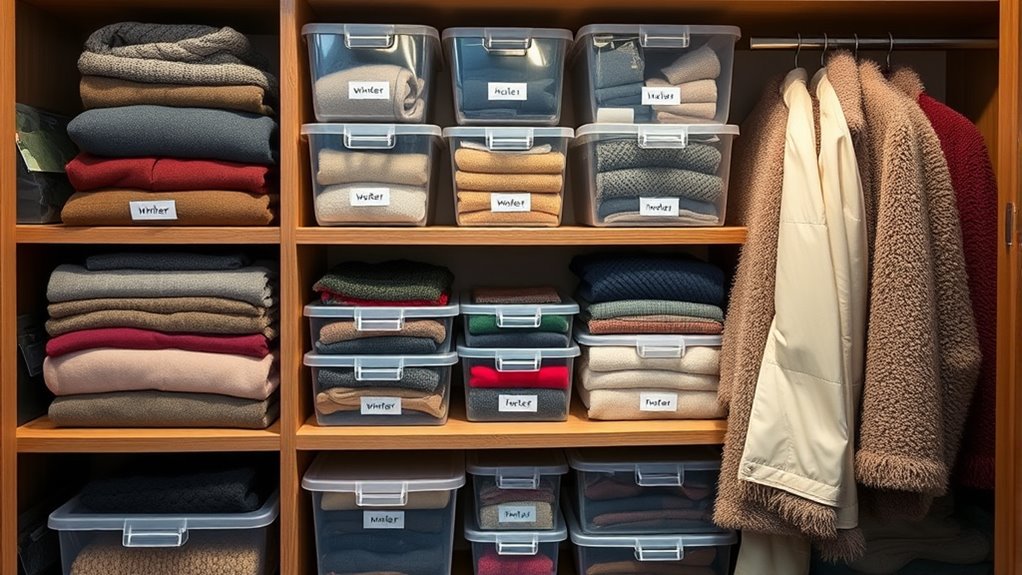
As the seasons change, it’s vital to properly store your wardrobe to keep your clothes in good condition and make space for new favorites. Correct storage not only preserves the quality of your garments but also makes it easier to find what you need when the weather shifts again. The key is focusing on clothing preservation through effective storage organization. When you organize your wardrobe for the off-season, you prevent damage caused by dust, pests, moisture, and improper handling. Start by sorting your clothes into categories—such as winter coats, summer dresses, or holiday sweaters—so you can easily access what you need later.
Before packing away your clothes, take the time to clean each item thoroughly. Dirty clothes attract pests and can develop mold or odors during storage. Use gentle, fabric-appropriate cleaners and ensure everything is completely dry before sealing it in storage containers. This step is vital for clothing preservation, as moisture and dirt are primary factors in fabric deterioration over time. Once clean, consider using garment bags for delicate pieces or items prone to snagging and stretching. These bags shield your clothes from dust and pests while maintaining their shape.
Storage organization is equally important. Opt for airtight containers or sturdy plastic bins with secure lids to prevent pests and moisture from getting in. Label each container clearly—this saves you time when retrieving seasonal items and keeps your storage space tidy. For bulky items like winter coats, consider vacuum-sealed bags, which greatly reduce volume and protect against pests. For delicate fabrics such as silk or wool, wrapping them in acid-free tissue paper before packing helps prevent fabric degradation and color fading.
When arranging your storage space, keep frequently used items within easy reach and store less-used pieces at the back or on higher shelves. Use vertical space efficiently by stacking containers or installing shelving units. This approach maximizes your storage capacity and keeps everything accessible. If you have closet space, installing hanging organizers or garment racks can help keep clothing hanging and wrinkle-free, especially for items you plan to revisit sooner. Remember, good storage organization minimizes the risk of damage and simplifies seasonal wardrobe swaps.
Amazon Product B0DNP3BHV1
As an affiliate, we earn on qualifying purchases.
Frequently Asked Questions
How Often Should I Rotate Stored Seasonal Clothes?
You should rotate your stored seasonal clothes at least twice a year, ideally during spring and fall. Regular clothing rotation keeps your seasonal wardrobe management on track, ensuring clothes stay fresh and in good condition. Check for any signs of damage or pests, and refresh your wardrobe as needed. This routine helps you stay organized, makes it easier to find what you need, and prolongs the life of your clothing.
What Are Eco-Friendly Storage Options for Seasonal Clothing?
You can choose sustainable storage options like breathable cotton bags or recycled fabric bins for your seasonal clothes. Use eco-friendly packaging such as biodegradable garment bags or cardboard boxes made from recycled materials. These options help reduce environmental impact and keep your clothes fresh. Opting for natural fibers and avoiding plastic guarantees your storage is eco-friendly, protecting both your wardrobe and the planet.
How Can I Prevent Moths Without Harsh Chemicals?
Imagine a gentle guardian protecting your wardrobe from unwanted invaders. You can prevent moths naturally by using natural repellents like cedar blocks, lavender sachets, or dried herbs, which emit subtle scents that deter moths. Store your clothes in airtight containers to keep these scents concentrated and effective. This eco-friendly approach keeps your clothing safe without harsh chemicals, ensuring your wardrobe stays fresh and moth-free year-round.
Is It Necessary to Wash Clothes Before Storing?
Yes, you should wash your clothes before storing. Proper clothing fabric care guarantees they stay fresh and free from dirt, oils, and odors that can attract pests. Use suitable storage containers like breathable fabric bags or plastic bins with airtight seals to protect your clothes. Washing removes contaminants, while quality storage prevents damage, helping your wardrobe stay in excellent condition until next season.
How Do I Organize My Wardrobe for Easy Access?
Imagine you’re trying to find your favorite sweater, but it’s buried deep. To make access easy, organize your wardrobe using clear bins and labels, grouping similar items together. Install good closet lighting to brighten dark corners. Use organizational tools like hanging shelves or drawer dividers. This setup helps you see everything at a glance, making dressing quicker and more efficient, just like in the case study of a busy professional who saves time daily.
Amazon Product B0DD6JMGDS
As an affiliate, we earn on qualifying purchases.
Conclusion
By properly storing your seasonal wardrobe, you guarantee your clothes stay fresh and ready for next year. Did you know that the average person wears only about 20% of their wardrobe regularly? Proper storage not only extends the life of your clothes but also helps you rediscover forgotten favorites. Taking the time now to organize and preserve your wardrobe means you’ll save time and money later, making your seasonal switch smoother and more enjoyable.
Amazon Product B0CD37WGQ2
As an affiliate, we earn on qualifying purchases.
Amazon Product B0DSVS399H
As an affiliate, we earn on qualifying purchases.