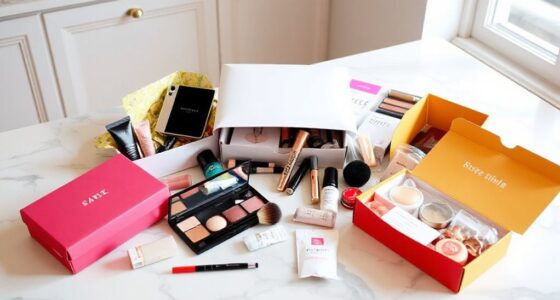
Knowing when to toss or splurge on makeup helps keep your skin healthy and your look flawless. Typically, powders can last up to 2 years, while liquids and creams need replacing every 6 months to a year. Keep an eye out for changes in texture, smell, or color—these are signs to replace. Proper packaging and hygiene also extend product life. If you want to find out more about how to manage your makeup’s lifespan wisely, keep going.

Get your next haul delivered free — and shop member deals
- Fast, free delivery on millions of items
- Access to Prime Big Deal Days deals on October 6–7
- Prime Video, Amazon Music and more included
Key Takeaways
- Replace mascaras every 3-6 months to prevent eye infections and ensure effectiveness.
- Powder products like blushes and eyeshadows last up to 2 years; replace sooner if texture or color change.
- Liquids and creams should be discarded after 6-12 months to avoid bacteria buildup and spoilage.
- Inspect packaging regularly and toss products with broken seals, cracked containers, or unusual odors.
- Prioritize hygiene practices and replace expired products to maintain skin safety and optimal makeup performance.

Have you ever wondered how long your makeup products really last? It’s a common question, especially when you consider all the money you spend on your favorite shades and formulas. Knowing the lifespan of your makeup isn’t just about saving money—it’s also about hygiene concerns. Over time, makeup can harbor bacteria, fungi, and other microbes that can lead to breakouts, infections, or skin irritation. That’s why understanding packaging longevity is essential. Most products are designed with a specific shelf life in mind, but how long they stay safe and effective depends on their packaging and storage.
Packaging longevity plays a significant role in preserving the quality of your makeup. Items stored in airtight containers or with antimicrobial properties tend to last longer because they’re less exposed to contaminants. For example, liquid foundations in pump bottles are less prone to contamination than those in pots, which you dip your fingers into. When packaging is compromised—like a broken seal or a cracked container—bacteria can enter, making the product unsafe to use. This is why it’s vital to regularly inspect your makeup, especially if it’s been around for a while or if the packaging shows signs of damage.
Hygiene concerns are another reason to pay attention to expiration dates. Using expired makeup can introduce bacteria to your skin, leading to breakouts or infections. Even if a product looks and smells fine, its effectiveness may diminish over time. For instance, mascaras tend to dry out and become clumpy, which not only affects application but also increases the risk of eye infections. Lipsticks and pencils can harbor bacteria in their core or around the edges, especially if you share them or don’t keep them clean. To minimize these risks, always wash your hands before applying makeup, avoid sharing products, and replace items once they reach their expiration. Additionally, some makeup products, like those in airtight containers, are better protected from environmental factors, which can help extend their safety and usability.
Understanding how long your makeup lasts helps you decide when to splurge on a new product or toss the old. Typically, products like powders and blushes last longer—up to two years—whereas liquids and creams often need replacing after about six months to a year. Keep an eye out for changes in texture, smell, or color, which are clear signs that it’s time to get rid of a product. Remember, investing in quality packaging can extend your makeup’s life, but it doesn’t eliminate the need for regular replacement. Ultimately, maintaining good hygiene and being aware of packaging longevity will protect your skin and ensure your makeup routine stays safe and effective.
Top picks for "makeup expiration splurge"
As an affiliate, we earn on qualifying purchases.
Frequently Asked Questions
How Can I Tell if My Makeup Has Gone Bad?
You can tell if your makeup has gone bad by checking for changes like a strange smell, clumping, or discoloration. Cosmetic bacteria can develop over time, especially if you don’t use proper preservation methods, leading to skin irritation or infections. Regularly clean your brushes and containers, and replace products as recommended. If in doubt, it’s safer to toss old makeup to avoid potential health risks.
Do Natural or Organic Makeup Products Last Longer?
Think of natural or organic makeup like a vintage vinyl—if stored properly, it can last longer. Usually, these products have better ingredient longevity and fewer preservatives, but packaging effects matter too. Airtight, opaque containers protect against air and light, extending shelf life. So, yes, natural and organic makeup can last longer if you choose quality packaging and store them correctly, giving you more bang for your buck.
Can Expired Makeup Cause Skin Infections?
Expired makeup can definitely cause skin infections because its shelf life is compromised, leading to bacterial growth. When you notice signs of contamination like unusual odors, changes in texture, or discoloration, it’s time to toss. Using expired products increases your risk of breakouts, redness, or infections, so always check your makeup for these signs and adhere to recommended expiration dates to keep your skin safe and healthy.
Should I Replace Makeup After Illness or Skin Issues?
Your makeup is like a battlefield after illness or skin issues, so it’s best to replace it for hygienic application. Bacteria can hide in products, risking reinfection or irritation. Proper makeup storage prevents contamination, but once you’re sick, tossing old makeup is essential. This prevents the spread of germs and protects your skin. Always prioritize hygiene; it’s worth the investment for healthy, glowing skin.
Are There Tips to Extend the Shelf Life of My Makeup?
To extend your makeup’s shelf life, focus on proper product storage—keep items in a cool, dry place away from sunlight. Always tighten lids tightly after use, and avoid sharing products to prevent contamination. Using makeup with preservatives helps prolong freshness, but if a product smells off or changes in texture, toss it. Regularly cleaning brushes and applicators also reduces bacteria, helping your makeup last longer.
Conclusion
Now that you know when to splurge on quality products and when to toss expired makeup, you can make smarter choices. For example, imagine applying an old mascara that’s been sitting in your drawer for over a year—you risk eye infections and uneven application. Regularly checking your makeup’s age helps keep your skin healthy and your look fresh. So, stay vigilant, and your beauty routine will always be safe and effective.
Evergreen bestsellers Picks
bestsellers
As an affiliate, we earn on qualifying purchases.