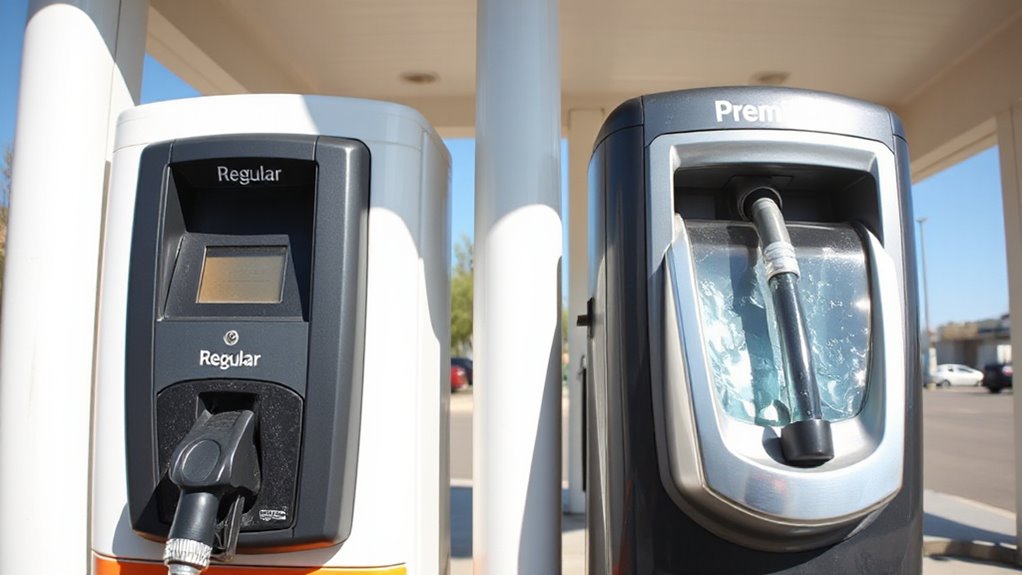

Using premium gas when your vehicle doesn’t require it is usually a waste of money that doesn’t improve performance or fuel efficiency. Most cars are optimized for regular fuel, and paying extra for higher-octane gas won’t make them run better or last longer. If your vehicle’s owner’s manual recommends regular fuel, sticking with it saves you cash. Want to find out when premium really makes a difference? Keep going to learn more.
Key Takeaways
- Most cars are optimized for regular gasoline; using premium offers no performance or efficiency benefits.
- Premium fuel costs significantly more; using it unnecessarily increases your overall fuel expenses.
- Only vehicles with high-compression engines or turbochargers require premium fuel to prevent knocking.
- Following your vehicle’s manufacturer recommendations ensures optimal performance and avoids wasting money.
- Using regular fuel in vehicles that specify premium provides no engine longevity or performance advantages.

Have you ever wondered whether you should use regular or premium gasoline for your vehicle? It’s a common question among drivers trying to make the most of their money at the pump. The choice between these fuels can impact your car’s overall performance and efficiency, but understanding when to use each type can save you unnecessary expenses. Generally, the main difference lies in the octane rating; premium fuel has a higher octane, which is designed to resist knocking in high-compression engines. But for most vehicles, especially those that don’t specify premium, using the higher-octane fuel doesn’t necessarily mean better performance or fuel efficiency.
Choosing between regular and premium gasoline depends on your vehicle’s needs; higher octane doesn’t always mean better performance.
If your car’s manufacturer recommends regular gasoline, sticking with it will usually give you the best balance of performance and savings. Modern engines are engineered to optimize fuel combustion with regular fuel, and using premium won’t typically enhance engine performance unless your car explicitly calls for it. In fact, premium fuel often costs considerably more, so if your engine isn’t designed for it, you’re probably wasting money at the pump. You might think that premium would boost your fuel efficiency, but unless your engine knocks or pings on regular fuel, switching won’t necessarily make your car more economical. Instead, you could end up spending extra without any tangible benefit.
However, if you drive a high-performance vehicle, turbocharged engine, or one with a high compression ratio, your owner’s manual might recommend or require premium fuel. In this case, using regular gasoline could result in knocking, which not only hampers engine performance but could also cause long-term damage. Premium fuel in these engines helps maintain smooth operation, ensuring you get the best engine performance and possibly extending the engine’s lifespan. In such instances, paying for premium is a wise investment, as it allows your vehicle to run efficiently and reliably.
Ultimately, the decision boils down to what your vehicle’s manufacturer recommends. If it calls for regular, then that’s what you should use. Using premium in a car that doesn’t need it won’t improve fuel efficiency or engine performance—just your wallet. Conversely, if your car benefits from premium, sticking to that choice will ensure you’re maintaining ideal performance and avoiding potential engine issues. Being aware of your vehicle’s requirements and understanding how fuel type impacts your engine can help you avoid unnecessary expenses and keep your car running smoothly for longer. Additionally, exploring engine design features can offer insights into which fuel type is best suited for your vehicle.

NordicTrack T Series 10 Treadmill
- iFIT Pro Membership Required: Access all iFIT content and features
- 10-inch Tilting Touchscreen: Optimal viewing for workouts and streaming
- Speed Range 0-12 MPH: Versatile for running, jogging, and walking
As an affiliate, we earn on qualifying purchases.
Frequently Asked Questions
Can Using Premium Gas Improve My Car’s Fuel Efficiency?
Using premium gas with higher octane ratings won’t improve your car’s fuel economy unless your vehicle specifically requires it. If your manual says you need premium, then it may help prevent knocking and optimize performance. Otherwise, sticking to regular gas generally provides the best fuel economy for most cars. Using higher octane unnecessarily costs more without boosting efficiency, so check your owner’s manual before choosing premium fuel.
Are There Long-Term Engine Benefits From Using Premium Over Regular?
Choosing premium gas can be like planting seeds for long-term engine health. It may help maintain engine longevity and keep your fuel system healthy by reducing knocking and deposits. However, if your car isn’t designed for it, benefits are minimal, and you might be wasting money. For ideal results, follow your vehicle’s manufacturer recommendations—using the right fuel is the key to a smoother, longer-lasting engine.
How Do I Determine if My Vehicle Requires Premium Fuel?
Check your vehicle’s engine specifications or manufacturer recommendations, usually found in your owner’s manual. If it specifies that you need premium fuel, use it to guarantee peak performance and prevent engine knocking. If it recommends regular gas, there’s no need to spend extra on premium. Ignoring these guidelines might not harm your engine immediately, but following manufacturer specs helps maintain efficiency and avoid potential long-term damage.
Is Premium Gas More Environmentally Friendly Than Regular?
Premium gas isn’t necessarily more environmentally friendly than regular. While it might reduce engine knocking in high-performance cars, it doesn’t substantially impact environmental factors like pollution reduction or overall environmental impact. Using premium when your vehicle doesn’t require it can lead to unnecessary emissions and waste. To minimize your environmental impact, stick to the recommended fuel type and maintain your vehicle properly for peak efficiency and lower pollution.
Does Fuel Additive Quality Differ Between Regular and Premium Options?
Fuel additive quality can differ between regular and premium options, but the additive effectiveness generally remains consistent across both grades. Premium fuels often contain higher-quality additives that may better protect your engine and improve performance. However, if your vehicle doesn’t specifically require premium, investing in high-quality fuel with effective additives doesn’t usually provide significant benefits. Always check your owner’s manual to determine the appropriate fuel type for your car.

NordicTrack Commercial 1750 Treadmill with iFIT
- iFIT Membership Required: Access all iFIT content and features
- 16-Inch Touchscreen: Pivoting display for optimal viewing
- Speed Range: Run up to 12 MPH
As an affiliate, we earn on qualifying purchases.
Conclusion
So, next time you fill up, ask yourself: are you really gaining anything by paying extra for premium? Most cars run perfectly fine on regular gas, saving you money without sacrificing performance. Don’t let the fancy labels fool you into wasting dollars each week. Why spend more when your vehicle’s manual likely recommends regular? Make smarter choices at the pump—your wallet will thank you for it. Isn’t it time you stopped throwing money away?

NordicTrack T Series 5 Starter Treadmill for Real Results
- LCD Display & Device Shelf: 5-inch screen with device holder
- Variable Speed: 0-10 MPH for versatile workouts
- Adjustable Incline: 0-10% incline for intensity
As an affiliate, we earn on qualifying purchases.

NordicTrack T Series 6.5 S Treadmill
- LCD Display & Device Shelf: 5-inch screen with device holder
- Speed Range: 0 to 10 MPH
- Incline Range: 0 to 10% incline
As an affiliate, we earn on qualifying purchases.