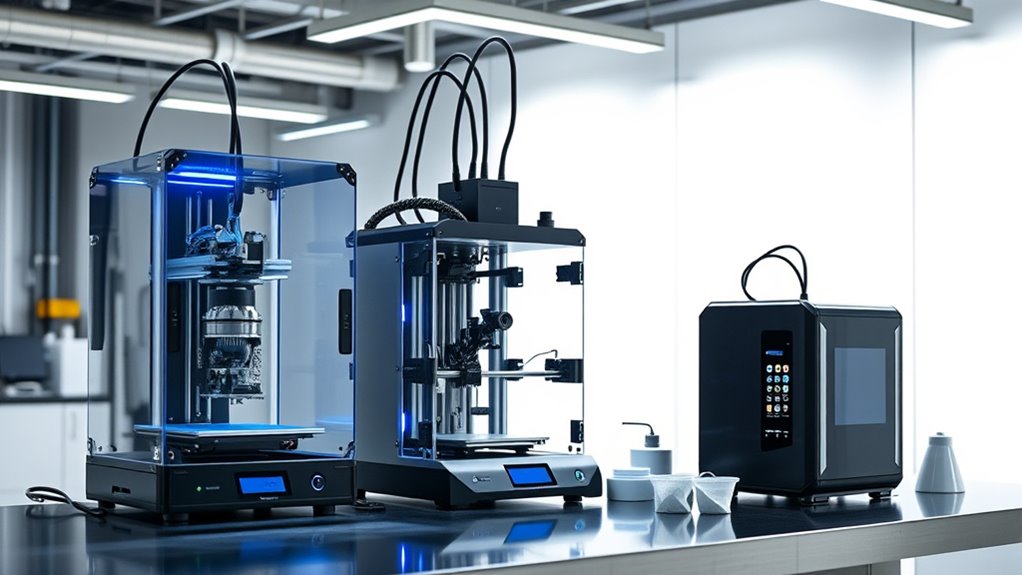

Choosing a professional-grade industrial 3D printer involves balancing build volume, material compatibility, speed, and ease of use. The Original Prusa XL stands out for its multi-material capabilities and reliable CoreXY system, making it ideal for prototyping and complex models. The Creality K2 Plus impresses with its multi-color, high-speed printing and automation features, perfect for detailed, multi-material projects. Meanwhile, the MD-1000D offers enormous build volume for large parts, suited for manufacturing but requires space and setup effort. Each of these options targets different professional needs, with tradeoffs in complexity, cost, and size.
Listen free for 30 days with Audible
Thousands of audiobooks and originals — cancel anytime.
Start your free trialAs an affiliate, we earn on qualifying purchases.
Complete the kit


Key Takeaways
- Large build volume is crucial for full-sized parts, as seen with the MD-1000D and K2 Plus.
- Multi-material and multi-color capabilities significantly enhance versatility in prototyping.
- Speed is a key differentiator, with options like the FlashForge Adventurer 5M Pro reaching 600mm/s.
- Automation and AI monitoring improve reliability but increase complexity and cost.
- Size and setup complexity vary, making some options better suited for dedicated labs versus smaller studios.
| Original Prusa XL 2-Toolhead Multi-Material Large-Format CoreXY 3D Printer |  | Best Overall for Multi-Material Large-Scale Projects | Build Volume: 14.17×14.17×14.17 in | Tool System: Dual Tool System | Heated Bed: Segmented heated bed with zones | VIEW ON AMAZON | See Our Full Breakdown |
| Creality K2 Plus Combo 3D Printer with Multi-Color Printing and Large Build Volume |  | Best for Multi-Color, High-Speed, Automated Projects | Build Volume: 13.78 x 13.78 x 13.78 inches | Print Speed: 600mm/s | Filament Compatibility: High-temp up to 350°C, ASA, PPA | VIEW ON AMAZON | See Our Full Breakdown |
| Industrial Grade 3D Printer MD-1000D by Mingda Technology |  | Best for Large-Scale, High-Precision Manufacturing | Build Volume: 1000 x 1000 x 1000 mm | Print Technology: FDM | Machine Dimensions: 1680 x 1365 x 1665 mm | VIEW ON AMAZON | See Our Full Breakdown |
| QIDI Max4 Combo 3D Printer, 390×390×340mm Build Volume, Heated Chamber, Dual Z Lead Screws, High Speed 800mm/s, Auto-Leveling, AI Camera, Multi-Materials |  | Best for Automated, Multi-Material Industrial Prototyping | Build Volume: 390×390×340mm | Heated Chamber: 65℃ | Nozzle Temperature: 370℃ | VIEW ON AMAZON | See Our Full Breakdown |
| FlashForge Adventurer 5M Pro 3D Printer with Auto Printing System, 600mm/s High-Speed, Quick Detachable Nozzle, Core XY Structure, 220x220x220mm Build Volume |  | Best for Speed and Compact Professional Use | Build Volume: 220x220x220mm | Max Nozzle Temperature: 280°C | Travel Speed: 600mm/s | VIEW ON AMAZON | See Our Full Breakdown |
| professional 3d printers industrial | Build Volume |
|---|---|
| Original Prusa XL 2-Toolhead M | 14.17×14.17×14.17 in |
| Creality K2 Plus Combo 3D Prin | 13.78 x 13.78 x 13.78 inches |
| Industrial Grade 3D Printer MD | 1000 x 1000 x 1000 mm |
| QIDI Max4 Combo 3D Printer | 390×390×340mm |
| FlashForge Adventurer 5M Pro 3 | 220x220x220mm |
More Details on Our Top Picks
Original Prusa XL 2-Toolhead Multi-Material Large-Format CoreXY 3D Printer
The Prusa XL makes a compelling case as a top choice for professionals needing multi-material capabilities combined with a large build volume. Its dual tool system allows simultaneous multi-material or multi-part printing, reducing time and improving workflow. The segmented heated bed and CoreXY motion system deliver high precision and speed, essential for complex prototypes. Compared to smaller or less versatile printers, it’s better suited for engineering teams focused on multi-material prototypes or small-batch manufacturing. However, its higher price and assembly requirements make it less ideal for those with tight budgets or limited setup space.
Pros:- Supports multi-material and multi-part printing
- Large build volume for professional projects
- Reliable, precise CoreXY motion system
- Integrated with Prusa ecosystem for streamlined workflow
Cons:- Fragile parts need careful packing during transport
- Assembly can be time-consuming
- Higher price point suited for professional use
Best for: Engineering teams and studios requiring large, complex, multi-material prints
Not ideal for: Small workshops or hobbyists due to its cost and complexity
- Build Volume:14.17×14.17×14.17 in
- Tool System:Dual Tool System
- Heated Bed:Segmented heated bed with zones
- Material Compatibility:Multi-material, including soluble supports
- Included Spool:1kg Prusament PLA
- Connectivity:Wi-Fi
Our verdict“A versatile large-format printer ideal for multi-material, detailed prototyping in professional settings.”
Creality K2 Plus Combo 3D Printer with Multi-Color Printing and Large Build Volume
The Creality K2 Plus Combo stands out for its ability to produce multi-color models with up to 16 colors thanks to four CFS units. Its large 350x350x350mm build volume supports bigger projects without sacrificing detail. The inclusion of AI cameras and automation enhances reliability, making it suitable for dedicated labs where precision and speed matter. Despite its impressive capabilities, the complex setup and high price may deter newcomers or small-scale hobbyists. It’s better suited for professional environments where multi-material, multi-color, and speed are priorities.
Pros:- Supports up to 16 colors for detailed multi-material models
- Large build volume for bigger parts
- Fast printing speeds of up to 600mm/s
- Automated features with AI monitoring
Cons:- Complex setup process due to automation and multi-color system
- High price may be prohibitive for some users
- Requires knowledge of high-temperature filament handling
Best for: Large-scale, multi-material, multi-color prototyping and manufacturing
Not ideal for: Beginners or those with limited technical support
- Build Volume:13.78 x 13.78 x 13.78 inches
- Print Speed:600mm/s
- Filament Compatibility:High-temp up to 350°C, ASA, PPA
- Number of CFS Units:4
- Color Capabilities:16-color
- Frame Material:Aerospace-grade aluminum alloy
Our verdict“A high-speed, multi-color printer best suited for professional multi-material projects with automation support.”
Industrial Grade 3D Printer MD-1000D by Mingda Technology
The MD-1000D offers unparalleled large build volume at 1000x1000x1000mm, making it an excellent choice for full-sized parts and high-precision manufacturing. Its enclosed frame promotes safety and quality, while fast speeds help meet industrial throughput demands. Designed for engineering-grade materials like PLA, TPU, and PETG, it excels in prototyping and part production at scale. Its size and power requirements, however, mean it’s less suitable for smaller studios or those with limited space. The complex setup and calibration process are tradeoffs for its massive capacity and speed.
Pros:- Enormous build volume for full-sized parts
- Fast printing speeds for industrial throughput
- Fully enclosed for safety and print quality
- Supports engineering-grade materials
Cons:- Very large and heavy, needs dedicated space
- High power consumption
- Complex calibration and setup
Best for: Large part manufacturing and high-precision prototyping
Not ideal for: Small workshops or users with space constraints
- Build Volume:1000 x 1000 x 1000 mm
- Print Technology:FDM
- Machine Dimensions:1680 x 1365 x 1665 mm
- Extruder Type:Dual Extruders
- Max Extruder Temperature:≤350°C
- Supported Filaments:PLA, TPU, PETG
Our verdict“An industrial giant perfect for large-scale manufacturing and high-precision prototyping but demanding in space and setup.”
QIDI Max4 Combo 3D Printer, 390×390×340mm Build Volume, Heated Chamber, Dual Z Lead Screws, High Speed 800mm/s, Auto-Leveling, AI Camera, Multi-Materials
The QIDI Max4 Combo offers a sizable build area suitable for industrial parts, with high-speed capabilities of up to 800mm/s. Its heated chamber and multi-material support make it versatile for engineering-grade materials like ABS and carbon fiber-reinforced nylons. Automated features such as auto-leveling and AI camera monitoring improve consistency and reduce manual intervention, making it a practical choice for busy professional environments. The heavy build and setup complexity, however, may be a barrier for smaller operations or less technically inclined users.
Pros:- Large build volume suitable for industrial prototypes
- Supports high-temp and abrasive materials
- AI monitoring for reliability
- High-speed printing at 800mm/s
Cons:- Separate cooler purchase needed
- Complex setup and calibration
- Heavy and less portable
Best for: Industrial prototyping requiring speed, automation, and multi-material support
Not ideal for: Small or portable setups due to size and weight
- Build Volume:390×390×340mm
- Heated Chamber:65℃
- Nozzle Temperature:370℃
- Max Speed:800mm/s
- Auto-Leveling:Yes
- AI Camera:Yes
Our verdict“A robust, automated industrial printer ideal for high-volume, multi-material prototyping in professional facilities.”
FlashForge Adventurer 5M Pro 3D Printer with Auto Printing System, 600mm/s High-Speed, Quick Detachable Nozzle, Core XY Structure, 220x220x220mm Build Volume
The Adventurer 5M Pro provides impressive speed, reaching 600mm/s, with a compact build volume appropriate for quick, detailed prototypes. Its Core XY structure ensures stability and precision, while features like auto leveling and a quick-detachable nozzle facilitate faster setup and maintenance. Compared with larger industrial options, it’s more suited for rapid iteration on smaller parts, making it a good fit for R&D labs or creative studios with space constraints. Its limited volume, however, makes it unsuitable for large manufacturing projects.
Pros:- High-speed printing up to 600mm/s
- Auto leveling and quick nozzle change
- Supports a wide range of filaments
- Stable and precise Core XY design
Cons:- Limited build volume for large parts
- Requires regular maintenance for optimal performance
- Less suitable for large industrial projects
Best for: Fast-paced prototyping and detailed small to medium models
Not ideal for: Large-scale manufacturing or full-sized parts production
- Build Volume:220x220x220mm
- Max Nozzle Temperature:280°C
- Travel Speed:600mm/s
- Acceleration:20,000mm/s²
- Nozzle Sizes:0.25 / 0.4 / 0.6 / 0.8mm
- Material Compatibility:PLA, ABS, PETG, ASA, TPU, PC, PLA-CF, PETG-CF
Our verdict“A speed-oriented, compact printer perfect for rapid prototyping and detailed small-scale models in professional settings.”
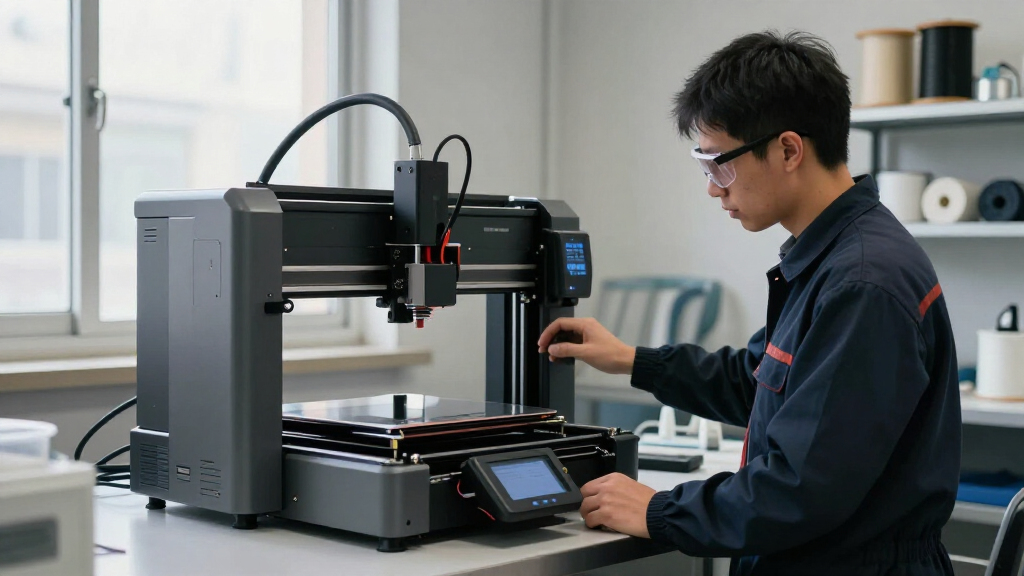
How We Picked
Our selection process focused on industrial 3D printers that combine large build volumes, material versatility, speed, and reliability. We prioritized models that serve professional manufacturing, prototyping, or large-scale production environments, considering factors like ease of operation, integration features, and cost. Each product was evaluated against these criteria, with an emphasis on how well they balance performance with practical tradeoffs such as size, complexity, and price.
Factors to Consider When Choosing Professional 3d Printers Industrial
When selecting an industrial 3D printer, I focus on key factors such as build volume, material compatibility, speed, and automation features. The right choice hinges on your specific application—whether you need large-scale part production, multi-material capabilities, or rapid prototyping. Understanding these priorities helps narrow down options that fit your workspace, budget, and expertise, ensuring you get a machine that enhances your manufacturing or prototyping workflow.Size and Build Volume
Size matters when printing large parts or multiple components simultaneously. Larger build volumes, like those of the MD-1000D or K2 Plus, enable full-sized parts and complex assemblies without splitting models. Smaller models like the FlashForge Adventurer are better suited for quick iterations or detailed prototypes where size is less critical.
Material Compatibility and Multi-Material Support
If your work involves diverse materials—like engineering plastics, composites, or soluble supports—select a printer that supports these. The Prusa XL and K2 Plus excel in multi-material, multi-color printing, offering versatility. Conversely, some industrial models focus on specific high-temperature or engineering-grade materials, optimizing durability and precision.
Speed and Automation
Fast printing speeds and automation simplify workflows, especially in production environments. The Adventurer 5M Pro and QIDI Max4 support high speeds and AI-assisted monitoring, reducing manual oversight. However, these features often come with increased complexity and cost, so consider your capacity to manage advanced features.
Size and Space Requirements
Massive printers like the MD-1000D need dedicated space and robust power supplies, making them less suitable for small workshops. Smaller, more integrated units can fit into limited environments but may sacrifice volume or speed. Always match your space constraints with the size of your planned investment.
Frequently Asked Questions
What is the most important feature for industrial 3D printers?
The most critical aspect is often build volume, especially if you’re producing large parts or multiple components simultaneously. However, material compatibility and print speed are equally vital, as they determine what you can produce and how efficiently. Balancing these features based on your project needs ensures you select a machine that fits your workflow.Are multi-material capabilities worth the extra cost?
Multi-material support significantly expands the versatility of a 3D printer, enabling complex, multi-part, or multi-color models without manual assembly. For professional prototyping or manufacturing requiring diverse materials, this feature justifies the investment. For simpler tasks, single-material printers may suffice and be more cost-effective.How important is automation in industrial 3D printing?
Automation, including auto-leveling, AI monitoring, and filament management, reduces manual intervention, increases reliability, and accelerates production cycles. While it adds to the initial cost, automation pays off in consistent quality and less downtime, especially in high-volume settings.What size should I consider for my workspace?
Size depends on your intended output; large industrial models like the MD-1000D require dedicated, spacious areas with sufficient power supply. Smaller or mid-sized machines like the K2 Plus or QIDI Max4 are more adaptable to typical workshop or lab environments, offering a balance of capacity and footprint.Is high-speed printing always better?
High-speed printing can significantly reduce project time, but it often requires high-quality components and precise calibration. Not all materials or models benefit from high speeds—some require slower, more controlled conditions to ensure accuracy and surface finish. Consider your project needs and machine capabilities before prioritizing speed.Conclusion
For those focused on large-scale manufacturing or full-sized part prototyping, the MD-1000D offers unmatched volume and speed but demands significant space and setup effort. Professionals needing multi-material, multi-color, and automation features will find the Creality K2 Plus to be a versatile, high-throughput option. Creative studios or R&D labs with limited space should consider the FlashForge Adventurer 5M Pro for rapid, detailed prototypes, balancing speed with compact size. Ultimately, the best choice depends on your specific production volume, material needs, and workspace constraints.
Flea & tick season Picks
flea and tick prevention
As an affiliate, we earn on qualifying purchases.