Looking for discounted smart home devices that deliver quality without breaking the bank? The U-tec Matter Smart Plug stands out as the best overall pick thanks to its efficiency and versatility, while the Amazon Echo Dot (5th Gen) offers an excellent entry point for smart speaker beginners. Another notable option is the GHome Smart Plug Mini, which balances affordability with robust compatibility. The main tradeoffs in this category often involve balancing cost against features like compatibility, ease of use, and build quality. Continue reading for a detailed breakdown of the top options and what makes each one unique.
Get ready for Prime Big Deal Days — try Prime free
Exclusive member deals on October 6–7, plus fast free delivery. Cancel anytime.
Start your free trialAs an affiliate, we earn on qualifying purchases.
Key Takeaways
- Top picks combine affordability with reliable performance, emphasizing compatibility with popular voice assistants.
- Bundles and multi-packs often provide better value, but may include features not necessary for all users.
- Smart plugs with USB ports and additional features like night lights add convenience, but can increase costs slightly.
- Entry-level smart speakers are now more affordable, making voice control accessible for most budgets.
- Tradeoffs between price and ecosystem compatibility are the main decision factor across all options.




More Details on Our Top Picks
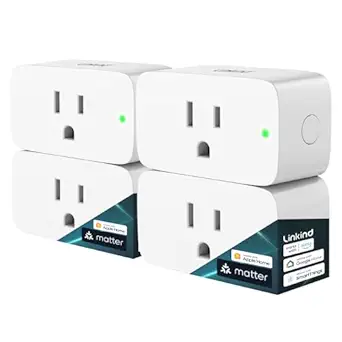
U-tec Matter Smart Plug, 15A Ultra-Efficient Smart Home Outlet, 4 Pack
This model stands out for its universal Matter support, making it compatible with Apple Home, Alexa, Google Home, and SmartThings, unlike the Kasa Smart Plug HS103P4 which only works with Wi-Fi and lacks Matter. The U-tec plug requires a separate Matter hub, adding setup complexity, but it offers more seamless integration across ecosystems and built-in surge protection to safeguard appliances. Its support for scheduling and timers helps cut energy waste, appealing to those who prioritize flexibility and device longevity. However, the need for a Matter hub and reliance on 2.4GHz Wi-Fi could be drawbacks for users seeking a straightforward setup or dual-band connectivity.
Pros:- Supports Matter standard for broad device compatibility
- Includes surge protection for connected appliances
- Offers voice control and remote management via app
Cons:- Requires a separate Matter hub for operation
- Limited to 2.4GHz Wi-Fi networks
Best for: Homeowners who want broad ecosystem compatibility and future-proofing with their smart plugs
Not ideal for: Casual users seeking an easy, hub-free setup or those on a tight budget since the hub adds extra cost
- Amperage:15A
- Quantity:4 Pack
- Connectivity:Matter over 2.4GHz Wi-Fi
- Compatible Ecosystems:Apple Home, Alexa, Google Home, SmartThings
- Surge Protection:Built-in
- Hub Required:Yes
Our verdict“This pick makes the most sense for users wanting maximum ecosystem flexibility and device protection, willing to handle a slightly more complex setup.”
Kasa Smart Plug HS103P4, Smart Wi-Fi Outlet, Works with Alexa & Google Home, No Hub Required, 15 Amp, UL Certified, 4-Pack, White
Compared with the U-tec plug, the Kasa Smart Plug HS103P4 offers plug-and-play convenience without needing a hub, making it ideal for users who prefer a straightforward setup. It supports Alexa and Google Assistant, and with over 5 million users trusting its UL certification, it provides reassurance on safety. The app allows remote control, scheduling, and timers, similar to more advanced options, but it only supports 2.4GHz Wi-Fi networks, which could limit performance in dual-band setups. For those seeking a reliable, budget-friendly solution with minimal fuss, this model hits the sweet spot.
Pros:- No hub needed for setup and operation
- Supports voice control via Alexa and Google Assistant
- UL certified and widely trusted
Cons:- Limited to 2.4GHz Wi-Fi networks only
- Lacks Matter standard support
Best for: Users seeking a dependable, easy-to-install smart plug without extra hardware requirements
Not ideal for: Power users wanting Matter support or dual-band Wi-Fi functionality for more complex setups
- Amperage:15 Amp
- Quantity:4-Pack
- Connectivity:2.4GHz Wi-Fi
- Compatibility:Alexa, Google Home
- Certification:UL
- Hub Required:No
Our verdict“This is perfect for everyday smart home users prioritizing simplicity and reliability at an affordable price.”
Lumary Smart Outlet with 2 USB Ports, 2 AC Outlets with Individual Control (4 Pack)
This outlet excels by providing 2 USB ports and 2 individually controllable AC outlets, surpassing the basic features of the GHome Smart Plug Mini which only offers simple on/off control. Its support for scheduling, timers, and real-time power monitoring makes it ideal for tech-savvy users who want detailed insights and control over energy consumption. The need for a neutral wire and reliance on 2.4GHz Wi-Fi, however, could pose installation challenges for some homes. Its 2-year warranty offers peace of mind, but the in-wall installation requirement limits it to those comfortable with wiring.
Pros:- Individual control of each AC outlet and USB port
- Supports scheduling, timers, and power monitoring
- ETL and FCC certified for safety
Cons:- Requires neutral wiring for installation
- Limited to 2.4GHz Wi-Fi networks
Best for: Tech enthusiasts wanting detailed power monitoring and USB charging options in their smart outlets
Not ideal for: Renters or DIYers without neutral wiring or those seeking plug-in solutions without installation
- Amperage:15A
- Voltage:110V
- USB Output:5V 2.1A
- Total Outlets:4 (2 AC, 2 USB)
- Connectivity:2.4GHz Wi-Fi
- Certifications:ETL, FCC
Our verdict“This is best suited for users who prioritize detailed energy insights and USB charging in a wired-in outlet, accepting installation complexity.”
Amazon Echo Spot (Newest Model) Smart Alarm Clock with Alexa – Glacier White (Like-New/Refurbished)
The Echo Spot brings a visual twist to smart assistants with its vibrant display, making it more than just a voice speaker. It offers rich sound quality, deep bass, and a customizable clock face, setting it apart from the Echo Dot Max which lacks a display. The device supports scene routines, smart home control, and even functions as a wifi extender with built-in eero technology, appealing to those who want a multifunctional device. The refurbished condition and generic packaging are tradeoffs, but the warranty remains the same as new. This makes it ideal for users who want a smart display with audio and hub-like features, without paying full retail.
Pros:- Refurbished with same warranty as new, offering value
- Vibrant display for time, weather, and notifications
- Rich audio with deep bass and clear vocals
- Built-in eero Wi-Fi extender functionality
Cons:- Ships in generic packaging, not retail box
- Refurbished units may show minor cosmetic wear
- Requires a compatible eero network for Wi-Fi extension
Best for: Smart home lovers seeking a multifunctional device with a display and good audio at a lower cost
Not ideal for: Users seeking a dedicated smart speaker or those who prefer new, unrefurbished units for maximum longevity
- Condition:Like-New (Refurbished)
- Display:Customizable smart clock
- Audio:Rich with deep bass
- Wi-Fi:eero Built-in
- Smart Assistant:Alexa
- Warranty:Same as new
Our verdict“This device suits users wanting a stylish, feature-rich smart display with audio and wifi extension capabilities at a lower price point.”
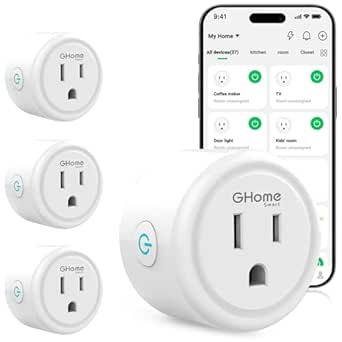
GHome Smart Plug Mini (4 Pack), WiFi Smart Outlet Works with Alexa & Google Home, Timer with App Control, ETL/FCC Listed, White
Compared with the larger Lumary outlet, the GHome Smart Plug Mini emphasizes space-saving design, making it ideal for crowded outlets or power strips. Like the GHome app, it supports schedules and timers, compatible with Alexa and Google Home. While it’s a straightforward choice for basic voice control and scheduling, it only supports 2.4GHz Wi-Fi networks, similar to the other plugs in this roundup, and lacks USB ports or energy monitoring. It’s a solid option for users who want a simple, affordable smart plug without extra features.
Pros:- Compact design fits in tight outlets
- Works with Alexa, Google, and GHome app
- ETL and FCC certified for safety
Cons:- Limited to 2.4GHz Wi-Fi networks
- Lacks advanced features like energy monitoring or USB ports
Best for: Users needing a compact, affordable smart plug for basic control and scheduling in tight spaces
Not ideal for: Power users wanting USB charging, energy monitoring, or Matter support for future-proofing
- Connectivity:WiFi 2.4GHz + Bluetooth
- Compatibility:Alexa, Google Home, GHome app
- Electrical Rating:10A, 1200W
- Certifications:ETL, FCC
- Hub Required:No
Our verdict“This plug is ideal for space-conscious users seeking reliable voice control at an economical price, with minimal setup fuss.”
Amazon Echo Dot Max (Newest Model) Smart Speaker with Alexa – Graphite
The Echo Dot Max is the most capable device in this roundup, and the price gap between it and the plugs tells the story. This pick makes the most sense for someone who wants one device to anchor a whole room: audio, voice control, and a built-in smart home hub in a single unit. Compared with the Amazon Basics Smart Plug 4-Pack, which needs an Alexa device to be useful, the Dot Max is the brain those plugs plug into. The eero Built-in mesh extender adds up to 1,000 sq. ft. of wifi coverage — but only if you already run an eero network, which is a real limitation for most buyers. The nearly 3x bass improvement over the 2022 Echo Dot makes this the clear audio choice, and Alexa+ support positions it for the future.
Pros:- Room-filling audio with nearly 3x the bass of the 2022 Echo Dot
- Built-in smart home hub removes the need for separate hub hardware
- Doubles as an eero mesh extender, adding up to 1,000 sq. ft. of wifi coverage
- Omnisense adaptive audio tunes playback to the room and supports presence-based routines
Cons:- The wifi extender feature only works if you already have an eero network
- The full conversational assistant experience requires Alexa+
Best for: Buyers building an Alexa-centered smart home who want a speaker, hub, and wifi extender in one device
Not ideal for: Google or Apple Home users — this is an Alexa ecosystem device first and foremost
Our verdict“Worth the premium if you want a single Alexa device to run your audio, smart home, and wifi — skip it if you’re locked into another ecosystem.”
Amazon Basics Smart Plug, Works with Alexa, 4-Pack
For pure value in an Alexa home, this four-pack is hard to beat. Where the Linkind Matter Smart Plug demands a Matter-certified hub for full platform integration, the Amazon Basics plugs connect directly to Alexa with no hub and no third-party app — setup takes minutes, and there’s even a zero-touch pairing option at checkout. That simplicity is the whole pitch. The tradeoff is ecosystem lock-in: unlike the EIGHTREE Smart Plug, which also supports Google Assistant and SmartThings, these are Alexa-only. The compact housing leaves the second outlet free, and sunrise/sunset scheduling is a genuinely useful touch for lamps and fans at this price. I’d call this the cheapest credible entry point into Alexa automation in the entire lineup, provided you’re not planning to switch platforms later.
Pros:- Direct Alexa connection with no hub or third-party app required
- Zero-touch setup option at checkout removes onboarding friction
- Compact design leaves adjacent outlets usable
- Sunrise/sunset scheduling plus standard routines
Cons:- Alexa-only — no Google Home or Apple Home support
- Limited to 2.4 GHz Wi-Fi networks
Best for: Alexa households that want the cheapest, simplest plug-and-go automation with no hub or extra apps
Not ideal for: Google Home or Apple Home users, or anyone who might switch ecosystems — Alexa-only compatibility locks you in
Our verdict“The best budget pick for committed Alexa users; anyone with a mixed-ecosystem home should pay slightly more for the Linkind Matter plugs instead.”
Linkind Matter Smart Plug with Night Light, 4 Pack
This is the most versatile plug in the roundup thanks to Matter certification — Apple Home, Alexa, Google Home, and SmartThings all work through one standard, no pile of manufacturer apps required. Compared with the Amazon Basics Smart Plug, you give up the zero-friction Alexa-only setup but gain genuine platform freedom. The standout differentiator is the built-in adjustable night light with dusk-to-dawn auto-sensing, which effectively makes each plug two devices in one — ideal for hallways, kids’ rooms, and bathrooms. Offline LAN control means your lights keep working even when the internet drops, something basic Wi-Fi plugs can’t do. The catch: full smart home platform integration requires a Matter-certified hub like a HomePod, Echo, or Nest, and 2.4GHz-only Wi-Fi rules out some newer routers without band splitting.
Pros:- Matter certification unifies Apple Home, Alexa, Google Home, and SmartThings control
- 2-in-1 design pairs a 15A/1800W smart plug with an adjustable 30lm night light
- Dusk-to-dawn auto-sensing and scheduling trim energy waste
- Offline LAN control keeps devices responsive during internet outages
Cons:- Only supports 2.4GHz Wi-Fi, not 5GHz
- Requires a Matter-certified hub for full smart home platform integration
Best for: Households mixing Apple, Google, and Alexa devices that want one plug standard for everyone — plus soft lighting at night
Not ideal for: Buyers with 5GHz-only networks or no Matter hub, who won’t get the cross-platform features they’re paying for
Our verdict“The smartest buy for mixed-ecosystem homes that also want gentle nighttime lighting — just confirm you have a Matter hub and a 2.4GHz network first.”
Linkind Matter Smart Plug
Sold individually, this is the no-commitment entry into Matter — the right choice when you need one smart outlet rather than four. It shares the cross-platform DNA of the Linkind Matter Smart Plug with Night Light, covering Apple Home, Alexa, Siri, Google Home, and SmartThings, but drops the night light to hit a lower single-unit price. Compared with the Amazon Basics 4-Pack, this option stands out for offline LAN control, so a router outage doesn’t leave your lamp dumb. Safety is a quiet strength here: fire-resistant materials, short-circuit protection, and overload protection on a 15A/1800W rating. The tradeoffs are familiar — a Matter hub is required for major platform integration, and it’s 2.4GHz only. For testing the Matter waters or outfitting one specific outlet, this makes more sense than buying a four-pack you won’t use.
Pros:- Matter support across Apple Home, Alexa, Google Home, SmartThings, and Siri without multiple apps
- Offline LAN control keeps switching working during internet outages
- Fire-resistant build with short-circuit and overload protection at 1800W/15A
- Compact housing doesn’t block the second outlet
Cons:- Requires a Matter-certified hub or controller for major platforms
- Only supports 2.4GHz WiFi
Best for: Buyers who need just one or two smart outlets and want maximum platform flexibility without buying a full 4-pack
Not ideal for: Anyone outfitting a whole room — the per-plug cost is worse than the 4-packs elsewhere in this lineup
Our verdict“The best way to add a single Matter-capable outlet without overbuying — multi-room shoppers should grab the 4-packs instead.”
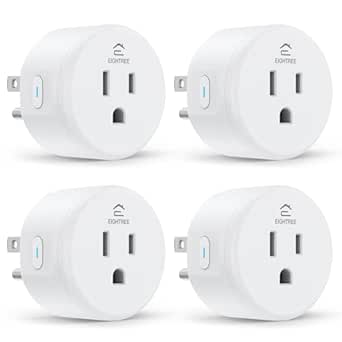
EIGHTREE Smart Plug WiFi Outlet, Works with Alexa & Google Home, 15A, 4-Pack
The EIGHTREE occupies the middle ground between the cheap Alexa-only plugs and the pricier Matter options. You get Alexa, Google Assistant, and SmartThings support in one four-pack at a budget price, which immediately beats the Amazon Basics Smart Plug on flexibility. Automatic Bluetooth pairing through the Smart Life app makes setup less painful than typical Wi-Fi plugs, and ETL/FCC certification plus a 15A/1800W rating means it can handle real appliances, not just lamps. Compared with the Linkind Matter Smart Plug with Night Light, you lose Matter certification, offline LAN control, and the night light — but you also skip the Matter hub requirement, since these connect to each platform directly through Smart Life. That hub-free simplicity is exactly why this pick makes sense for casual users who want voice control today without researching standards.
Pros:- Works with Alexa, Google Assistant, and SmartThings without a hub
- Setup simplified by automatic Bluetooth pairing in the Smart Life app
- Compact design leaves the second outlet free
- ETL and FCC certified with 15A/1800W capacity for heavier appliances
Cons:- Setup runs through the Smart Life app rather than a direct Alexa connection
- Only supports 2.4GHz Wi-Fi networks
Best for: Budget shoppers who want both Alexa and Google Home support without a hub or Matter homework
Not ideal for: Apple Home users and anyone who wants offline control during internet outages — this relies on cloud connectivity and Smart Life
Our verdict“The cheapest way to cover both Alexa and Google homes in one purchase — just accept the Smart Life app dependency and the lack of Matter’s future-proofing.”
GHome Smart Plug – WiFi Smart Outlet with Alexa & Google Home Compatibility
At its discounted price, this single GHome plug is one of the cheapest ways to dip a toe into smart home automation without committing to a multipack. Compared with the Kasa HS103P4 4-Pack, you give up amperage headroom — this outlet tops out at 10A/1200W versus Kasa’s 15A — which rules out space heaters and some high-draw appliances. Where it holds its own is flexibility: it works with the GHome, Smart Life, and Tuya apps, so buyers already living in the Tuya ecosystem won’t need yet another app. Scheduling and group control are included, and no hub is required. The tradeoff is setup friction — you must register through the GHome app before linking Alexa or Google, and 2.4GHz-only WiFi can trip up households running split-band networks.
Pros:- Very low entry price for a single unit, ideal for testing the waters
- Triple app support (GHome, Smart Life, Tuya) avoids ecosystem lock-in
- Scheduling, timers, and group control included at no extra cost
- ETL and FCC listed with no hub required
Cons:- 10A/1200W limit excludes heaters and other high-draw appliances
- Initial setup must go through the GHome app before voice control works
- 2.4GHz-only WiFi support complicates setup on modern dual-band routers
Best for: First-time buyers who want one inexpensive smart plug for a lamp, fan, or coffee maker before investing in a multipack
Not ideal for: Owners of high-wattage devices like space heaters or hair tools — the 1200W ceiling is too low, and 15A options like the Kasa or EIGHTREE packs are safer choices
- Current Rating:10 A
- Wattage:1200 watts
- Operating Voltage:120 volts
- Connectivity:WiFi, Bluetooth (2.4GHz only)
- Control Methods:App, Remote, Voice
- Compatible Devices:Alexa, Google Home
- Compatible Apps:GHome, Smart Life, Tuya
- Certifications:ETL, FCC Listed
Our verdict“A sensible, low-risk first plug for lamp-and-fan automation, provided your device stays under 1200W.”
Amazon Echo Spot (Newest Model) – Smart Alarm Clock with Alexa, Glacier White
The Echo Spot earns its spot through focus: it is the only device in this lineup built specifically around the bedside routine. Compared with the Echo Dot (5th Gen), the Spot trades pure audio punch for a customizable display showing time, weather, and song titles at a glance — something the Dot simply cannot do. Gentle wake routines with gradual light make it a genuinely better alarm clock than any phone. It also shares the Dot’s built-in eero extender, adding up to 1,000 sq. ft. of WiFi coverage, but the same caveat applies: that feature only activates on an existing eero network. Compared with the Echo Show 5, the Spot is more compact and bedroom-oriented, but the Show 5’s larger screen and camera make it the better pick for kitchens or video calls. Buyers wanting a screen for streaming should skip this one.
Pros:- Customizable display surfaces time, weather, and music without voice commands
- Gentle wake routines with gradual light replace jarring alarms
- Doubles as an eero mesh extender adding up to 1,000 sq. ft. of coverage
- Compact footprint fits nightstands, desks, and kitchen counters
Cons:- WiFi extender functionality requires an existing eero network
- Screen is too small for meaningful video streaming
- Full smart home control depends on owning compatible devices
Best for: Anyone rebuilding their morning and bedtime routine — the display, gentle wake light, and Alexa make it the best alarm-clock upgrade in this roundup
Not ideal for: Households without an existing eero router, who lose one of the device’s headline features, and anyone wanting a screen large enough for comfortable video watching
- Smart Assistant:Alexa
- Display:Customizable smart clock face
- WiFi Extender:Built-in eero mesh extender, up to 1,000 sq. ft. added coverage
- Privacy Features:Mic off button and in-app controls
- Recycled Materials:36%
- Color:Glacier White
Our verdict“The clear choice if your smart home starts and ends at the bedside — just don’t expect it to replace a true smart display.”
Amazon Echo Dot (5th Gen, Glacier White) Smart Speaker with Alexa
The 5th Gen Echo Dot remains the value benchmark for voice-first smart homes, and at a discount it is hard to argue against. Its 1.6-inch full-range driver delivers fuller sound than the smart plugs in this roundup could ever complement, and its built-in motion and temperature sensors let it trigger routines — lights on when you walk in — without buying extra hardware. Compared with the Echo Spot, you lose the display but gain a lower price; compared with the Echo Show 5, you lose the camera and screen but keep Matter support and the eero extender feature. Two caveats matter: audio is mono only, so stereo seekers need two units, and Amazon Sidewalk ships enabled by default, quietly sharing a slice of your bandwidth with neighbors unless you disable it. Dual-band WiFi is a nice edge over the 2.4GHz-only competition here.
Pros:- Built-in motion and temperature sensors enable routines without extra sensors
- eero Built-in extends WiFi coverage up to 1,000 sq. ft. (100 Mbps, 10 devices)
- Dual-band WiFi plus Matter and BLE mesh compatibility
- Compact 3.5-inch size fits nearly anywhere
Cons:- Mono playback only — stereo requires buying two units
- eero extender requires a compatible eero router and account linking
- Amazon Sidewalk enabled by default consumes shared bandwidth
Best for: Budget-conscious buyers who want Alexa voice control plus motion-triggered automations in a bedroom, office, or entryway
Not ideal for: Audiophiles or anyone wanting stereo sound from a single speaker — mono output is a real limitation, and video-callers should step up to the Echo Show 5
- Size:3.9″ x 3.9″ x 3.5″
- Weight:10.7 oz (304g)
- Loudspeaker Driver:1.6″ full range driver
- Audio Bandwidth:62 Hz – 19 kHz, mono
- Wi-Fi:Dual-band 802.11a/b/g/n/ac (2.4 and 5 GHz)
- Smart Home Compatibility:WiFi, Bluetooth Low Energy Mesh, Matter
- eero Built-in:Up to 1,000 sq. ft., 100 Mbps, 10 devices
- Bluetooth:A2DP, AVRCP
Our verdict“The most capable voice assistant per dollar in this roundup, as long as mono audio and a screen-free experience fit your needs.”
Amazon Smart Thermostat
This is the only product in the roundup that pays for itself — Amazon claims an average of $90 per year in energy savings, which at a discounted price means a payback period measured in months. Compared with plugs like the GHome Smart Plug, which automate individual devices, the thermostat attacks the single largest energy consumer in most homes: the HVAC system. Built on Honeywell Home technology and ENERGY STAR certified, it offers 7-day schedules, vacation mode, and ‘hunches’ that adjust temperature based on presence and sleep. The tradeoffs are real, though. A C-wire is required (or a separately sold adapter kit), older homes often lack one, and there’s no built-in microphone — voice control means pairing it with an Echo device like the Echo Dot. It also won’t work with high-voltage 110-240V systems common in baseboard heating.
Pros:- Estimated $90 average yearly energy savings with ENERGY STAR certification
- Thermostat hunches adjust temperature automatically using presence and sleep detection
- Works with both Alexa and Ring for remote control and scheduling
- Guided DIY installation backed by Honeywell Home technology
Cons:- C-wire required, with the power adapter kit sold separately
- No built-in microphone — an Alexa device is needed for voice control
- 2.4GHz-only WiFi and incompatible with 110-240V HVAC systems
Best for: Homeowners with standard 24V HVAC systems who want the fastest payback on a smart home purchase and already own (or plan to buy) an Echo device
Not ideal for: Renters and owners of older homes without a C-wire or compatible 24V wiring — check compatibility first, because 110-240V baseboard systems won’t work at all
- Compatibility:Most 24V HVAC systems (forced air, heat pump, radiant boiler); not 110-240V
- C-Wire:Required (power adapter kit sold separately)
- Certifications:ENERGY STAR, ECOLOGO Gold
- Connectivity:2.4 GHz only, 802.11 b/g/n
- Controls:3 on-device touch buttons; Alexa app; voice via Alexa device
- Features:Indoor humidity sensing, 7-day schedules, vacation mode, energy dashboard, hunches
- Size:3.56 x 3.56 x 0.84 in
- Weight:3.86 oz (109.5 g)
Our verdict“The best pure ROI pick here for compatible HVAC systems — verify your wiring before buying and you’ll likely recoup the cost within a year.”
Amazon Echo Show 5 (Newest Model) Smart Display – Cloud Blue
When voice alone isn’t enough, the Echo Show 5 is the step up — it adds a camera, a 5.5-inch screen, and video calling to the Alexa experience. Compared with the Echo Spot, the Show 5 is the better kitchen or desk companion: its larger display handles recipe steps, doorbell feeds, and photo slideshows more comfortably, and its 2 MP camera enables video calls the Spot can’t make at all. Compared with the Echo Dot, you gain a visual interface for checking cameras and controlling devices by tap instead of voice — but you lose the Dot’s motion and temperature sensors and pay more for the privilege. Privacy is handled thoughtfully with a physical camera shutter and mic/camera off button. The honest tradeoff: 5.5 inches is tight for actual TV-style streaming, and features like unlimited photo storage sit behind a Prime subscription.
Pros:- Built-in 2 MP camera enables video calls and room check-ins
- Displays compatible video doorbells and camera feeds at a glance
- Strong privacy controls including a physical camera shutter
- Made with 100% recycled fabric, aluminum, and recyclable packaging
Cons:- 5.5-inch screen is limiting for video streaming and detailed content
- Some features, like unlimited photo storage, require a Prime subscription
Best for: Buyers who want a visual command center — video calls, doorbell feeds, and tap-based device control — on a desk, nightstand, or kitchen counter
Not ideal for: Anyone hoping to stream shows regularly — the 5.5-inch screen is fine for glanceable info but frustrating for video — or buyers unwilling to pair it with subscriptions
- Display:5.5 inch
- Camera:2 MP built-in camera
- Voice Assistant:Alexa
- Smart Home Control:Compatible lights, thermostats, cameras, video doorbells
- Privacy Features:Mic/camera off button, camera shutter
- Sustainability:100% recycled fabric and aluminum, recyclable packaging
- Color:Cloud Blue
Our verdict“The right pick when you want eyes and a screen in your Alexa setup — just accept that it’s a glanceable display, not a television.”
How We Picked
These products were selected based on a combination of affordability, functionality, build quality, user reviews, and compatibility with popular smart home ecosystems like Alexa and Google Home. We prioritized devices that offered real value, whether through multi-packs, added features, or reliable connectivity. Our ranking reflects a balance between cost-effectiveness and performance, ensuring that budget-conscious buyers can find options that still deliver a seamless smart home experience. Devices with strong user feedback and safety certifications were favored, while those with unnecessary complexity or limited compatibility were ranked lower.Factors to Consider When Choosing Discounted Smart Home Devices
When choosing discounted smart home devices, it’s important to focus on factors that maximize value and future-proof your setup. Price is often a key consideration, but understanding core features and ecosystem compatibility helps avoid buyer’s remorse. Consider how easy the device is to set up and control, especially if you’re new to smart home tech. Durability and safety certifications matter for long-term reliability. Finally, think about whether additional features like USB charging or integrated night lights align with your needs, as these can influence overall value and usability.Compatibility with Voice Assistants
Most smart home devices work best when they seamlessly integrate with your existing ecosystem, such as Alexa or Google Home. Ensuring compatibility prevents frustration and makes daily routines easier. Some budget options might lack support for certain voice assistants, so check this before purchasing. Devices that support multiple platforms offer greater flexibility, especially if you plan to expand your smart home later.
Ease of Installation and Use
Devices that are simple to install and manage provide a better overall experience, especially for beginners. Look for products with straightforward app interfaces and minimal setup steps. Complicated installations can lead to frustration and reduce the likelihood of regular use. User-friendly controls and clear instructions are key factors in making a device worth the discounted price.
Build Quality and Safety Certifications
Low-cost devices can sometimes cut corners on durability. Prioritize options with safety certifications like UL, ETL, or FCC, which indicate thorough testing and adherence to safety standards. Well-built devices also tend to last longer, saving money in the long run. Avoid models with flimsy construction or vague safety credentials, even if they are heavily discounted.
Additional Features and Versatility
Extras like USB ports, night lights, or scheduling options can significantly boost value, especially when bundled in a low-cost package. However, not all features are necessary for every user, so consider whether they genuinely add convenience. Sometimes paying slightly more for a feature-rich device is worth it if it simplifies your setup or enhances functionality.
Long-term Value and Ecosystem Investment
While discounted prices are attractive, think about how the device fits into your broader smart home ecosystem. Investing in compatible products can prevent future compatibility issues and reduce the need for replacements. Also, consider whether the device supports future updates or integrations, ensuring your investment remains useful over time.
Frequently Asked Questions
Are discounted smart home devices reliable enough for everyday use?
Many discounted smart home devices are made by reputable brands and meet safety and performance standards, making them reliable for daily use. However, it’s wise to check user reviews for real-world feedback on longevity and connectivity. Devices with safety certifications and positive ratings tend to perform well, even at lower prices. Keep in mind that some cheaper options may lack advanced features or durability, so choose based on your specific needs and expected use case.
Can I expand my smart home ecosystem with discounted devices without compatibility issues?
Most budget-friendly devices support popular ecosystems like Alexa or Google Home, but it’s essential to verify compatibility before purchasing. Some lower-cost options might only work with specific platforms, which could limit future expansion. Choosing devices with broad compatibility ensures a more flexible and scalable setup, avoiding the need to replace already purchased items later.
Do discounted smart plugs affect my Wi-Fi network performance?
Generally, smart plugs and similar devices use minimal bandwidth and shouldn’t significantly impact your Wi-Fi network. However, if you add many devices or if your network is already congested, performance might degrade. Opt for devices that support dual-band Wi-Fi and have good reviews for stable connectivity. Proper placement of your Wi-Fi router can also mitigate potential issues.
Are smart devices with extra features like USB ports worth paying for on a budget?
Extras like USB charging ports or built-in night lights can add convenience and enhance everyday use, making them worthwhile even at discounted prices. However, if these features are not essential for your setup, you might save money by choosing simpler models. Consider how often you’ll use these additional features to determine if the extra cost is justified in your case.
Is it better to buy multi-packs or single devices when shopping for discounts?
Multi-packs often provide better value per unit, especially if you plan to outfit multiple rooms or areas. They can also streamline setup and management. However, if you only need one or two devices, buying singles might be more cost-effective and prevent paying for features you won’t use. Balance your needs with the total savings to make the best choice.
Conclusion
For most homeowners looking to upgrade affordably, the U-tec Matter Smart Plug offers reliable performance and broad compatibility, making it the best overall choice. Budget-conscious buyers should consider the Amazon Basics Smart Plug or the GHome Smart Plug Mini, which provide solid features at lower prices. Beginners will appreciate the simplicity of the Amazon Echo Dot (5th Gen), while those seeking a more integrated experience may prefer the Echo Show 5 for its display capabilities. Ultimately, your pick depends on your specific needs—whether that’s budget, ease of use, or ecosystem integration—so weigh these factors carefully before deciding.
Fall yard work Picks
leaf blowers
As an affiliate, we earn on qualifying purchases.