Do outlet stores really offer the best bargains, or is it just a clever marketing ploy? While you might spot discounts of up to 70%, the reality behind those prices can be quite different. Factors like inflated “compare at” prices and differences in product quality raise questions about true value. So, how can you determine if you’re genuinely saving money or just falling for a sales tactic? Let’s explore the nuances that could change your shopping strategy.
Key Takeaways
- Outlet stores often advertise discounts of 30% to 70%, but actual savings may average around 40% due to inflated reference prices.
- Many outlet items are specifically designed with lower-quality materials, impacting durability compared to regular retail items.
- Shoppers at outlet stores tend to be more price-sensitive, focusing on discounts rather than product exclusivity, which can lead to impulse purchases.
- Consumers may end up spending more overall when combining outlet shopping with visits to regular retail stores due to perceived savings.
- Luxury brands increasingly utilize outlet stores, raising concerns about product quality and the authenticity of advertised savings.
Understanding Price Differences Between Outlet and Regular Retail

When you compare outlet stores to regular retail, it’s clear that price differences play a significant role in consumer choices. You might find that products at regular retail stores average around $300, while outlet store items often sell for less than half that price. Outlets frequently advertise discounts ranging from 30% to 70%, but actual savings typically hover around 40%. Be cautious, though; advertised reference prices can be inflated, making markdowns appear more impressive than they really are. You’ll often see “compare at” pricing that doesn’t reflect genuine retail prices, which could mislead you about real savings. Ultimately, understanding these pricing tactics can help you make more informed shopping decisions when you’re hunting for bargains. Additionally, some all-inclusive resorts offer incredible discounts on family activities, which can further illustrate the value of shopping smart.
Evaluating Product Quality in Outlet Stores
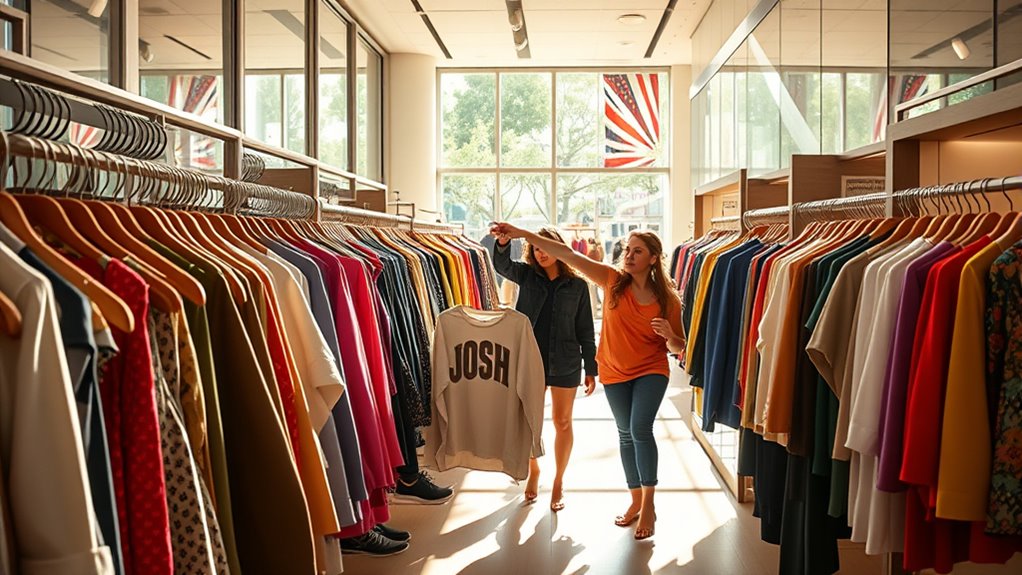
Although outlet stores can offer significant savings, the quality of products often differs from those found in regular retail stores. When you’re shopping at outlets, keep these points in mind:
- Many items are made with lower-quality materials than their retail counterparts, which can affect durability.
- You might encounter products designed specifically for outlets, not found anywhere else, but often at a lower quality.
- Fabrics can be less expensive, and hardware like buttons or zippers may not hold up as well.
- The perception that outlets only sell past-season items is outdated; they now frequently feature unique products made just for these stores.
- Additionally, just as with eco-friendly natural pools, it’s essential to consider the sustainability of the materials used in the products you purchase.
Being aware of these differences can help you make informed choices while shopping at outlet stores.
Consumer Behavior: How Outlet Shopping Affects Spending
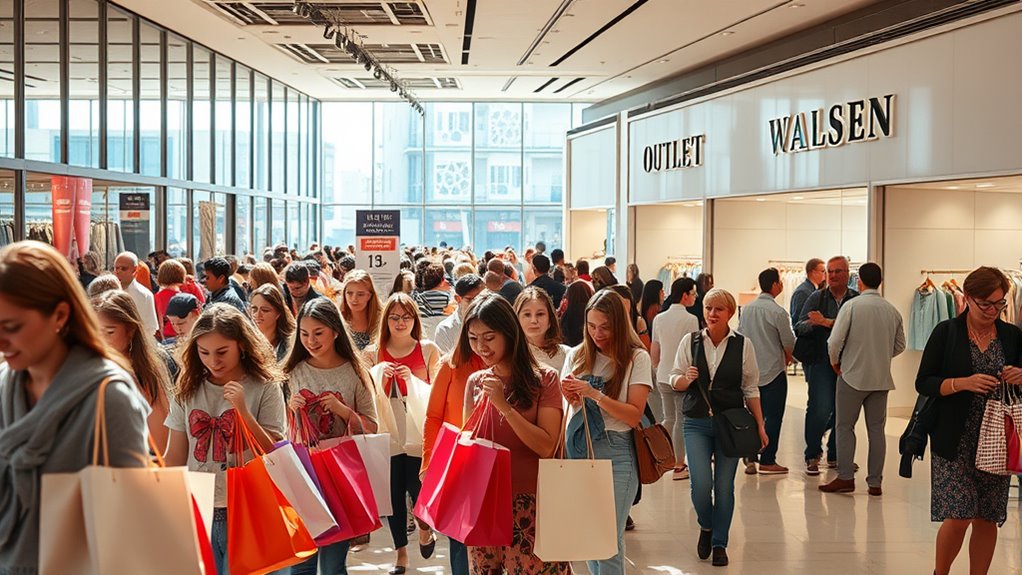
Outlet shopping not only influences product selection but also substantially impacts consumer spending behavior. When you browse outlet stores, you might feel tempted by the substantial discounts, often ranging from 30% to 70%. This perception of savings can lead you to spend more than planned, as the allure of lower prices encourages impulse purchases. Remarkably, research shows that outlet shoppers often increase their spending at regular retail stores over time, indicating a shift in buying habits. If you combine outlet visits with online research, you may find yourself spending considerably more than those who shop exclusively at outlets. Ultimately, these experiences can enhance brand engagement, making you more likely to return to both outlet and regular retail locations. Additionally, understanding the importance of informed shopping can help you make better purchasing decisions and avoid overspending.
Demographics of Outlet Shoppers

While you might think of outlet shoppers as primarily bargain hunters, the reality is more nuanced. Many of these shoppers come from diverse backgrounds and motivations. Here’s a closer look at who they are:
Outlet shoppers are a diverse group, driven by various motivations beyond just seeking bargains.
- They typically have slightly lower average annual incomes, around $65,000, compared to regular retail shoppers at $71,000.
- They often live farther from outlet stores, traveling longer distances for perceived bargains.
- About 30% of outlet shoppers also shop at regular retail stores, showcasing a multi-channel approach.
- Price-sensitive consumers are drawn to outlets, focusing on discounts and value rather than exclusive offerings.
Additionally, fostering a digital-friendly environment at home can influence shopping behaviors, as families seek out cost-effective ways to manage their budgets.
Understanding these demographics helps illuminate the distinct motivations and behaviors driving outlet shopping today.
Trends and Challenges in the Outlet Store Industry

As the retail landscape evolves, the outlet store industry faces both exciting trends and significant challenges. You’ll notice a shift towards luxury brands embracing outlet stores, which has led to a surge in sales. However, with inflation and competition from online retailers, sustaining growth can be tough. Many outlets now offer products specifically designed for their stores, which raises questions about quality. While you might think you’re scoring a deal, inflated “compare at” prices can mislead you about actual savings. Additionally, the need for omnichannel integration is vital; combining online and in-store experiences can enhance your shopping journey. Balancing these trends and challenges is essential for outlets to remain relevant and appealing to savvy shoppers like you. Furthermore, the rise of high-quality Beauty products has influenced consumer expectations, leading to a demand for better value in outlet offerings.
Frequently Asked Questions
How Can I Verify the Actual Savings at Outlet Stores?
To verify actual savings at outlet stores, you should compare prices with regular retail stores. Check the original price of the item online or at full-price retailers before shopping. Look for quality differences in materials and craftsmanship, as these can affect value. Also, be cautious of “compare at” pricing, as it might be inflated. Finally, keep track of discounts offered and read reviews to guarantee you’re making an informed decision.
Are Outlet Store Products Returnable Like Regular Retail Items?
Like a treasure hunt, shopping at outlet stores can be a mixed bag when it comes to returns. Generally, outlet store products are returnable, but policies vary by store. You might find some outlets offer a more flexible return policy, while others could be stricter. Always check the specific return policy before purchasing, and keep your receipt handy. That way, you can avoid any surprises if you need to return an item!
Do Outlet Stores Offer Warranties on Their Products?
Outlet stores often don’t offer warranties on their products like regular retail stores do. You might find that some outlets provide limited guarantees or return policies, but these can vary greatly. It’s crucial to check the specific store’s policy before you buy. If a warranty is important to you, consider purchasing from a regular retailer instead, as they’ll typically have more extensive coverage for their items.
Can I Find Exclusive Brands Only at Outlet Locations?
Yes, you can find exclusive brands only at outlet locations. Many outlets carry merchandise specifically designed for them, which means you won’t see those items in regular retail stores. While these products may share brand labels, they’re often made with different materials and manufacturing processes. So, if you’re hunting for unique pieces that set you apart, outlet stores can be a great destination to explore those exclusive offerings.
What Are the Best Times to Shop at Outlet Stores for Deals?
Think of outlet shopping like hunting for treasure; timing can make all the difference. The best times to shop are during holiday weekends and end-of-season sales, when discounts can soar. Don’t overlook back-to-school sales in late summer, either. Early mornings on weekdays often yield less crowded stores, allowing you to browse without the hustle. By planning your visits around these peak times, you’ll snag the best deals and maximize your savings.
Conclusion
So, next time you find yourself wandering through those enticing outlet stores, remember: a big discount doesn’t always mean a great deal. You might score some fantastic buys, but it’s easy to get swept up in the excitement. Just like that time you impulsively bought those shoes that looked amazing but felt uncomfortable—don’t let the savings blind you. Take a moment to compare prices and quality; your wallet (and feet) will thank you later!