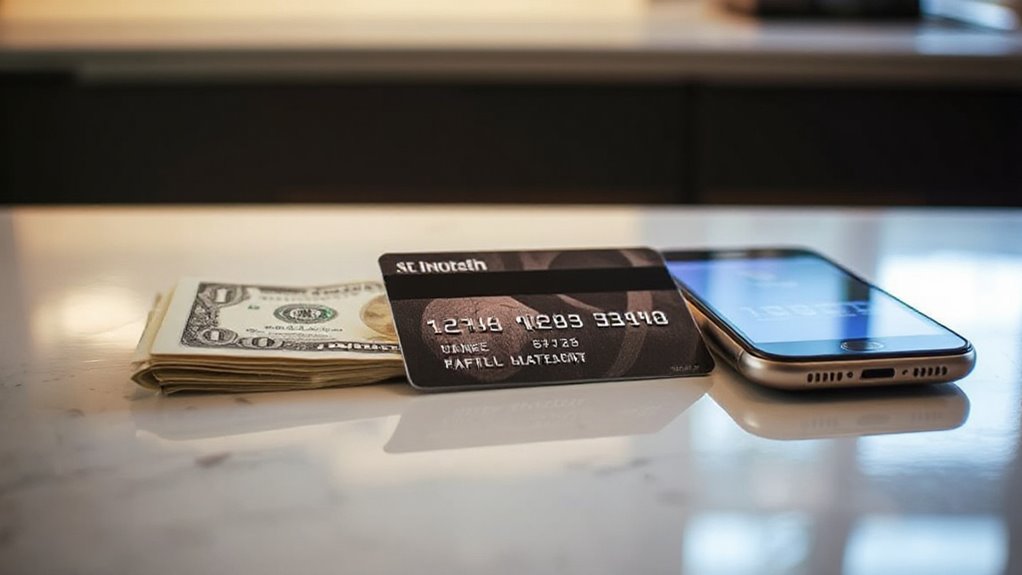

Choosing between cash, credit, or mobile pay affects your savings. Cash has no fees but offers less security and convenience. Credit cards provide rewards and protection but may involve interest and foreign transaction fees. Mobile pay often reduces merchant fees and offers rewards, making it cost-effective for small purchases. Your best option depends on your spending habits and priorities. To maximize savings, understanding the true costs of each method can make a big difference, so keep exploring your options.
Key Takeaways
- Digital wallets often reduce merchant fees and offer rewards, making them more cost-effective for small, frequent transactions.
- Cash payments have no fees but lack rewards and privacy, suitable for straightforward, fee-free transactions.
- Credit cards may incur interest and foreign transaction fees but offer rewards, purchase protection, and credit-building benefits.
- Choosing the right method depends on your spending habits, with digital wallets saving money on fees and rewards, cash for simplicity, and credit for perks.
- Understanding each method’s costs and benefits helps optimize savings and make smarter financial decisions.

In today’s fast-paced world, choosing the right payment method can make transactions quicker and more convenient. Whether you’re shopping online or in-store, your choice of cash, credit, or mobile pay can influence not just how fast you complete your purchase but also how much you end up paying. Each method has its own benefits and drawbacks, especially when it comes to costs like transaction fees and potential savings.
Digital wallets, a popular form of mobile pay, are changing how you handle payments. They store your card information securely and allow you to pay with a tap or a quick scan. One of the main advantages is that they often reduce transaction fees for merchants, which can sometimes translate into discounts or rewards for you. However, it’s essential to be aware of the transaction fees associated with digital wallets, especially if you frequently make large or international transactions. Some digital wallets might charge fees for certain types of payments or currency conversions, which can add up over time. But overall, digital wallets tend to be more cost-effective than credit cards for everyday small transactions, especially when they offer cashback or reward programs. Additionally, understanding the cost structure of each payment method can help you make smarter financial choices.
Digital wallets often reduce merchant fees, offering discounts or rewards, but beware of transaction and currency conversion charges.
Cash remains the simplest and most direct payment method. It doesn’t involve any transaction fees, so you pay exactly what’s on the price tag. But cash also has its costs. You might need to carry enough on hand, and it can slow down transactions at the register. Plus, cash offers no purchase protection or rewards, which means you’re not gaining any benefits beyond the immediate exchange. It’s a straightforward choice if you prefer privacy or want to avoid fees, but it can be less convenient and less secure if lost or stolen.
Credit cards, on the other hand, offer convenience and security, but they often come with transaction fees for the merchant, which may be passed on to you indirectly through higher prices. Some credit cards also charge foreign transaction fees, which can make international shopping more expensive. However, credit cards come with perks like purchase protection, rewards, and the ability to build credit. While they might seem costly due to interest if not paid in full, using a credit card smartly can save you money through cashback, points, or discounts on certain purchases.
Ultimately, your choice depends on your spending habits and priorities. Digital wallets can save you money on fees with smart use, cash is straightforward and fee-free but less flexible, and credit cards, if managed well, can offer rewards and protections that outweigh their costs. Knowing the nuances helps you pick the payment method that best fits your financial goals.
Frequently Asked Questions
Do Certain Payment Methods Offer Better Fraud Protection?
Yes, some payment methods offer better fraud protection. Digital wallets often provide enhanced contactless security, using encryption and tokenization to protect your info. When you pay with contactless methods, like mobile pay, your actual card details stay hidden, reducing theft risk. Additionally, digital wallets typically have real-time fraud alerts and remote disabling options, giving you extra control and peace of mind compared to cash or traditional credit card payments.
How Do Rewards Programs Differ Across Payment Types?
Reward programs vary across payment types, and it’s true that cashback offers and reward point systems often differ. Credit cards typically offer more lucrative rewards, like points and cashback, especially for specific categories like dining or travel. Mobile pay apps sometimes partner with merchants for exclusive discounts. Cash payments usually don’t provide rewards, but they can help you avoid overspending, making your choice a matter of balancing benefits and personal control.
Are There Hidden Fees Associated With Specific Payment Methods?
Yes, some payment methods have hidden fees. For example, certain credit cards charge foreign transaction fees, and some mobile pay services may have transaction fees for specific vendors. To avoid surprises, look for cash discounts and prioritize fee transparency. Always read the fine print before using a new payment method, so you know exactly what charges to expect and can make the most cost-effective choice.
Which Payment Option Is Most Widely Accepted Internationally?
You’ll find digital wallets are most widely accepted internationally, especially in major cities and online stores. They simplify currency exchange, letting you pay seamlessly across borders without heavy fees. When traveling, using your mobile pay app helps you avoid carrying cash and minimizes exchange rate issues. Just confirm your digital wallet supports the country’s currency and is compatible with local payment systems for smooth transactions everywhere you go.
How Do Privacy Concerns Vary Between Cash, Card, and Mobile Payments?
You might find that cash offers the most transaction anonymity, protecting your digital footprint. With cards and mobile payments, your purchases are tracked, raising privacy concerns. Cards link to your identity, while mobile pay apps often share data with third parties. If privacy matters to you, cash keeps your transactions more private, but digital payments make record-keeping easier. Consider your comfort level with digital footprints when choosing your payment method.
Conclusion
Ultimately, choosing your payment method is like finding the right rhythm in a dance—each step has its own grace. Whether you favor cash, credit, or mobile pay, there’s a subtle harmony that can help you save without feeling like you’re sacrificing convenience. Trust your instincts, stay mindful of your habits, and let your preferred method gently guide you toward smarter spending. After all, the right choice quietly makes your money go a little further.