

To spot red flags in product listings, don’t rely only on star ratings—check detailed reviews for consistent issues like quality or durability concerns. Be cautious of prices that seem too good to be true and compare them with similar listings. Evaluate seller reputation, verifying trust signals and consistent descriptions. Carefully examine product descriptions for clarity, completeness, and possible discrepancies. If you want to stay ahead of scams, keep an eye on cues like vague details or sudden price drops—more insights await you.

Get your next haul delivered free with Prime
- Fast, free delivery on millions of items
- Prime Video, Amazon Music and more included
- Member-only deals all year
Key Takeaways
- Read detailed reviews for specific feedback on product quality and common issues.
- Compare pricing with similar listings to identify suspiciously low prices or hidden fees.
- Check seller reputation, trust signals, and consistency in product descriptions.
- Be cautious of vague descriptions, discrepancies, or missing details that may indicate scams.
- Watch for promotional tactics like limited-time discounts or pressure to buy quickly.
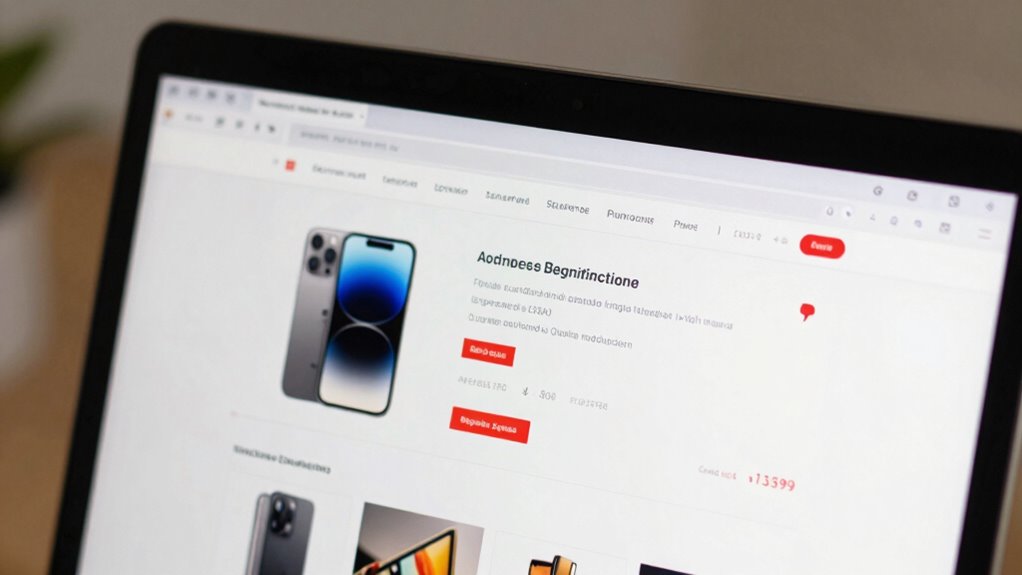
Have you ever skimmed a product listing only to realize too late that it’s riddled with red flags? It’s a common trap, especially when you’re eager to find a good deal or just want to quickly browse options. The key to avoiding these pitfalls is learning how to read listings carefully and spot warning signs early. One of the most telling clues comes from customer reviews. Don’t just glance at the star ratings—dig into what people are saying. Are reviews overwhelmingly positive without details? That’s suspicious. Look for specific feedback about the product’s quality, durability, or if it matches the description. Multiple reviews mentioning similar issues, like poor construction or false advertising, are red flags that the listing might be unreliable. Conversely, a handful of negative reviews isn’t necessarily a deal-breaker, but a pattern of complaints warrants caution.
Pricing strategies are another essential aspect to scrutinize. If a product is priced markedly lower than comparable items, it could be a bait-and-switch tactic or a sign of inferior quality. Be wary of listings that have prices that seem too good to be true; they often are. Sometimes sellers use low prices to attract clicks, only to hit you with hidden fees or upselling tactics at checkout. Check if the pricing is consistent with other listings for similar products. If there’s a major discrepancy, ask yourself why. Are there extra costs for shipping? Is there a limited-time discount that seems designed to pressure quick buying decisions? By understanding common pricing strategies, you can better assess whether a deal is genuine or a potential red flag. Additionally, being aware of seller reputation can help you avoid scams and unreliable sellers. Recognizing trust signals such as verified badges or return policies also plays a crucial role in safeguarding your purchase. Being attentive to these consumer protection markers can make a significant difference in your overall shopping experience. Furthermore, taking the time to research the seller’s history can reveal patterns of behavior that might indicate fraud or dishonesty. Paying attention to product descriptions can also help you identify inconsistencies or vague details that may be meant to mislead.
As an affiliate, we earn on qualifying purchases.
Frequently Asked Questions
How Do I Spot Fake Reviews on a Product Listing?
You can spot fake reviews by paying close attention to customer experience and review authenticity. Look for overly generic comments, repetitive phrases, or extreme positivity with no details. Check the reviewer’s profile for suspicious activity, like accounts with few reviews or generic names. Genuine reviews often share specific experiences, while fake ones tend to be vague or overly enthusiastic. Trust your instincts and compare multiple reviews to identify inconsistencies.
What Are Common Signs of Counterfeit Products Online?
Imagine a shadow lurking behind a bright storefront—that’s how counterfeit products often appear. You’ll notice signs like brand imitation, where logos seem slightly off, and packaging discrepancies, such as poor printing or mismatched colors. These clues reveal the product’s true nature. Be cautious of overly cheap prices or unfamiliar sellers. Recognizing these subtle hints helps you avoid falling for fake products and guarantees you get genuine quality.
How Can I Verify a Seller’s Credibility Before Buying?
You can verify a seller’s credibility by checking their reputation through reviews and ratings, which reveal past buyer experiences. Look for consistent positive feedback and high ratings, indicating reliability. Confirm the platform offers secure payment options, emphasizing payment security to protect your transaction. Additionally, consider the seller’s response time and communication quality. These steps help you avoid scams and ensure a safe, satisfactory purchase.
What Should I Do if a Product Listing Seems Suspicious?
If a product listing seems suspicious, you should prioritize checking the product authenticity and seller reputation. Look for detailed descriptions, clear images, and genuine reviews. Avoid listings with vague info or overly low prices. Research the seller’s ratings and feedback, and consider reaching out with questions. Trust your instincts—if something feels off, it’s best to avoid the purchase until you’re confident about the seller’s credibility.
Are There Tools to Help Detect Misleading Product Descriptions?
Yes, there are tools to help detect misleading product descriptions. You can use product description analysis tools that scan listings for suspicious language or inconsistencies. Additionally, performing seller reputation checks on platforms like eBay or Amazon helps verify credibility. These tools and checks make it easier for you to identify red flags, ensuring you don’t fall for deceptive listings and make safer, more informed purchasing decisions.
As an affiliate, we earn on qualifying purchases.
Conclusion
So, next time you delve into a product listing, remember to keep your eyes peeled for red flags. After all, it’s so easy to get caught up in a slick photo or a catchy headline—who wouldn’t? But if you ignore those warning signs, you might just end up with exactly what you didn’t want. Irony of ironies, sometimes the biggest red flags are hiding in plain sight, silently waiting for you to overlook them.
As an affiliate, we earn on qualifying purchases.
As an affiliate, we earn on qualifying purchases.
Fall Picks
fall essentials
As an affiliate, we earn on qualifying purchases.