
If you’re looking to keep your pets entertained without breaking the bank, DIY pet toys might be the solution you need. With just a few common household items, you can create engaging toys that cater to your furry friend’s preferences. Plus, these activities can foster a stronger bond between you and your pet. Curious about how to get started and what materials you’ll need? Let’s explore the possibilities.
Key Takeaways
- DIY pet toys are cost-effective, utilizing household items to save money while keeping pets entertained.
- Customizable designs cater to individual pet preferences, enhancing engagement and happiness.
- Creating toys together strengthens the bond between pets and their owners through shared activities.
- Using recycled materials reduces waste and supports eco-friendly pet care practices.
- DIY toys promote mental stimulation and physical activity, helping to prevent anxiety and destructive behavior in pets.
Benefits of DIY Pet Toys
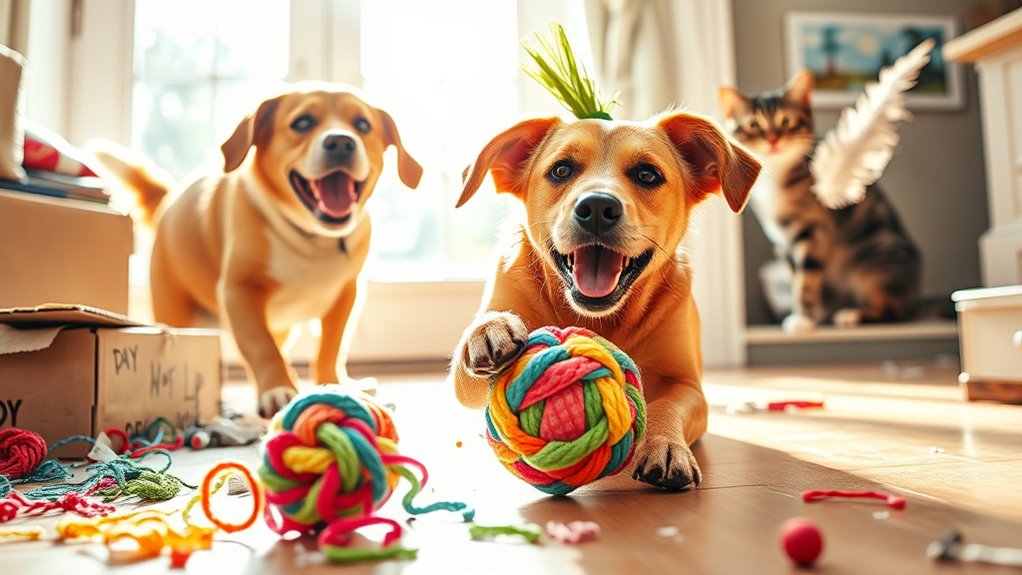
While you may be tempted to buy expensive toys for your pets, DIY pet toys can offer numerous benefits that enhance both their well-being and your bond. Creating toys at home provides mental stimulation, reducing anxiety and destructive behaviors. You can customize these toys to fit your pet’s specific preferences, ensuring they’re engaged and happy. Plus, it’s a cost-effective solution, using items you already have around the house. Engaging in DIY projects together strengthens your connection, making playtime even more special. You’ll also have greater control over safety, avoiding harmful materials or small parts that could pose choking hazards. Ultimately, DIY pet toys lead to healthier, happier pets while saving you money and enhancing your relationship. Additionally, using recyclable materials for DIY projects can also contribute to environmental sustainability.
Materials Commonly Used for DIY Pet Toys
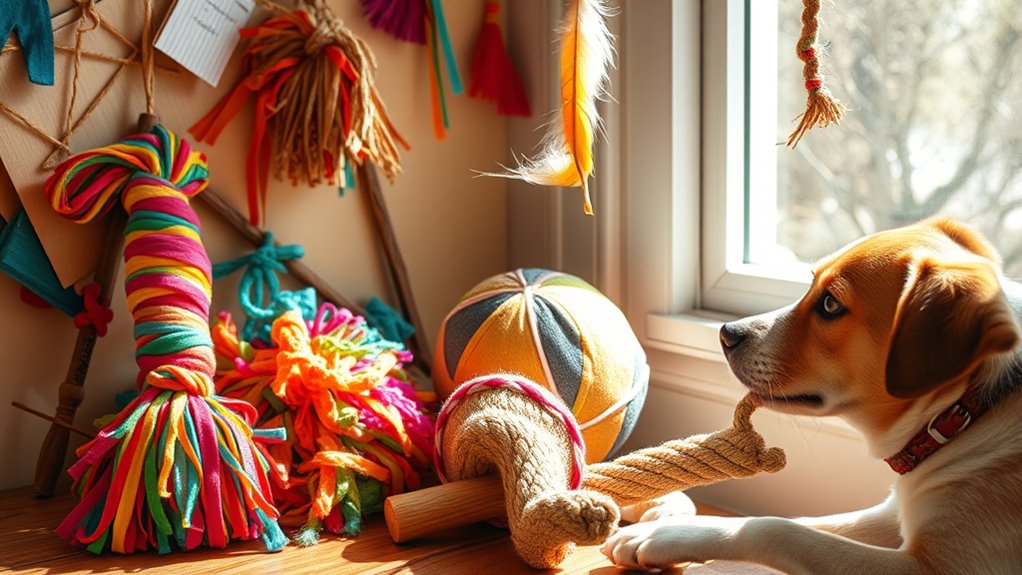
When creating DIY pet toys, you can use a variety of common materials found around your home. Old socks and fabric scraps can be transformed into treat-dispensing or chew toys that are washable and reusable. Plastic bottles make excellent puzzle toys; simply cut holes to create interactive feeding fun. Ropes and knotted fabric strands can be braided into robust tug and chew toys. Household cardboard boxes are perfect for hide-and-seek games or puzzle enrichment activities. Additionally, recycled clothing or towels can be fashioned into stuffing-free toys. By using these materials, you not only save money but also guarantee your pets have engaging and safe toys tailored to their preferences. Furthermore, creating toys from recycled materials helps promote sustainability while keeping your pets entertained.
Types and Functions of DIY Pet Toys
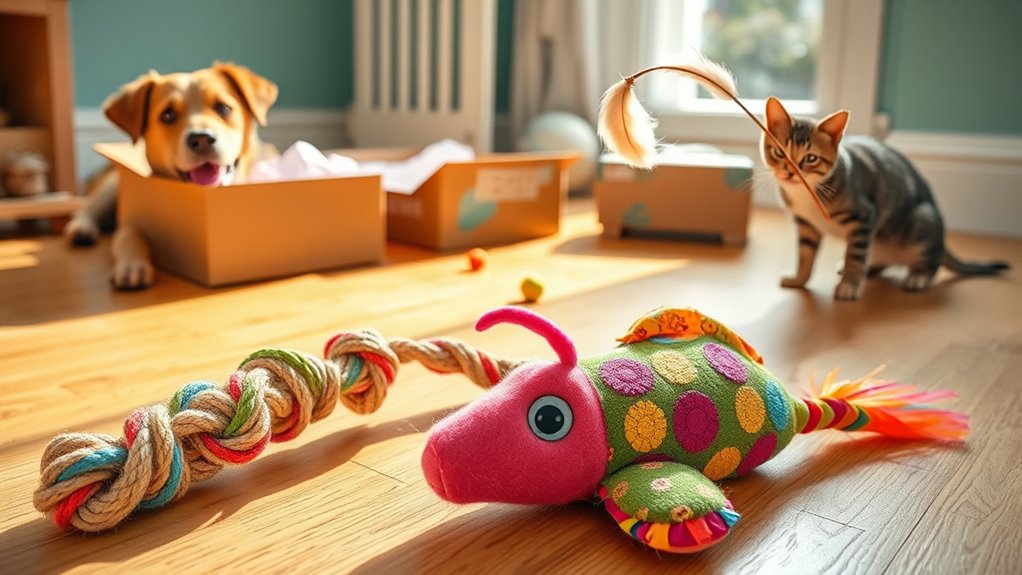
Creating DIY pet toys not only involves using common household materials, but it also opens up a world of possibilities for engaging your pet in play. You can craft treat-dispensing toys that stimulate your pet’s problem-solving skills and encourage foraging behavior. Chew toys promote oral health while satisfying their natural urge to chew. Interactive tug toys not only enhance physical exercise but also strengthen your bond through play. Puzzle toys challenge their cognitive skills, keeping them mentally active. Simple fetch toys made from repurposed items encourage physical activity and fun. Each type serves a specific function, ensuring your pet stays entertained, healthy, and happy while you save money and customize their playtime experience. Additionally, using common household materials can lead to innovative toy designs that cater to your pet’s unique preferences.
Cost and Sustainability Advantages
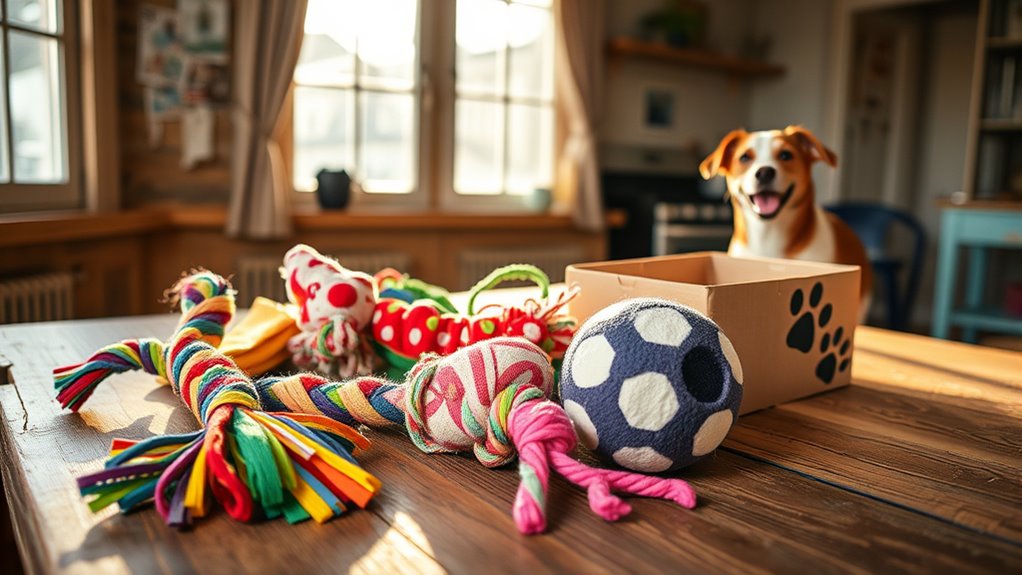
Not only do DIY pet toys offer a fun and engaging way to keep your furry friend entertained, but they also come with significant cost and sustainability advantages. By using recycled or readily available materials, you reduce waste and limit your environmental footprint. Instead of spending over $20 on commercial toys, you can create affordable options that keep your pet engaged. DIY toys are often repairable, extending their life and minimizing landfill contributions. Plus, you have control over the ingredients, ensuring nothing harmful goes into your pet’s toys. This approach supports budget-conscious households and allows you to frequently renew toys, keeping your pet interested without breaking the bank. Embrace DIY to save money while being eco-friendly! Additionally, incorporating sustainable practices into your pet toy creations can further enhance your commitment to the environment.
Safety Considerations With DIY Toys
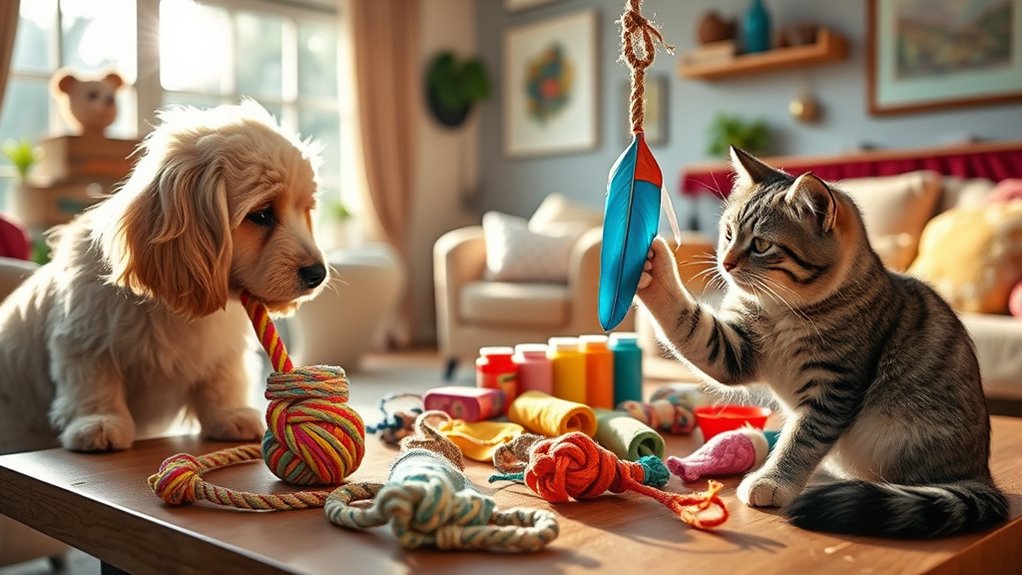
While DIY pet toys can be a great way to engage your furry friend, it’s crucial to prioritize safety during the creation process. Use only non-toxic, pet-safe materials to prevent poisoning or allergic reactions. Steer clear of small parts or loose components that could pose choking hazards. Regularly inspect your DIY toys for wear and tear, and promptly discard or repair any damaged items. Supervise your pet during playtime to ensure the toys hold up against their chewing strength. Finally, maintain cleaning and hygiene, especially for fabric and treat-dispensing toys, to avoid bacterial buildup. By keeping these safety considerations in mind, you can enjoy peace of mind while your pet has fun. Additionally, understanding the importance of cultural exchange can enhance your experience in creating toys that reflect your pet’s playful spirit.
Impact of DIY Toys on Pet Behavior and Welfare
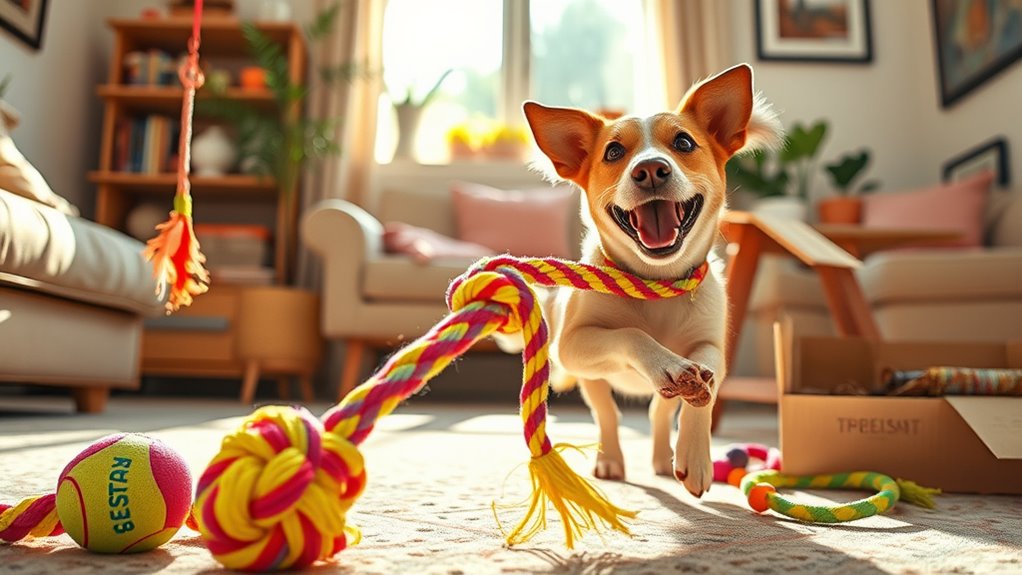
DIY toys can considerably enhance your pet’s behavior and overall welfare by providing mental and physical stimulation. When you create engaging toys, you encourage your pet to be active, boosting their appetite and overall health. These toys can notably reduce undesirable behaviors like excessive barking and destructive chewing, giving your pet a positive outlet for their energy. Interactive play with DIY toys also strengthens training outcomes, leading to better recall and obedience. By regularly introducing new toys, you keep your pet mentally engaged, which helps reduce stress and boredom-related behaviors. Ultimately, these positive play experiences foster stronger emotional bonds between you and your pet, supporting their overall wellbeing and happiness. Incorporating elements like eco-friendly natural pools can also create a stimulating environment that benefits both you and your pet.
Creative Ideas for Making Your Own Pet Toys

Engaging your pet with fun and creative toys can considerably enhance their well-being while also providing you with an enjoyable project. Here are some simple ideas to get you started:
| Materials | Toy Ideas |
|---|---|
| Old socks | Treat-dispensing chew toys |
| Plastic bottles | Puzzle feeders |
| Cardboard boxes | Hide-and-seek enrichment toys |
You can transform old socks into knotted toys or use plastic bottles by cutting holes for treats. Cardboard boxes can become interactive puzzles that encourage your pet to explore. These DIY projects not only save you money but also allow you to bond with your pet through play. Plus, you can customize these toys to fit your pet’s unique preferences!
Frequently Asked Questions
How Do I Know if My Pet Will Like a DIY Toy?
To know if your pet will like a DIY toy, observe their interests and play style. If they enjoy chewing, consider a chew toy made from old fabric. For the curious ones, create a puzzle toy using a plastic bottle. Introduce the toy during playtime and watch their reaction. If they engage and seem excited, you’ve likely found a winner. Don’t hesitate to try different designs until you find what captures their attention!
Can I Use Non-Pet Materials for DIY Toys?
You can use non-pet materials for DIY toys, but you need to be cautious. Make sure those materials are safe and free from harmful chemicals. Avoid small parts that could pose choking hazards, and check for any sharp edges. Always supervise your pet during playtime with these toys to make certain they’re safe and durable. Creative repurposing can lead to fun, engaging toys, but safety should always come first!
How Long Do DIY Pet Toys Typically Last?
Durable DIY pet toys can last anywhere from a few days to several months, depending on the materials and your pet’s play style. If you use sturdy, strong supplies, you’ll likely see longer lifespans. However, softer items may wear out faster, especially with aggressive chewers. Regularly inspect the toys for signs of wear, and don’t forget to maintain them to maximize their lifespan and keep playtime safe and enjoyable for your furry friend.
What Are Some Easy DIY Toy Ideas for Beginners?
You can start with simple DIY toys like a treat-dispensing sock toy, where you stuff an old sock with treats and tie it closed. Another easy idea is a cardboard box puzzle; cut holes in a box and hide treats inside for your pet to find. You can also make a tug toy by braiding strips of old t-shirts. These projects are quick, fun, and will keep your pet engaged and happy!
How Often Should I Replace DIY Pet Toys?
You should replace DIY pet toys regularly, ideally every few weeks or whenever they show signs of wear. Inspect the toys for any damage, like fraying or loose parts, and if they’re no longer safe, toss them. Keeping an eye on your pet’s interest is important too; if they lose interest, it’s time for a new one. Fresh toys maintain their excitement and promote mental stimulation, ensuring your pet stays engaged and happy.
Conclusion
In a world where pets deserve the best, DIY toys are your golden ticket to happiness and health. By crafting unique playthings from everyday items, you’re not just saving money; you’re creating treasures that light up your pet’s eyes like stars in the night sky. So roll up your sleeves, unleash your creativity, and watch your furry friend’s tail wag with joy. Together, you’ll set out on a journey of fun, love, and sustainability!