
To baby-proof your home without overspending, start by securing furniture with straps to prevent tipping and using corner protectors on sharp edges. Cover electrical outlets and organize cords with twist ties or shorteners to keep wires out of reach. Install simple cabinet locks and safety gates at stairs to block access to hazards. Regularly check for small objects and remove tempting toys. If you want more budget-friendly tips, keep exploring how small changes can make a big difference.
Key Takeaways
- Use furniture straps and brackets to prevent tipping and protect your child from falling injuries.
- Cover electrical outlets and organize cords with twist ties or shorteners to reduce shock and strangulation risks.
- Install inexpensive cabinet locks and safety gates to restrict access to hazardous areas like kitchens and stairs.
- Add corner protectors and remove small objects to prevent bumps, bruises, and choking hazards.
- Install affordable smoke and carbon monoxide detectors, and use barriers or alarms around pools for water safety.
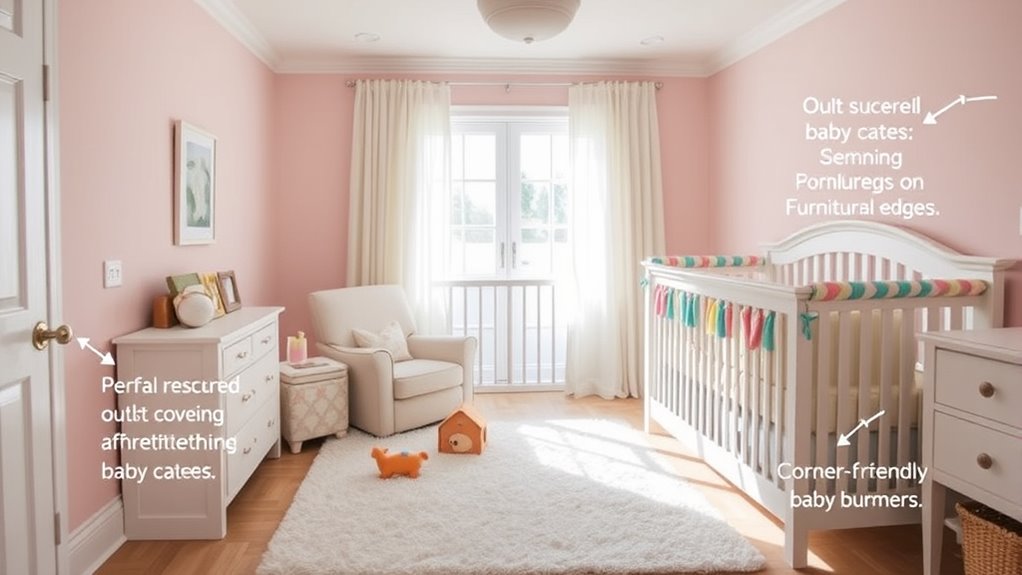
Baby-proofing your home is essential to create a safe environment as your little one starts exploring. As your baby becomes more mobile, ensuring indoor safety becomes a top priority. Fortunately, you don’t have to spend a fortune to make your home safer. There are plenty of affordable solutions that effectively protect your child without breaking the bank. The key is to identify the most common hazards and address them with simple, cost-effective fixes.
Start by securing furniture and heavy objects that could tip over. You can use furniture straps or brackets, which are inexpensive and easy to install. These prevent accidents if your baby tries to pull up or climb. Cover electrical outlets with affordable outlet covers to eliminate the risk of shocks. These covers are cheap and readily available at most hardware stores. Keep cords, blinds, and wires out of your baby’s reach; use twist ties or cord shorteners to tidy them up. This not only keeps your little one safe but also reduces clutter, making the space more organized and less tempting for curious hands.
In the kitchen and bathroom, use inexpensive cabinet locks to prevent your baby from accessing harmful substances or sharp objects. These locks are simple to install and remove later, offering ongoing protection. Place safety gates at the top and bottom of stairs to prevent falls, and look for budget-friendly options that don’t compromise on durability. When it comes to sharp edges on furniture, consider using inexpensive corner protectors or padding made from soft materials. These are easy to attach and can save your baby from painful bumps and bruises.
Another affordable safety measure involves keeping small objects, choking hazards, and toys with small parts out of your baby’s reach. Regularly scan your home for items that could pose a threat and remove them promptly. Additionally, install smoke and carbon monoxide detectors—these are often inexpensive but can be lifesavers in emergencies. Checking and maintaining these devices regularly ensures they work when needed. Incorporating knowledge about Floating on Water safety can also be beneficial, especially if your home has pools or water features, by installing barriers or alarms to prevent accidental drownings.
Baby-proofing doesn’t have to be complicated or costly. By focusing on indoor safety and using affordable solutions, you can create a secure environment where your little one can explore freely and safely. The goal is to eliminate hazards without overwhelming your budget. With a little effort and some smart shopping, you’ll have a home that’s safer for your child and peace of mind for you. Remember, safety is about prevention, and many simple, inexpensive fixes can make a significant difference in protecting your baby as they learn and grow.
Frequently Asked Questions
How Can I Baby-Proof My Stairs Cheaply?
To baby-proof your stairs cheaply, start with stair gate installation using affordable options like pressure-mounted gates, which don’t require drilling. You can also add carpet padding options along the stairs to soften falls and prevent injuries. Regularly check these safety measures for stability. With these simple steps, you can effectively protect your little one without spending a lot, ensuring a safer home environment on a budget.
What Are Affordable Options for Outlet Covers?
Outlet covers are your home’s first line of defense against electrical safety hazards. You can find affordable options like plastic plug protectors or foam covers at dollar stores or online for just a few dollars. These simple solutions act like gatekeepers, preventing curious little hands from accessing dangerous outlets. Look for covers that are easy to install and secure, ensuring your child’s safety without draining your wallet.
How Do I Secure Furniture Without Expensive Anchors?
You can secure furniture by using furniture stability techniques like attaching items to the wall with inexpensive L-brackets or heavy-duty straps, which serve as safety gate alternatives. For added stability, place heavy objects on top or behind furniture to prevent tipping. Regularly check that all items are secure and stable. These simple, low-cost methods help keep your little one safe without splurging on expensive anchors.
Are There DIY Solutions for Cabinet Safety?
Imagine your kitchen cabinets as open treasure chests, waiting for tiny explorers. You can use DIY safety hacks like adhesive magnetic strips or tension rods as cabinet lock alternatives. These simple, inexpensive solutions keep cabinets closed without drilling or expensive locks, giving you peace of mind. Just apply the strips or place tension rods inside, preventing little hands from getting into trouble while maintaining easy access for you.
What Budget-Friendly Methods Prevent Choking Hazards?
To prevent choking hazards on a budget, you should focus on childproof locks for cabinets and drawers, especially in the kitchen. Keep small objects, plastic bags, and food with choking risks out of reach. Regularly check your home for potential dangers and clear clutter. These simple steps enhance kitchen safety and are affordable, effective ways to protect your little one without overspending.
Conclusion
Just like Alice maneuvering Wonderland’s twists and turns, baby-proofing your home requires careful steps and creative solutions. By staying vigilant and resourceful, you create a safe haven where your little one can explore freely, much like a child discovering their own wonderland. Remember, you don’t need a treasure chest of gold—simple, thoughtful fixes can turn your home into a secure playground. With patience and persistence, you’ll master the art of baby-proofing without breaking the bank.