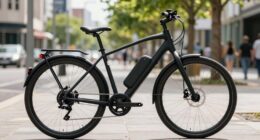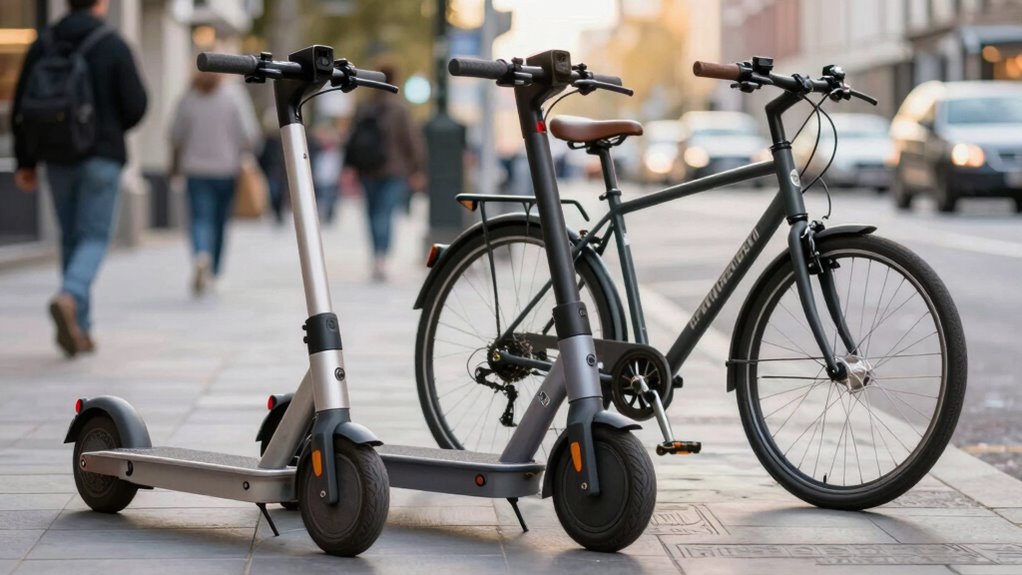
If you need a quick, easy way to get around short distances, an electric scooter can be very convenient—it’s lightweight, foldable, and perfect for quick errands. For longer commutes or more stability, an e-bike with larger wheels and better safety features is ideal, offering increased range and comfort. Consider your daily distances, safety priorities, and storage needs. Want to find out which option suits your lifestyle best? Keep exploring for more details.

Get your next haul delivered free with Prime
- Fast, free delivery on millions of items
- Prime Video, Amazon Music and more included
- Member-only deals all year
Key Takeaways
- E-bikes offer longer battery life and range, ideal for extended daily commutes, while scooters are better for short trips and quick errands.
- Scooters are lightweight and foldable, making them highly portable and easy to carry onto transit or store at destinations.
- E-bikes provide enhanced stability, safety features, and comfort for longer rides, suitable for more extended daily use.
- Both require proper safety techniques; e-bikes often include additional safety features like lights, reflectors, and GPS.
- Choice depends on daily distance, terrain, and convenience needs—scooters for short, quick trips; e-bikes for longer, stable rides.

When choosing a convenient way to get around town, you might wonder whether electric scooters or e-bikes are the better fit for your daily needs. Both options offer quick, eco-friendly transportation, but understanding their differences can help you make the right choice. One key factor to evaluate is battery life. Electric scooters typically have shorter ranges, often between 10 to 20 miles on a single charge, which suits short commutes or quick errands. E-bikes, on the other hand, often boast longer battery life, sometimes exceeding 40 miles, making them ideal for longer trips or daily commutes without frequent recharging. If you need a vehicle that can handle extended distances without hassle, an e-bike might be more reliable. Conversely, if your trips are brief and you want to avoid the inconvenience of frequent charging, an electric scooter could be more practical.
User safety is another vital aspect to weigh. Electric scooters are generally lightweight and easy to maneuver, but their smaller wheels and less stable frame can pose challenges on uneven surfaces or in high-traffic areas. You’re more vulnerable to falls or accidents if you’re not cautious, especially at higher speeds. E-bikes provide greater stability thanks to larger wheels and a more robust frame, which can improve your sense of security. They also typically come equipped with better braking systems and sometimes even lights or reflectors, enhancing visibility and safety during rides. Additionally, riding skills are crucial for both modes of transportation to ensure safe operation, and familiarizing yourself with proper techniques can help prevent accidents. Developing proper riding techniques can significantly reduce your risk of injury and boost your confidence on the road. It’s important to wear protective gear regardless of your choice, as both modes of transportation carry risks, especially in crowded or unpredictable environments. Understanding battery life and safety features can help you make an informed decision that suits your lifestyle. Many e-bikes also incorporate additional safety features, such as alarms or GPS tracking, which can provide extra peace of mind.
In terms of user experience, electric scooters offer the benefit of portability—you can often fold them and carry them onto public transit or store them easily at work or home. E-bikes are bulkier but often come with features like gears and adjustable seats, making them more comfortable for longer trips. Both vehicles require some level of familiarity to operate safely, so investing time in learning proper riding techniques is wise. Ultimately, your decision may come down to your typical daily distances, terrain, and comfort level. If you prefer quick hops around town and easy storage, scooters might be your best bet. If you need more range and stability, e-bikes could better suit your lifestyle. Whichever you choose, prioritizing battery life and user safety will ensure your daily commute remains smooth and secure.
electric scooter with long battery life
As an affiliate, we earn on qualifying purchases.
As an affiliate, we earn on qualifying purchases.
Frequently Asked Questions
Which Is More Cost-Effective Long-Term: Scooters or E-Bikes?
E-bikes are more cost-effective long-term because they typically have better battery life and longer-lasting batteries than scooters, which reduces replacement costs. Their charging time is also reasonable, allowing you to recharge overnight or during breaks. While e-bikes might cost more upfront, their durability and efficiency make them a better investment over time, especially if you ride frequently. Scooters are cheaper initially but may cost more in maintenance and replacements.
Are Electric Scooters or E-Bikes Better for Hilly Terrain?
E-bikes are better suited for hilly terrain because they offer higher battery life and riding comfort on inclines. You’ll find that their motor assistance makes climbing hills easier and less tiring, compared to electric scooters. Scooters often struggle with battery life during steep climbs and may feel less stable on uneven surfaces. So, if you frequently navigate hills, an e-bike provides a smoother, more reliable ride.
How Do Storage Options Compare Between Scooters and E-Bikes?
E-bikes generally offer better storage options than electric scooters because they often have built-in racks or baskets, making carryingsolutions easier. While scooters usually lack extensive storage, some models feature small compartments or attachable baskets. Battery capacity also impacts storage choices, as larger batteries can add weight, influencing how easily you can carry or maneuver your vehicle. Overall, e-bikes provide more versatile carrying solutions for everyday convenience.
What Are the Safety Concerns Specific to Each Vehicle Type?
You should be aware that safety concerns with electric scooters include falls from balance issues, especially on uneven surfaces, and limited visibility. For e-bikes, there’s a higher risk of injury from faster speeds and potential collisions. Always wear protective gear like helmets and pads, and follow traffic laws to stay safe. Both vehicle types require vigilance, but e-bikes demand extra caution due to their speed and weight.
Which Requires More Maintenance: Electric Scooters or E-Bikes?
E-bikes generally require more maintenance than electric scooters. You’ll need to monitor their battery lifespan closely, as e-bikes have larger batteries that wear out faster with frequent use. Tire durability also plays a role; e-bikes often have larger, heavier tires that need more frequent checks and replacements. Electric scooters typically have simpler mechanisms, making them easier and less costly to maintain for daily use.
foldable electric scooter for adults
As an affiliate, we earn on qualifying purchases.
As an affiliate, we earn on qualifying purchases.
Conclusion
Ultimately, choosing between an electric scooter and an e-bike is like picking your ride through a bustling cityscape or a scenic countryside. Both glide smoothly beneath you, turning busy streets into your personal playground. Whether you prefer the nimble dart of a scooter or the steady rhythm of an e-bike, your daily commute becomes a breeze—like a leaf dancing on the wind. Whichever you choose, you’re set to turn everyday travel into a seamless, effortless adventure.
electric bike with GPS and safety features
As an affiliate, we earn on qualifying purchases.
As an affiliate, we earn on qualifying purchases.
As an affiliate, we earn on qualifying purchases.
Halloween Picks
halloween
As an affiliate, we earn on qualifying purchases.