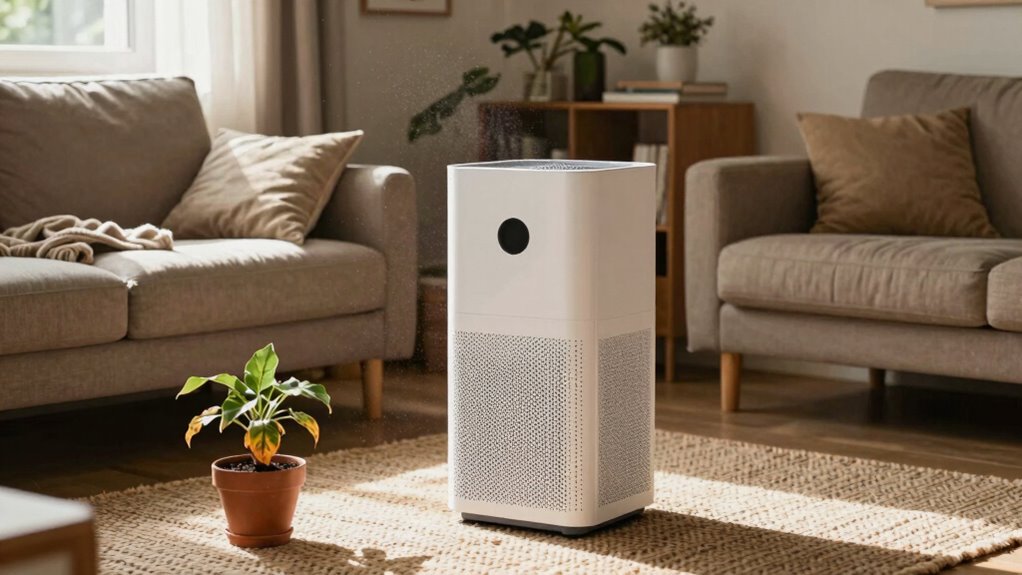
If you live in a polluted area or have allergies, air purifiers matter more for your home, as they help filter out pollutants, allergens, and mold spores. For homes near busy roads or with pets, these devices reduce indoor irritants that can trigger asthma or allergy symptoms. Monitoring air quality enhances their effectiveness, so you only run them when needed. Want to discover how combining these tools can improve your indoor environment? Keep exploring to find out more.
Key Takeaways
- Homes in polluted areas or near busy roads face higher indoor air pollution, increasing the need for effective air purification.
- Houses with pets or mold issues have elevated allergen levels, making air purifiers more essential for health.
- Properties with poor ventilation or high humidity benefit more from air purifiers to improve air quality.
- Use of air quality monitors helps identify allergen spikes, increasing the necessity for targeted purification.
- Individuals with allergies or asthma require more consistent air purification to mitigate health triggers effectively.
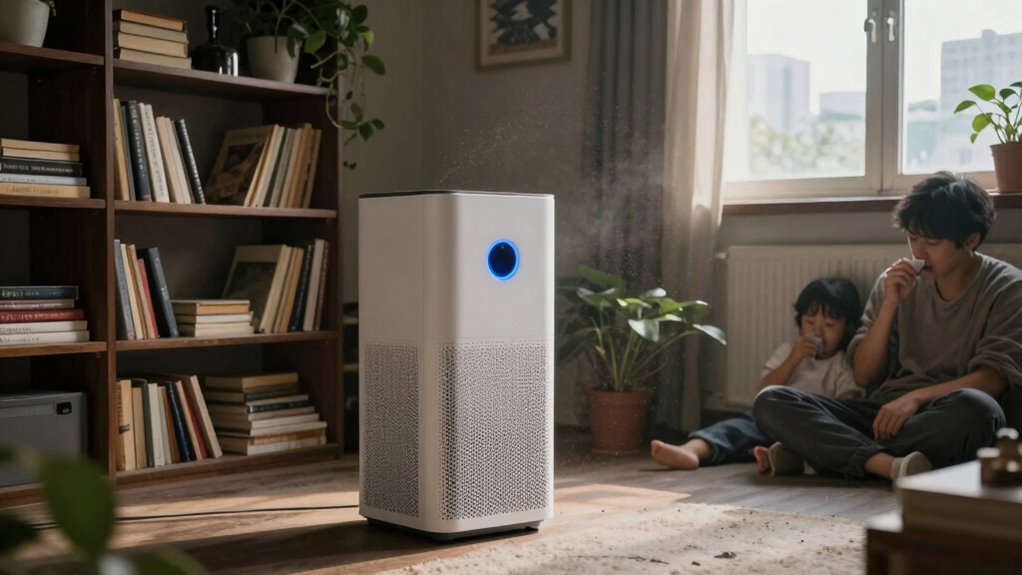
Many homeowners are turning to air purifiers to improve indoor air quality, especially in areas with high pollution levels or allergy concerns. If you live in a city with smog or near busy roads, you probably notice how outdoor air quality impacts your home environment. Air purifiers can be be a game-changer, especially when indoor allergens like dust, pet dander, mold spores, and pollen are persistent. These allergens can trigger allergies and asthma, making it hard to breathe comfortably or sleep well. By filtering out tiny particles, air purifiers help create a cleaner, healthier indoor space.
Air purifiers improve indoor air quality by filtering out allergens and pollutants, especially in polluted or allergy-prone areas.
But simply having an air purifier isn’t enough—you need to understand your home’s specific air quality. That’s where air quality monitoring comes in. Many people overlook this step, but it’s essential to know exactly what’s lurking in your air. With an air quality monitor, you gain real-time data about pollution levels, humidity, and airborne allergens. This information helps you decide when to run your air purifier and how long to keep it on. For example, if your monitor detects high levels of indoor allergens during certain times of the day, you can increase your purifier’s operation during those periods. Conversely, if the air quality is consistently good, you might not need to run it constantly, saving energy and prolonging the filter’s life.
In homes with high indoor allergen levels, an air purifier becomes even more crucial. If you have pets, for example, pet dander often hangs in the air long after cleaning, and allergens from pet hair can settle into carpets and furniture. Mold spores, especially in damp areas like bathrooms or basements, can also circulate freely without proper filtration. In such environments, air quality monitoring acts as your personal health indicator, alerting you when allergen levels spike and prompting you to take action. This proactive approach helps you maintain a safer, healthier indoor environment for yourself and your family. Recognizing the sources of indoor air pollution can help you implement more effective filtration strategies and improve your overall indoor environment. Additionally, understanding air quality trends over time can help you identify patterns and better manage your home’s air quality.
Ultimately, the importance of air purifiers varies based on your home’s unique conditions. If you live in a polluted area or have allergy sufferers in your household, investing in an air purifier paired with air quality monitoring makes all the difference. It’s about taking control of your indoor environment, reducing allergens, and ensuring the air you breathe is as clean as possible. Recognizing the significance of indoor air quality and the role of proper filtration can greatly improve your overall well-being. Understanding air pollution sources and how they affect your home environment can help you make more informed decisions about your air quality management. Additionally, incorporating proper ventilation strategies can further enhance air quality in your home.
As an affiliate, we earn on qualifying purchases.
Frequently Asked Questions
How Do I Choose the Right Size Air Purifier for My Home?
To select the appropriate size air purifier, begin by measuring your room’s square footage and pick a model rated for that size or larger. Position it in a central spot for maximum room coverage, and consider noise levels to guarantee it’s not disruptive. A properly sized purifier will efficiently clean the air without being loud or overworking, providing cleaner air and a more comfortable environment.
Are There Specific Air Purifiers Better for Allergy Sufferers?
Yes, some air purifiers are better for allergy sufferers. Look for models with HEPA filters, as they effectively trap airborne allergens like pollen, pet dander, and dust mites. These purifiers provide allergy relief by greatly reducing airborne irritants. When choosing one, ensure it’s appropriately sized for your space and has good airflow. This way, you create a cleaner, allergen-free environment that eases your allergy symptoms.
How Often Should I Replace Filters in My Air Purifier?
Think of your air purifier’s filter as a diligent worker, battling dust and allergens daily. You should replace the filter based on its lifespan—usually every 6 to 12 months—depending on usage and air quality. Follow your model’s replacement schedule closely, like a trusted map guiding you through clean air. Regular changes keep your purifier running smoothly, ensuring it’s always ready to sweep away pollutants and breathe new life into your home.
Do Air Purifiers Help Eliminate Household Odors?
Yes, air purifiers help eliminate household odors by capturing and neutralizing odor-causing particles. They’re effective for odor removal from cooking, pets, smoke, and musty environments. Look for models with activated carbon filters, which are specifically designed for smell elimination. Regularly replacing filters guarantees peak performance, so you keep your indoor air fresh and odor-free. Air purifiers are a simple, effective way to improve air quality and maintain a pleasant home environment.
Can Air Purifiers Reduce Indoor Air Pollution From Cooking?
Think of your home as a ship steering through smoky waters. Air purifiers act as vigilant captains, reducing indoor air pollution from cooking fumes. While ventilation strategies like range hoods help clear the air, purifiers catch remaining particles, ensuring cleaner, healthier air. Together, they form a strong defense against indoor pollutants, making your home safer and more comfortable, especially during busy cooking times.
As an affiliate, we earn on qualifying purchases.
Conclusion
So, next time you’re debating whether to invest in an air purifier, remember how a simple coincidence—like discovering mold behind your walls or noticing lingering odors—can turn into a wake-up call. Sometimes, it takes a little luck (or misfortune) to realize how much cleaner air can make a difference. Honestly, it’s funny how life nudges us to prioritize our health when we least expect it. Trust me, your lungs will thank you.
As an affiliate, we earn on qualifying purchases.
As an affiliate, we earn on qualifying purchases.