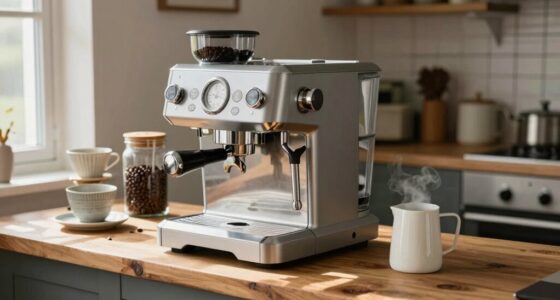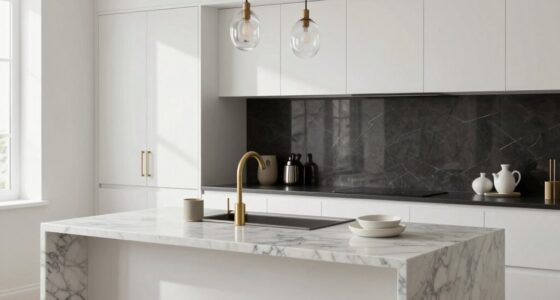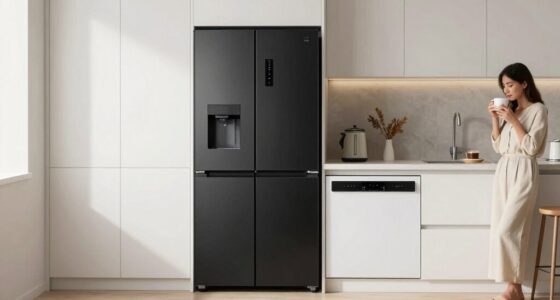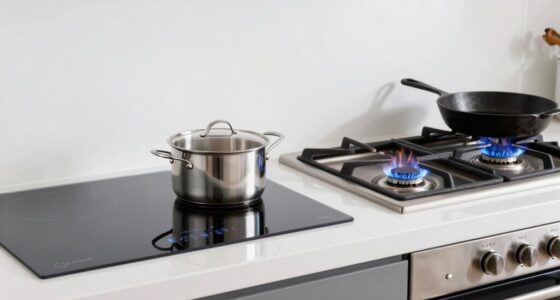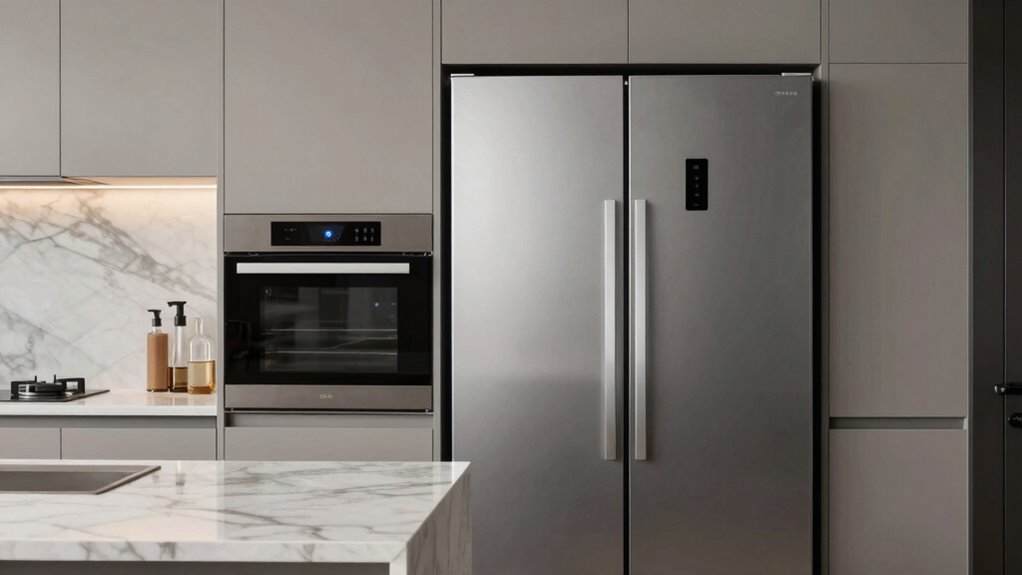

To choose between built-in and freestanding appliances, consider your style preferences, space, and future plans. Built-ins give your kitchen a sleek, seamless look but limit flexibility and upgrades. Freestanding units are easier to maintain, move, and replace, offering more adaptability. Think about whether you prefer a modern, integrated appearance or want more convenience. If you want a clearer picture of which option fits your needs best, keep exploring for more details.
Key Takeaways
- Consider your aesthetic preference: sleek, integrated look versus flexible, standalone units.
- Evaluate maintenance ease: built-ins may require professional repairs, while freestanding units are easier to access.
- Think about future upgrades and flexibility: freestanding appliances offer easier rearrangement and replacement.
- Assess space and layout: built-ins maximize space and create a seamless appearance; freestanding units provide layout flexibility.
- Match your lifestyle and long-term planning: prioritize design cohesion or convenience and adaptability for future needs.

Choosing between built-in and freestanding appliances can significantly impact your kitchen’s look and functionality. When making this decision, you need to weigh how each option aligns with your lifestyle, design preferences, and long-term plans. Built-in appliances are designed to integrate seamlessly into your cabinetry, creating a sleek, streamlined appearance that can elevate your kitchen’s aesthetic. They often offer a more custom look, making your space appear cohesive and modern. However, this integration can make appliance maintenance more challenging, as accessing components or performing repairs might require removing panels or calling in professionals. If you prefer a kitchen that emphasizes clean lines and minimal clutter, built-in appliances could be the right choice, but keep in mind that they can limit your flexibility in rearranging or upgrading in the future.
On the other hand, freestanding appliances are standalone units that are easier to install and move if needed. They often come in standard sizes, which simplifies space planning and allows you to adapt your kitchen layout more readily. If you value flexibility and want appliances that can be replaced or repositioned without much hassle, freestanding options are advantageous. They also tend to be more accessible for regular appliance maintenance, as you can pull them out or access their components more easily compared to built-ins. This ease of access can save you time and money over the lifespan of your appliances, especially if you plan on upgrading or replacing units periodically. But keep in mind that freestanding appliances may disrupt the uniformity of your kitchen design, as they can stand out more than built-ins. Additionally, understanding appliance installation requirements can help you make an informed choice between these options. Being aware of the potential future upgrades can further influence your decision, especially if you’re considering long-term adaptability.
Space optimization plays an essential role in your decision. Built-in appliances help maximize your available space by fitting flush with cabinets, which is especially beneficial in smaller kitchens or open-plan layouts. They can make your kitchen appear more spacious and organized. Freestanding appliances, while often bulkier, give you the flexibility to adjust your layout as your needs change, which is a significant advantage if you’re still designing or renovating your space. Ultimately, your choice depends on how much you prioritize a sleek, integrated look versus convenience, flexibility, and ease of maintenance. Think about your long-term plans for the kitchen, your design aesthetic, and how much effort you’re willing to invest in appliance upkeep. With a clear understanding of these factors, you’ll be better equipped to decide which type of appliance best suits your needs.

Itaar 71" Pantry Cabinet with Charging Station and LED Light, Kitchen Pantry Cabinet with Microwave Stand, 47.2" Wide Kitchen Storage Cabinets with Storage Cart 3 Tier for Dining Room, Black
- Versatile Storage Options: Includes drawers, shelves, and compartments
- Mobile Storage Cart: Wheeled cart with sturdy wooden shelves
- Ample Workspace: Large desktop for kitchen tasks
As an affiliate, we earn on qualifying purchases.
As an affiliate, we earn on qualifying purchases.
Frequently Asked Questions
Are Built-In Appliances More Energy-Efficient Than Freestanding Ones?
Built-in appliances often offer better energy savings because they fit seamlessly into your cabinetry, reducing drafts and heat loss. They tend to have a longer appliance lifespan due to higher-quality materials and better installation. Conversely, freestanding appliances might use more energy and wear out faster. So, if you’re aiming for efficiency and durability, built-ins could be the smarter choice, helping you save energy and extend the appliance’s lifespan.
Can I Retrofit Existing Cabinets for Built-In Appliances?
Yes, you can retrofit existing cabinets for built-in appliances. You’ll need to take into account cabinet customization to guarantee a seamless fit and proper ventilation. Measure carefully, and possibly modify or remove existing cabinetry to accommodate appliance integration. Consulting a professional can help you determine the best approach, ensuring the retrofit is safe and visually appealing. Proper planning guarantees your appliances blend nicely with your current cabinetry, creating a sleek, integrated kitchen look.
What Are the Long-Term Maintenance Differences?
Did you know built-in appliances typically last 10-15% longer than freestanding ones? When it comes to maintenance costs, built-ins usually require less frequent, more straightforward upkeep because they’re integrated into cabinetry, making repairs easier. Freestanding appliances often need more regular cleaning and replacement parts, which can add up over time. So, if longevity and lower maintenance costs matter, built-ins might be the smarter choice for your long-term savings.
Do Built-In Appliances Affect Home Resale Value?
Built-in appliances can boost your home’s resale value because they enhance appliance integration and improve aesthetic appeal, making your space look seamless and modern. Buyers often see built-ins as a sign of quality and thoughtful design. However, they may require more customization and investment upfront. If your goal is to increase home value, built-ins generally have a positive impact, especially when they match your home’s style and appeal.
Are There Size Limitations for Built-In Units?
Yes, there are size limitations for built-in units. You might need cabinet modifications to fit larger appliances, which can increase installation costs. Measure carefully to guarantee the appliance will fit within your space and match your cabinetry. Standard sizes are common, but custom-built units may be necessary for unusual dimensions. Planning ahead helps avoid surprises, keeping installation costs manageable and ensuring your built-in appliance fits seamlessly into your kitchen.

Icyglee 4.5 Cu.ft Beverage Refrigerator Cooler, 145 Can Mini Fridge with Digital Temperature Display for Soda Beer Wine, Freestanding beverage fridge with Adjustable Shelving for Home Office Bar
- Large Capacity: Holds 145 cans or 37 wine bottles
- Precise Digital Control: Adjusts from 32°F to 61°F with LED display
- Quiet Operation: Ultra-quiet compressor below 40dB
As an affiliate, we earn on qualifying purchases.
As an affiliate, we earn on qualifying purchases.
Conclusion
Choosing between built-in and freestanding appliances depends on your style, space, and budget. Built-ins offer a sleek, seamless look, while freestanding units provide flexibility and affordability. Did you know that about 65% of homeowners prioritize customizable kitchen layouts? Keep your needs in mind, and you’ll find the perfect fit. Whether you prefer a modern design or versatile options, making an informed decision guarantees your kitchen is both functional and stylish for years to come.

SAMSUNG 30" Smart Double Wall Oven w/Steam Cook, Wi-Fi, Large Oven Capacity, NV51K6650DG/AA, Fingerprint Resistant Stainless Steel, Black
- Dual Convection for Faster Cooking: Saves time with even cooking
- Steam Cook for Crispy Results: Creates crispy, tender dishes
- Fingerprint Resistant Finish: Maintains a clean look
As an affiliate, we earn on qualifying purchases.
As an affiliate, we earn on qualifying purchases.
As an affiliate, we earn on qualifying purchases.