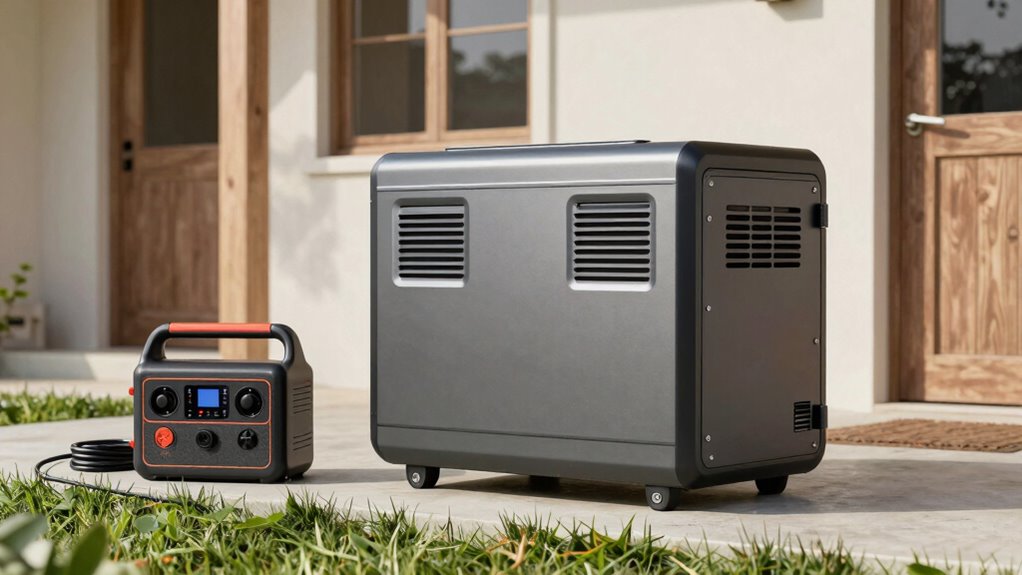

If you want reliable, automatic backup power during outages, a whole-home generator is your best choice, as it kicks in instantly without effort on your part. Portable generators are flexible and easy to set up but require manual operation and fueling, making them ideal for short-term needs. Consider your budget, installation, and power demands. Curious to find out which option fits your situation best? Keep exploring for more detailed insights.
Key Takeaways
- Whole-home generators activate automatically during outages, providing seamless, continuous power; portable units require manual startup and operation.
- Whole-home systems run on natural gas or propane, while portable generators typically use gasoline stored on-site.
- Installation costs are higher for whole-home generators, needing professional setup; portable units are inexpensive and quick to deploy.
- Whole-home generators ensure immediate power restoration without user intervention; portable units depend on manual operation and monitoring.
- Noise levels, fuel management, and maintenance are important considerations for both options, influencing suitability based on needs and environment.
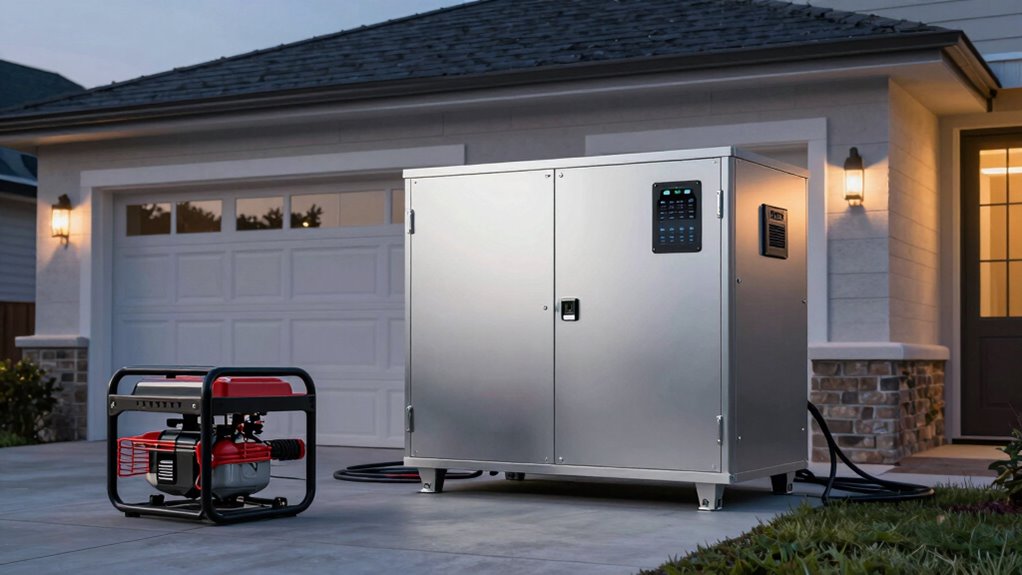
When it comes to keeping your home powered during outages, choosing between a whole-home generator and portable power options can be challenging. Each comes with its own advantages and considerations, especially when it involves factors like backup fuel and installation costs. If you want a reliable, automatic solution that kicks in immediately when the power goes out, a whole-home generator might be the best fit. These systems typically run on natural gas or propane, which are often supplied through existing connections, making backup fuel management straightforward. Since they are permanently installed, they offer continuous power without you needing to move or set up anything during an outage. However, the installation costs can be significant, often running into several thousand dollars, because they require professional setup, connection to your home’s electrical system, and sometimes modifications to your property.
On the other hand, portable power options are usually more budget-friendly upfront and don’t require extensive installation. You simply buy the generator and use extension cords to power essential appliances or electronics. Portable generators generally run on gasoline, which you need to store safely, and their fuel tanks are limited in size, meaning you’ll need to refill them more frequently during prolonged outages. While backup fuel is a manageable concern, it does require planning, especially if you’re using a generator for extended periods. The initial costs are lower, often making portable units accessible for many homeowners, but keep in mind that they require manual operation and monitoring. Unlike whole-home systems, portable generators don’t automatically turn on when the power fails, so you need to be present to start them up and connect your devices. Additionally, backup fuel management is an important aspect to consider when choosing between these options, as it impacts ongoing maintenance and convenience. Properly understanding power transfer options can also help ensure your setup is both safe and effective. It’s also worth considering the noise levels of different models, especially if you live in a noise-sensitive neighborhood.
Installation costs for portable options are minimal because they are designed for easy setup and portability. You can purchase and start using them within hours, which is perfect if you’re looking for quick, temporary power solutions. But, because they are not integrated into your home’s electrical system, they won’t provide the same level of convenience or security as a whole-home generator. It’s also worth noting that some portable generators now feature automatic transfer switches, which can offer a compromise in terms of convenience and cost, though they still require manual setup.
Ultimately, your choice depends on your budget, power needs, and how much effort you’re willing to invest in setup and maintenance. Whole-home generators promise automatic, seamless backup with minimal intervention once installed, but they come with higher installation costs and a need for backup fuel management. Portable generators offer flexibility and affordability but require more active involvement during outages. Weighing these factors will help you decide which option suits your home and lifestyle best.
whole home generator automatic transfer switch
As an affiliate, we earn on qualifying purchases.
As an affiliate, we earn on qualifying purchases.
Frequently Asked Questions
How Long Can a Portable Generator Run Continuously?
You can typically run a portable generator continuously for about 8 to 12 hours, depending on its fuel efficiency and load. To maximize runtime, choose models with good fuel efficiency and consider those featuring noise reduction technology, which helps keep operation quieter during long periods. Always monitor fuel levels and follow manufacturer guidelines to guarantee safety and peak performance during extended use.
What Is the Maintenance Frequency for Whole-Home Generators?
You should plan on performing maintenance on your whole-home generator every 6 to 12 months, depending on usage and manufacturer recommendations. Regular maintenance helps guarantee peak fuel efficiency and reduces long-term maintenance costs. You’ll need to check and change oil, replace filters, and inspect components periodically. Staying consistent with these tasks prevents breakdowns, prolongs your generator’s lifespan, and keeps it running smoothly during emergencies.
Are There Noise Level Differences Between the Two Options?
You’ll notice a noise comparison between a whole-home generator and a portable power unit. Whole-home generators tend to produce higher sound levels, often comparable to a loud vacuum or air conditioner, but they’re usually installed outside for minimal disturbance. Portable power units operate more quietly, often producing sound levels similar to a conversation. If noise is a concern, portable options might be preferable, but consider placement and soundproofing for whole-home generators.
Can Portable Generators Power an Entire House?
You can’t power your entire house with a portable generator, no matter its size. While they excel in power portability for outdoor activities or emergencies, generator efficiency drops when trying to run multiple appliances simultaneously. Whole-home generators are designed for sustained, reliable power, ensuring your entire house stays functional during outages. Portable options are great for short-term needs but aren’t built to handle the continuous load of an entire household.
What Are the Safety Concerns With Each Type of Generator?
You should be aware of safety concerns related to each generator type. With fuel types, portable generators often use gasoline, which poses fire risks, while whole-home generators usually run on natural gas or propane, which require proper handling. Installation safety is critical for whole-home models to prevent carbon monoxide poisoning or electrical hazards. Always follow manufacturer guidelines, guarantee proper ventilation, and hire professionals for installation to minimize risks.
portable gasoline generator for home use
As an affiliate, we earn on qualifying purchases.
As an affiliate, we earn on qualifying purchases.
Conclusion
Choosing between a whole-home generator and a portable power source depends on your needs and budget. While a whole-home generator offers seamless backup without hassle, some worry about the upfront cost. But think of it as peace of mind—you’re protected during power outages without lifting a finger. Portable options are great for flexibility, but if you want reliable, automatic backup, investing in a whole-home generator is worth it. After all, your comfort and security matter most.
natural gas powered home generator
As an affiliate, we earn on qualifying purchases.
As an affiliate, we earn on qualifying purchases.
quiet portable generator for emergencies
As an affiliate, we earn on qualifying purchases.
As an affiliate, we earn on qualifying purchases.