
Solar backup and home batteries can help lower energy costs and offer some security during outages, but they’re not a fix for total independence or unlimited power. Your system’s effectiveness depends on factors like battery size, local sunlight, and your energy habits. While they reduce reliance on the grid, high upfront costs, battery degradation, and limited backup duration mean they aren’t a perfect solution. To understand what you should expect and consider, keep exploring these important details.
Key Takeaways
- Solar backup and batteries improve energy security but do not guarantee full independence or continuous power during blackouts.
- Cost savings depend on system size, local rates, and incentives, with larger batteries offering greater grid reliance reduction.
- Battery lifespan and performance degradation require ongoing maintenance and influence long-term reliability.
- Site assessment and local solar potential are crucial for realistic expectations and financial feasibility.
- Informed planning and understanding system limits prevent overhyped claims and ensure investments match actual needs.
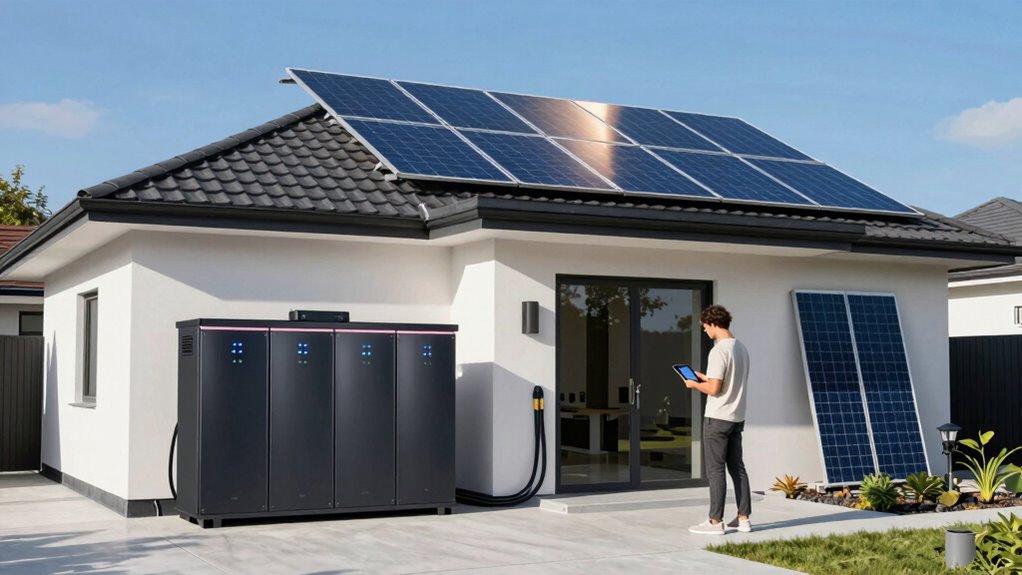
Many homeowners are attracted to the idea of solar backup and home batteries, but the hype often overshadows the realities. The promise of energy independence appeals to many, especially as energy prices climb and concerns about power outages grow. You might envision a home that runs smoothly during blackouts, with your own stored energy powering your daily life. However, it’s essential to understand how these systems truly work and what they can realistically deliver. While they can provide a sense of security and reduce reliance on the grid, they don’t automatically guarantee complete independence. The extent of energy independence depends on your energy consumption patterns, the size of your battery system, and the local solar potential.
Cost savings is another major selling point that draws many homeowners. You hear about slashing electricity bills and eventually recouping the initial investment through lower utility costs. In theory, this makes sense. But in practice, the savings vary widely based on your location, energy rates, and your system’s capacity. For example, if you have a small battery that only covers essential loads, your savings will be limited. Conversely, larger systems can reduce your reliance on grid power considerably, but they come with higher upfront costs. It’s essential to analyze your energy usage and consider whether the investment aligns with your financial goals. Sometimes, the savings may take years to offset the initial expenditure, especially if your local utility offers incentives or net metering options that influence overall savings.
Many homeowners overlook the ongoing maintenance and potential limitations of home batteries. Batteries degrade over time, and replacement costs can add up. Additionally, some systems may not perform at their best during prolonged power outages or on cloudy days, which can diminish their reliability as backup power sources. It’s easy to get caught up in marketing claims about seamless backup and huge savings, but the reality often involves trade-offs. You need to weigh the benefits against the costs, maintenance, and system limitations. Furthermore, understanding the local solar potential is crucial to accurately assess the effectiveness of a solar backup system in your area. Conducting a comprehensive site assessment can help determine whether your location is suitable for maximizing solar efficiency. Additionally, being aware of battery lifespan and the expected degradation over time can help set realistic expectations for long-term performance. Knowing solar incentives and available programs can also significantly impact the financial feasibility of your investment.
Ultimately, while solar backup and home batteries can contribute to energy independence and cost savings, they aren’t magic solutions. They require careful planning, realistic expectations, and an understanding of their capabilities. You should approach these investments with a clear eye, considering your energy needs, financial situation, and willingness to maintain and monitor the system. The hype can be enticing, but the true value lies in making informed decisions that align with your home’s specific circumstances.
home solar backup battery system
As an affiliate, we earn on qualifying purchases.
As an affiliate, we earn on qualifying purchases.
Frequently Asked Questions
How Long Do Home Batteries Typically Last Before Needing Replacement?
Your home battery typically lasts between 5 to 15 years, depending on the battery type and usage. The battery lifespan varies based on factors like cycling frequency and temperature. As it nears the end of its replacement timeline, you’ll notice decreased performance or capacity. Regular maintenance can extend its life, but eventually, you’ll need to substitute the battery to guarantee reliable backup power. Planning for this replacement ensures continued energy independence.
Are There Government Incentives for Installing Solar Backup Systems?
Sure, government incentives are practically begging you to go green. You can snag financial incentives like tax credits and rebates for installing solar backup systems. Keep an eye on policy updates, because they evolve faster than sunlight at dawn. These perks can slash your costs considerably, making your eco-friendly upgrade more affordable. So, why not take advantage? After all, the government’s just trying to help you save money and save the planet.
What Are the Hidden Costs Associated With Home Battery Systems?
You’ll find hidden costs in home battery systems, especially when doing a cost comparison. Maintenance requirements can add up over time, with batteries needing regular checks and potential replacements. Installation might also involve extras like upgrading your electrical system or additional wiring. These hidden costs can surprise you, so it’s essential to factor them into your budget to avoid unexpected expenses down the line.
Can Solar Backup Systems Work During Extended Power Outages?
Yes, solar backup systems can work during extended power outages, especially if you have a properly designed system with enough battery capacity. They help you achieve grid independence and boost your energy resilience by powering essential appliances even when the grid is down. However, the effectiveness depends on your system’s size, battery storage, and whether it’s set up for extended outages. Proper planning guarantees continuous power when you need it most.
How Do Weather Conditions Affect Battery Performance?
Weather impact markedly affects battery efficiency. Extreme temperatures, both hot and cold, can diminish your battery’s capacity and lifespan. During cold weather, batteries may struggle to hold a charge, while heat can accelerate degradation. Cloudy or rainy days might limit solar charge, but your battery still provides backup power. To maximize performance, guarantee your system is properly insulated and consider climate-specific battery options for ideal efficiency year-round.
As an affiliate, we earn on qualifying purchases.
Conclusion
Don’t be swayed by the hype around solar backup and home batteries. While they offer benefits, they’re not a magic solution for all power outages or energy needs. If you’re worried about costs or practicality, consider your home’s specific power demands first. You can still enjoy reliable energy without overinvesting. Think carefully about your situation, and remember, a well-planned system tailored to your needs often offers the best value and peace of mind.
As an affiliate, we earn on qualifying purchases.
As an affiliate, we earn on qualifying purchases.