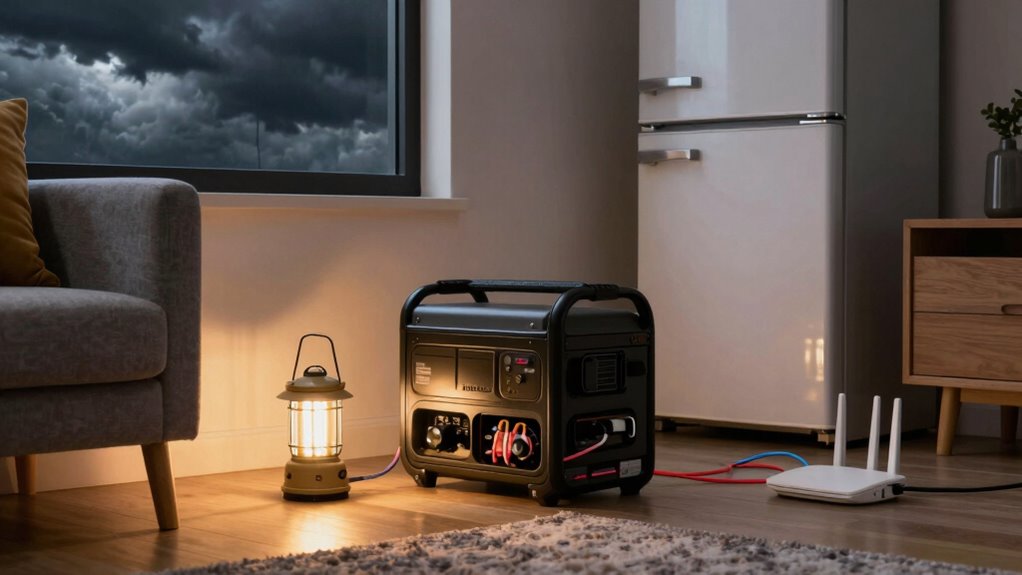

To decide if your home needs backup power, consider how often and how long outages happen and how they disrupt your daily routines. If power cuts cause safety issues, food spoilage, or major inconvenience, investing in a backup system makes sense. Think about your energy needs—whether you want to power everything or just essentials—and your budget. More details on choosing the right solution are available if you keep exploring.

Get your next haul delivered free with Prime
- Fast, free delivery on millions of items
- Prime Video, Amazon Music and more included
- Member-only deals all year
Key Takeaways
- Assess the frequency and duration of local power outages and their impact on daily routines.
- Determine if outages disrupt critical functions like safety, work, or food preservation.
- Calculate your home’s essential energy needs to decide between partial or whole-house backup solutions.
- Consider the costs, maintenance, and efficiency of different backup options, such as portable or whole-house generators.
- Evaluate how outages affect your lifestyle to decide if investing in backup power is justified.
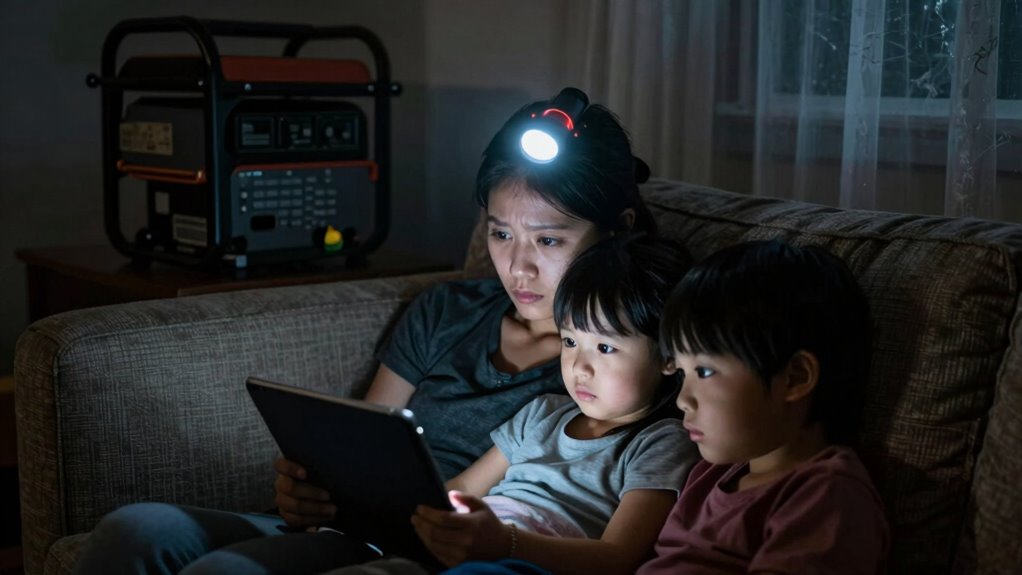
Deciding whether your home needs backup power starts with evaluating your typical power outages and their impact on your daily life. If outages are frequent or last for extended periods, having a dependable backup system becomes more than just a convenience; it’s a necessity. Think about how losing power affects your routines—does it interrupt your work, compromise your safety, or spoil your food? If power interruptions cause significant disruptions, investing in backup power makes sense. Conversely, if outages are rare and short-lived, you might decide that a backup system isn’t worth the cost and effort.
Frequent or long-lasting outages make backup power a smart, essential investment for your home.
When considering backup options, you’ll want to look into generator maintenance. Properly maintained generators are essential for ensuring they operate efficiently when needed. Neglecting routine checks and servicing can lead to malfunctions during critical moments, leaving you without power when you need it most. Regular generator maintenance not only extends the lifespan of your equipment but also guarantees that it performs at peak energy efficiency. An energy-efficient generator consumes less fuel, reduces emissions, and saves you money in the long run. It’s worth investing in models with high energy efficiency ratings, especially if you plan to rely on the backup system frequently.
You should also assess your home’s energy needs to determine the size and type of backup power system suitable for you. Do you want to keep your entire house running or just essential appliances? Calculating your power requirements helps you select a generator that offers the right capacity without wasting energy. An oversized generator can lead to unnecessary fuel consumption and increased costs, while an undersized one won’t meet your needs during outages. Balancing your power needs with energy efficiency is key to making a smart investment. Additionally, understanding your home’s energy consumption can help you choose the most efficient and cost-effective backup solution. Recognizing your power outage frequency can also guide you in deciding whether a backup system is a worthwhile investment. Knowing how your energy needs fluctuate during outages can further refine your choice of backup system. Incorporating energy conservation strategies can also help reduce your overall power demand during outages, making backup solutions more manageable and cost-effective. Moreover, evaluating the reliability of your power supply can provide deeper insight into how urgent your backup needs truly are.
Cost is another important factor. Backup power systems can range from portable generators to whole-house units. Portable generators are usually less expensive and easier to maintain, but they may not provide enough power for larger households or critical systems. Whole-house generators tend to be more expensive upfront but offer seamless power backup and often come with automatic transfer switches, which ensure uninterrupted service without manual effort. Weighing these options against your budget and energy efficiency goals will help you find the right solution.
Ultimately, deciding if your home needs backup power depends on how outages impact your daily life, your budget, and your commitment to maintaining an energy-efficient system. Proper generator maintenance is crucial to ensuring your backup power is reliable when you need it most. By carefully evaluating your needs and considering energy efficiency, you can make an informed decision that provides peace of mind and continuous comfort during power disruptions.
As an affiliate, we earn on qualifying purchases.
Frequently Asked Questions
What Types of Backup Power Systems Are Most Cost-Effective?
The most cost-effective backup power systems often include solar panels combined with battery storage, especially if you prioritize fuel efficiency. Solar panels harness free sunlight, reducing ongoing fuel costs, and batteries store excess energy for use during outages. This setup minimizes fuel consumption, lowers long-term expenses, and offers renewable energy. While initial costs can be higher, the savings on fuel and maintenance make solar-plus-battery systems a smart, economical choice for reliable backup power.
How Long Can Backup Power Typically Sustain My Household?
Your backup power can keep your household running for days or even weeks, depending on the fuel type and maintenance. Gas generators may last longer with proper upkeep, while solar systems need minimal maintenance but rely on sunlight. If you choose a diesel or propane unit, regular maintenance guarantees maximum run time. Overall, the duration varies, but with good care, your backup power can sustain your home through extended outages.
Are Portable Generators Suitable for Long-Term Backup Power?
Portable generators aren’t ideal for long-term backup power because they can be noisy and often lack fuel efficiency for extended use. You might find their noise levels disruptive, especially in quiet neighborhoods. Plus, frequent refueling becomes a hassle, making them less practical for sustained power needs. For long-term backup, consider standby generators, which are more fuel-efficient and operate quietly, providing reliable power without constant maintenance.
What Safety Precautions Should I Consider With Backup Power Systems?
Did you know that electrical accidents increase during power outages? When handling backup power systems, prioritize safety by following emergency preparedness guidelines. Always read manufacturer instructions, keep a fire extinguisher nearby, and avoid overloading circuits. Use proper extension cords and never run generators indoors, as this can cause carbon monoxide poisoning. Emphasizing electrical safety helps protect your family and ensures your backup power system functions reliably during emergencies.
How Do I Determine the Appropriate Backup Power Capacity for My Home?
To determine the right backup power capacity, first assess your essential power needs by listing devices and appliances you want to keep running during an outage. Consider your preferred power source, like a generator or battery system, and how much energy storage you’ll need to support those devices. Add a buffer for future needs or unexpected surges, ensuring your system can reliably power your home until power is restored.
As an affiliate, we earn on qualifying purchases.
Conclusion
Ultimately, deciding if your home needs backup power is like choosing whether to anchor your ship in a storm. If power outages leave you stranded, vulnerable, or lost in the dark, it’s time to equip your home with a reliable backup. Think of it as installing a lighthouse—guiding you safely through the storm’s chaos. When the lights flicker and the world goes quiet, backup power keeps your life steady, bright, and always on course.
As an affiliate, we earn on qualifying purchases.
As an affiliate, we earn on qualifying purchases.
Halloween Picks
halloween
As an affiliate, we earn on qualifying purchases.